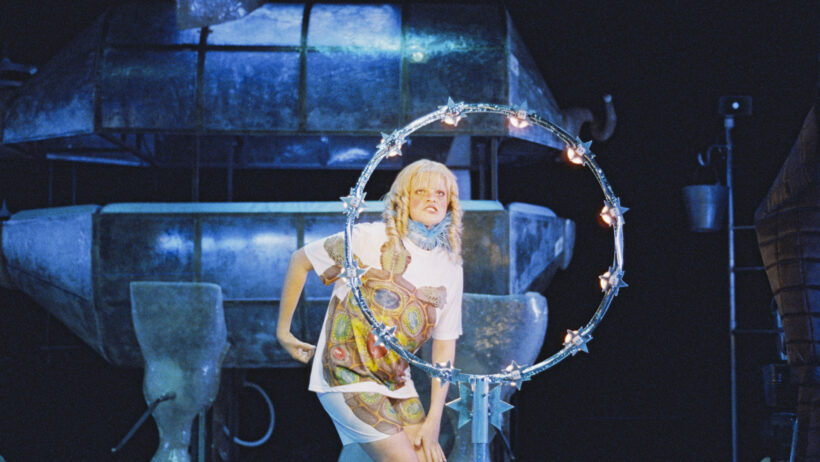
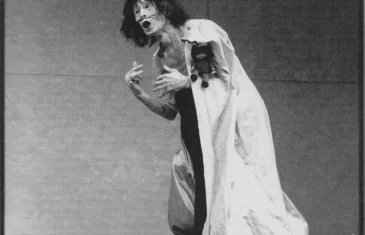
Schweinerei – Lieselot Siddiki recensie Kristof van Baarle Something is rotten in this age of hope Lieselot Siddiki kruist in Schweinerei het mooie met het misselijke. Punk, trash en het abjecte vermengt ze met intieme fragiliteit. Haar maximalistische privéuniversum groeit zo uit tot een beeld van een bourgeois Europa dat zwelgt in zijn eigen decadentie.
“Uiteindelijk is geld de enige taal die iedereen vloeiend spreekt” Milo Rau, Christiane Jatahy en Matej Drlička over artistieke vrijheid in een steeds autoritairder Europa Hoe vrij zijn de kunsten nog in een Europa waarin het beleid steeds meer naar rechts kantelt? Floris Baeke vroeg het aan Wiener Festwochen-intendant Milo Rau, die graag voorop loopt in de strijd, Braziliaans regisseur Christiane Jatahy en de ontslagen Slowaakse theaterdirecteur Matej Drlička, die de naam van zijn eigen minister niet meer mag uitspreken. “Om de artistieke vrijheid vandaag te verdedigen, moeten we de instituten gebruiken die we twintig jaar geleden nog vrolijk wilden afbreken.” Floris Baeke interview
“In the end, money is the only language everyone speaks fluently” Milo Rau, Christiane Jatahy and Matej Drlička on artistic freedom in an increasingly authoritarian Europe How free are the arts in a Europe whose politics are tilting steadily to the right? Floris Baeke put the question to Wiener Festwochen director Milo Rau — always eager to lead the charge, to Brazilian director Christiane Jatahy, and to the dismissed Slovak theatre director Matej Drlička, who is currently legally barred from even uttering the name of his own Minister of Culture. “To defend artistic freedom today, we have to use the very institutions we would happily have torn down twenty years ago.” Floris Baeke interview
Lichamen in beweging tegen fascisme Van het non-fascistische lichaam tot antifascistische allianties: de jaren 1970 en het Brussel van vandaag Van de gespierde atleten van Leni Riefenstahl tot de mechanische precisie van militaire parades: het klassieke fascisme vierde steevast het ideaal van een strak, gehoorzaam en onoverwinnelijk lichaam. De experimentele dans van de jaren 1970 zette daar een ‘non-fascistisch’ lichaam tegenover, met contactimprovisatie als bewegingsvorm van geweldloosheid. Bojana Cvejić ziet deze ‘non-fascistische’ erfenis vandaag opnieuw opduiken in het project La Candidate Sans-Papiers, waarin solidariteit centraal staat met juist díe lichamen die het hedendaagse fascisme probeert uit te wissen. Bojana Cvejić artikel
When Bodies Move Against Fascism From the Nonfascist Body to Antifascist Alliances: The 1970s and Brussels Today Think of Leni Riefenstahl’s sculpted athletes or the mechanical precision of military parades: classical fascism always relied on an ideal of rigid, obedient, invincible bodies. Experimental dance in the 1970s set a non-fascist body against this ideal, with Contact Improvisation as a physical practice of non-violence. Bojana Cvejić examines what remains of this ‘non-fascist’ legacy today, seeing it resurface in La Candidate Sans-Papiers, which centres solidarity with the very bodies contemporary fascism tries to erase. Bojana Cvejić article
Het lichaam als archief Notities over hoe politieke systemen in ons lichaam voortleven Terwijl studentenprotesten Belgrado opschudden, houdt theatermaker Sanja Mitrović vanuit Brussel een dagboek bij. Algauw tekent zich een rode draad af: welke sporen hebben politieke systemen in haar eigen lichaam achtergelaten? Haar notities voeren terug naar het Joegoslavië van haar jeugd, naar brieven van haar vader en naar haar geboortestad, die al drie keer van naam veranderde. Sanja Mitrović artikel
The Body as Archive How political systems live on in our bodies As student protests shake Belgrade, theatremaker Sanja Mitrović keeps a diary from Brussels. The distance sharpens her gaze on the invisible traces that political systems have left in her own body. Her notes lead back to the Yugoslavia of her youth, to her father’s letters, and to her hometown, which has already changed its name three times. diary
Artistieke autonomie na Gaza Hoe culturele censuur in Berlijn solidariteit de kop indrukt De veelgeprezen Berlijnse kunstscene is in gevaar. Dalia Maini, hoofdredacteur van de Berlijnse straatkrant Arts of the Working Class, legt de vinger op de wonde van een nieuw cultureel mccarthyisme in Duitsland, waarbij bureaucratische valstrikken worden gespannen als politiek wapen tegen solidariteit met Palestina. Hoe houdt een culturele scene stand onder de verpletterende druk van politieke inmenging, administratief isolement en sluipende zelfcensuur? Dalia Maini artikel