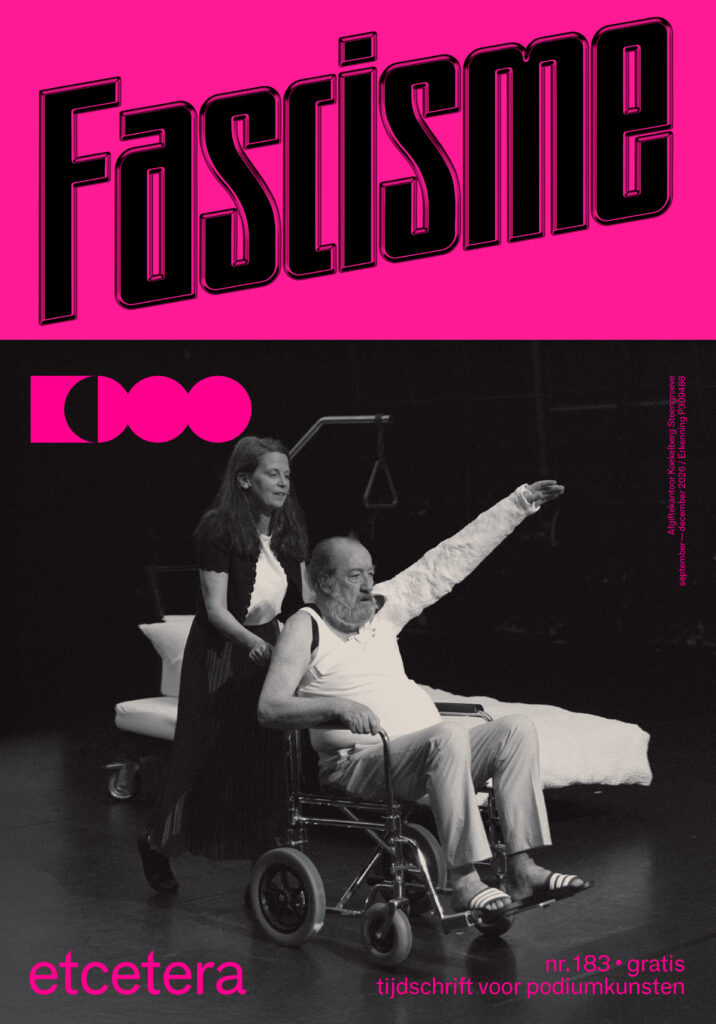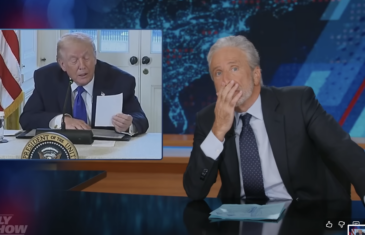
Farcical Fascism How Performance Responds to the Cruel Show of Trump and Co. With Donald Trump’s second term, the hypocritical theatre of liberal democracy has collapsed at last. In its place arrives a no less theatrical form of politics that Georg Döcker diagnoses as “farcical fascism” – a contemporary anti-politics celebrating the hollowness at the heart of fascism, and turning it into political performance. Having dispensed with the liberal theatre of stitching together appearance, truth and lie, Trump, Netanyahu and co. promote a cruel spectacle of total violence while appropriating the tools of satire to immunise themselves against ridicule and critique. In the face of this shift in the relation between theatricality and power, how can performance still act as a subversive and resistant force? Georg Döcker essay 08.09.2026
Before censorship comes homologation How Silicon Valley-speak invaded our artistic practice Historical fascism wasn’t unique in its modus operandi or its goals, writes Rodrigo Batista. On the contrary: where it failed – in trying to impose “total inner adhesion” – neoliberal capitalism has stepped in to finish the job. When consumerism becomes the sole conceivable ideology, where does that leave the arts? Are artists really bound to operate within the language of homologation and commodification, as has become the norm, or is there another way? Rodrigo Batista article 08.09.2026
“In the end, money is the only language everyone speaks fluently” Milo Rau, Christiane Jatahy and Matej Drlička on artistic freedom in an increasingly authoritarian Europe How free are the arts in a Europe whose politics are tilting steadily to the right? Floris Baeke put the question to Wiener Festwochen director Milo Rau — always eager to lead the charge, to Brazilian director Christiane Jatahy, and to the dismissed Slovak theatre director Matej Drlička, who is currently legally barred from even uttering the name of his own Minister of Culture. “To defend artistic freedom today, we have to use the very institutions we would happily have torn down twenty years ago.” Floris Baeke interview 08.09.2026
When Bodies Move Against Fascism From the Nonfascist Body to Antifascist Alliances: The 1970s and Brussels Today Think of Leni Riefenstahl’s sculpted athletes or the mechanical precision of military parades: classical fascism always relied on an ideal of rigid, obedient, invincible bodies. Experimental dance in the 1970s set a non-fascist body against this ideal, with Contact Improvisation as a physical practice of non-violence. Bojana Cvejić examines what remains of this ‘non-fascist’ legacy today, seeing it resurface in La Candidate Sans-Papiers, which centres solidarity with the very bodies contemporary fascism tries to erase. Bojana Cvejić article 08.09.2026
The Body as Archive How political systems live on in our bodies As student protests shake Belgrade, theatremaker Sanja Mitrović keeps a diary from Brussels. The distance sharpens her gaze on the invisible traces that political systems have left in her own body. Her notes lead back to the Yugoslavia of her youth, to her father’s letters, and to her hometown, which has already changed its name three times. diary 08.09.2026
Artistic Autonomy after Gaza How cultural censorship in Berlin suppresses solidarity Berlin’s long-celebrated art scene is in danger. Dalia Maini, editor-in-chief of the Berlin street newspaper Arts of the Working Class, dissects Germany’s new cultural McCarthyism, where state funding has been weaponised against Palestinian solidarity. Maini exposes Germany’s bureaucratic trap designed to paralyse collective action and restrict artistic freedom. How can a cultural scene resist under the crushing weight of political pressure, administrative isolation, and self-censorship? essay 08.09.2026
State of the Future 2026 – Frederico Araujo A Forest of the Future On September 2, 2026, Frederico Araujo delivered his State of the Future during the opening ceremony of the TheaterFestival at KVS in Brussels. “We know that making a living as an artist is difficult for a person who was born here. Imagine what it is like for someone who was not?” Frederico Araujo statement 02.09.2026