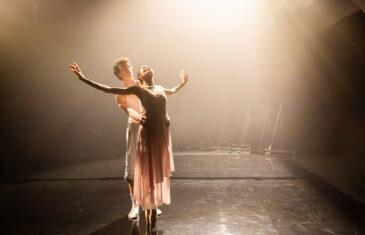
De Materie – Phia Ménard/Opera Ballet Vlaanderen/Bas Wiegers
Een schurend vooruitgangsdenken
Sébastien Hendrickx




© Sanja Mitrović
As student protests shake Belgrade, theatremaker Sanja Mitrović keeps a diary from Brussels. The distance sharpens her gaze on the invisible traces that political systems have left in her own body. Her notes lead back to the Yugoslavia of her youth, to her father’s letters, and to her hometown, which has already changed its name three times.
Since November 2024, Serbia has been shaken by months of student-led protests, sparked by the collapse of the railway station canopy in Novi Sad, which claimed sixteen lives and gradually evolved into a broader movement demanding accountability and meaningful political change. This text brings together diary entries and notes I have been keeping since then, while following the protests from Brussels and working on a new theatre performance, Zemlja.
1.
I am writing this from Brussels. Distance is not neutral: it changes the way we remember events, or the way we observe them as they unfold.
I follow the protests in Serbia from Belgium. I see images, read reports and headlines, watch videos. Distance rearranges events. What reaches me has always already been edited. I cannot feel their rhythm or the weight of bodies standing in the streets for hours. But the distance allows me to see them as part of a longer historical process. The farther away I am, the less I can feel what is happening, but the more I can say about the patterns I recognise in it.
Students. Crowds. Collapse becoming the beginning of something new. Or perhaps not.
A body in the street is never merely a body. It is immediately interpreted. One person sees a student, another a protester, another a threat, another hope.
I try not to understand too quickly. Understanding closes things down. I attend to what repeats itself.
2.
Yesterday I spent the entire day exchanging messages and speaking with friends in Belgrade. Today I find myself thinking intensely about the city where I was born. About Zrenjanin. Or perhaps Bečkerek. Or Petrovgrad.
Over the past century, the city where I grew up has changed its name with every change of state. Bečkerek existed for centuries, from the Middle Ages until 1935. Petrovgrad, named after King Peter I Karađorđević, for eleven years, from 1935 to 1946. Zrenjanin, in honour of the Partisan hero Žarko Zrenjanin, for just over eighty years, from 1946 to the present.
I remember discussions in the 1990s, when I was a university student, about the possibility of changing the city’s name once again, of returning ‘Zrenjanin’ to ‘Petrovgrad’. The debate did not last long. Someone remarked that replacing identity documents, street signs and licence plates would be too expensive. The name remained.
What changes when a city changes its name? Does the city itself change? Or only the story it tells about itself? What remains when flags or borders change? How do political systems live on in our physical and social habits?
“What changes when a city changes its name? Does the city itself change? Or only the story it tells about itself?”
History is transmitted as much through atmosphere as it is through school textbooks. Through the presence of something we cannot quite name. In silences. In stories that break off. In names that are no longer spoken.
As a child, I grew up surrounded by grand historical narratives, yet much remained unspoken. Certain names were never mentioned; certain subjects quietly avoided. There were houses with histories that no one ever explained.
Only much later did I begin to learn more about the history of Banat, the northern region now divided between Serbia, Romania, and Hungary, where my hometown is located. About the occupation, the deportations, the disappearances. It was then, confronted with how history can be (deliberately) forgotten, that I first began to wonder where history actually remains.
© Sanja Mitrović
Today, when I say the name Zrenjanin, I hear its previous names within it. I find myself thinking of the city as a body. Not as a symbol or an identity, but as a place where different times continue to exist alongside one another.
And what if a body functions in a similar way to a city too: how much history could it hold at once? How many names? How many senses of belonging? How many interrupted stories?
Is the city’s relation to history like the body’s relation to the world: the way we enter a room or read a stranger; the caution, a trust, or a distrust that we cannot fully explain?
Perhaps this is why fascism does not interest me primarily as a historical subject. What interests me more is what it leaves behind. How it settles into everyday gestures. Into the ways we imagine our community. Into the boundaries we draw between those who belong and those who do not. Into the stories we repeat and those we leave untold.
3.
As a child, I often passed the monument to Sonja Marinković. Her name was part of the city’s geography, like the name of a bus stop. I did not know who she was. Only much later did I learn that she had been a young woman executed in 1941. Most accounts of her life end with the familiar heroic narrative: a young Partisan, tortured, executed at Bagljaš on 31 July 1941, refusing to turn her back on the firing squad and remaining true to her convictions. Her last words: “Shoot! These are communist breasts.”
But what stays with me about Marinković isn’t the myth.
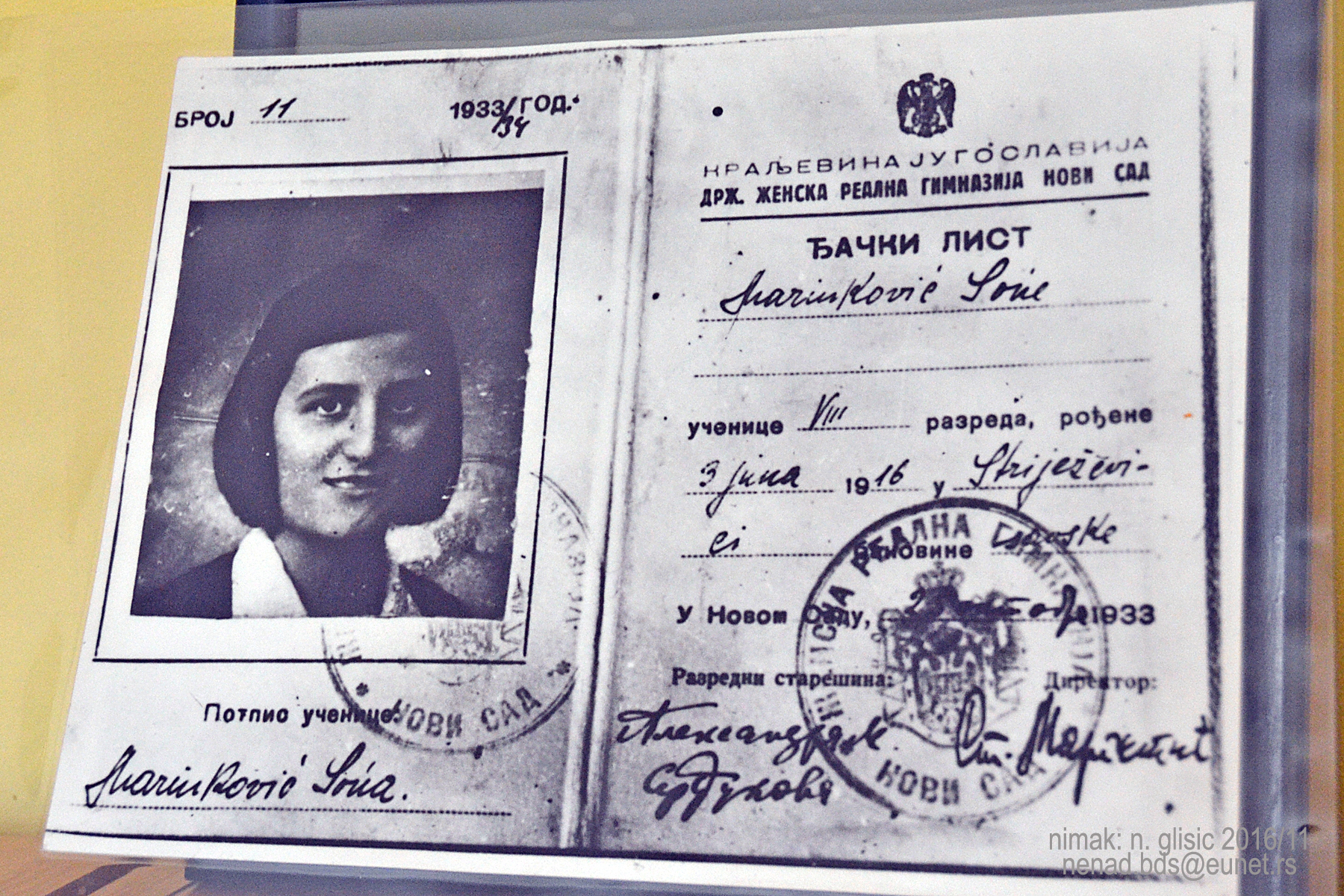
Sonja Marinkovic. https://commons.wikimedia.org/wiki/File:Sonja_Marinkovic,_djacki_list.jpg
Sonja was not a soldier. She was a student, an agronomist, a freedom fighter. She had a problem with one of her legs and walked with difficulty. Her body did not conform to the ideal of the strong, disciplined, flawless body that political myths so often celebrate. Yet despite, or perhaps because of that, she became one of the central symbols of resistance.
For years I laid flowers at her monument. I remember the ceremonies, the speeches, the wreaths, the school gatherings. Today I realise that my memory is attached not so much to Sonja herself as to the rituals through which we commemorated her name. What I find most striking is the discovery that the body we celebrated as heroic was, in fact, imperfect and vulnerable. That moves me more deeply than any ceremonial speech ever could.
Sometimes I wonder what exactly remains of Sonja Marinković in a city that still bears traces of her name. Does her story remain? An ideology? A memory? Or only the habit of repeating her name?
Over the past few months, as the student protests continued without producing immediate political results, different criticisms emerged even among those who had stood firmly behind the movement. Some questioned the effectiveness of the students’ symbolic actions and their dispersed, open-ended methods, wondering whether the movement’s aims had become too diffuse. Others were troubled by elements of its rhetoric, which risked reproducing a language historically associated with nationalist mobilisation and made the movement vulnerable to appropriation by conservative forces.
“Fascism does not necessarily begin with hatred. Sometimes it begins as impatience toward complexity and a desire to make the world more legible than it is.”
I understand and share some of these concerns. What unsettled me, however, was how quickly ambiguity gave way to certainty. I noticed it in conversations that became increasingly narrower. Every problem seemed to have a single obvious explanation, every disagreement a clear moral judgment. Instead of asking what might be true, the question becomes one of who is right and who is wrong, a division between “us” and “them”. Ambivalence becomes difficult to tolerate. Nuance begins to feel like weakness. Doubt starts to sound like betrayal.
It brings me back to the question of fascism as a recurring temptation. Fascism does not necessarily begin with hatred. Sometimes it begins as impatience toward complexity and a desire to make the world more legible than it is. To want one story to replace all the others.
5.
My father kept the letters he wrote during his military service in Yugoslavia, along with the photographs. In one of them, he is standing with a rifle. His gaze is fixed in the distance, as though absorbed in thoughts of something outside time, thoughts that carry him beyond the grassy clearing where the photograph was taken, where he seems to be posing rather than taking part in a military exercise.
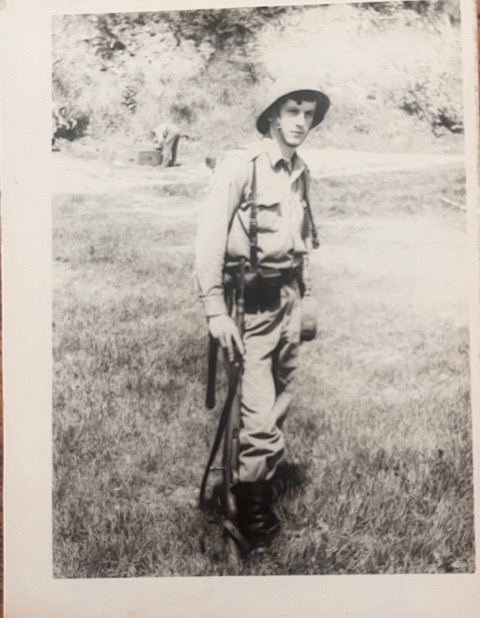
© Sanja Mitrović
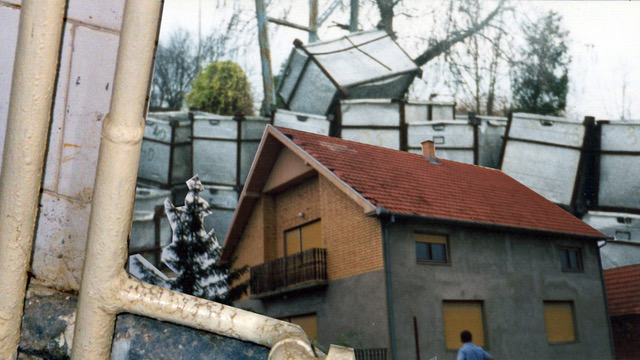
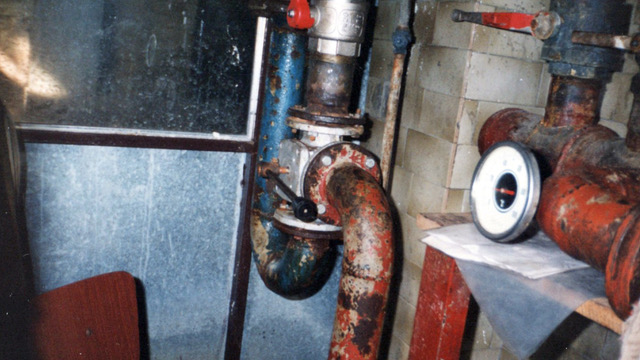
Later, while working as a claims officer for an insurance company and undergoing treatment for cancer, he also saved photographs of damaged buildings that he documented as part of his job. It was as though he were trying to preserve traces of what was disappearing. As though damaged roofs, walls, manholes, boilers, and conduits were architectural kin of a body ravaged by illness and a country ravaged by war.
For years, I believed that history resided in documents, archives, photographs, and letters. So when I began working with these materials, I believed they would help me understand the past. But documents have their limits. They only preserve facts, not experience.
A photograph can show a building, but not fear. A letter can preserve a sentence, but not the warmth of the body that wrote it. A document can confirm that something happened, but it cannot explain how that event continues to live on.
Today, I increasingly wonder whether I was looking in the wrong place. My father’s most important archive was never stored in boxes of documents; it resided in his body. In the way he entered a room, unconsciously scanning who was present. In the way my mother fell silent or abruptly changed the subject whenever politics came up. In myself: the brief hesitation before saying something aloud, even when there is nothing to hide.
Watching the students who have spent months walking across Serbia, I find myself wondering what memories are being archived in their bodies at this very moment. Which movements will return many years from now, when they watch a new generation take to the streets?
In the recordings of the protests, I find myself drawn above all to walking: both to the impulse to move my own body in response to what I see and to the images themselves – columns of students covering hundreds of kilometres, footsteps falling into a shared rhythm as one.
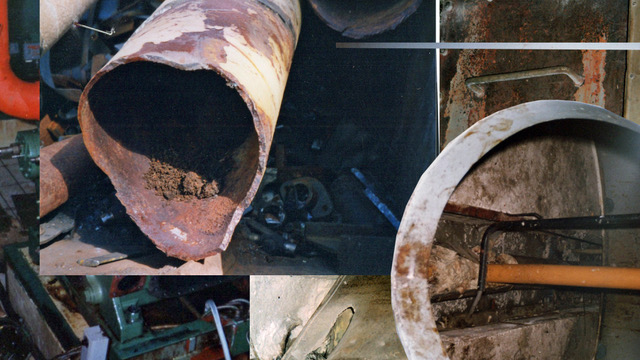
© Sanja Mitrović
Growing up in Yugoslavia, I became instinctively attuned to the choreography of the collective body. It was everywhere: in classrooms, at Pioneer ceremonies through which children entered Yugoslavia’s socialist youth organisation, during public celebrations, on television. The state produced images of togetherness through synchronised bodies.
Watching the students today, my body sometimes responds with a brief sense of unease before my mind catches up. Not because of what they are demanding – their demands are profoundly democratic – but to the rhythm of footsteps, the image of the crowd, discipline itself.
A body marching in the service of power or a body marching against it look remarkably similar. What distinguishes them is the relationship between the bodies in motion and the power they reproduce or contest.
7.
In her essay ‘Fascinating Fascism’, Susan Sontag writes about the political fantasies of the body. She describes an aesthetic that glorifies strength, discipline, perfection, and collective harmony, showing how ideology operates through images, through ideas about which bodies are desirable and which are not.
My question begins where those images end.
While researching butoh, I often found myself wondering why I was so drawn to it. Not because of its exoticism or its aesthetic. It was something else. In butoh, I encountered for the first time a body that does not seek to serve as evidence, that does not stand for the nation, class, or culture; a body that refuses to become an ideal.
I found such a body strangely liberating.
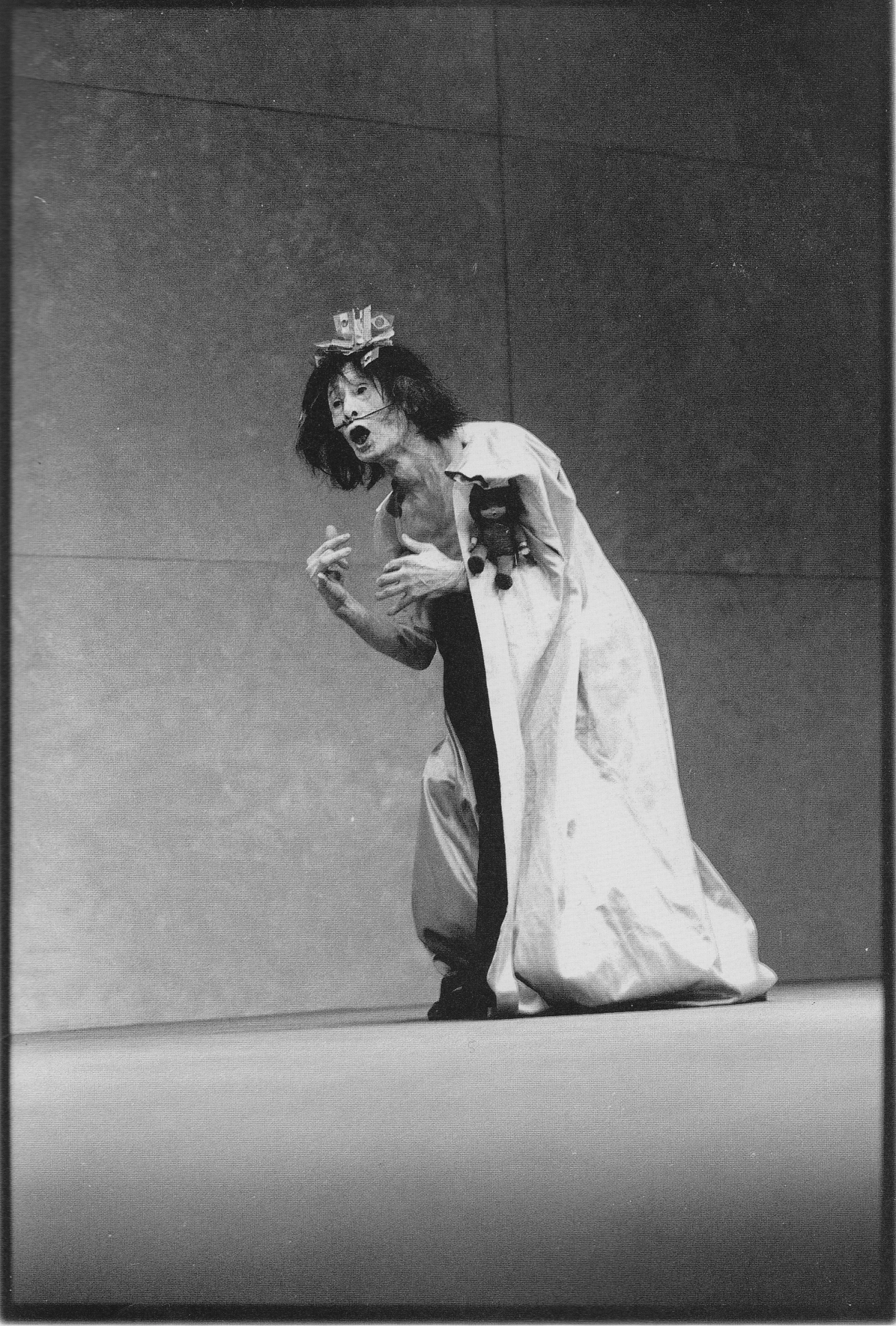
The Dead Sea (1985), Yurakucho Asahi Hall © Nourit Masson-Sekine.
Watching butoh performers, I often feel that I am looking at bodies that carry multiple temporalities at once: the body of a child, the body of an old person, the body of the living and the body of the dead. A body that belongs to the present and another that remains deeply anchored in the past.
The body as archive. Not of documents, but of traces: a place where nothing has entirely disappeared, yet nothing is fully present any longer.
8.
I am in Zrenjanin, walking through streets I have known almost my entire life.
Nothing looks dramatic. People are going to work, children are riding their bicycles, someone is waiting for a bus. History is not visible, yet it is everywhere.
KRIJG JE GRAAG ONS PAPIEREN MAGAZINE IN JOUW BRIEVENBUS? NEEM DAN EEN ABONNEMENT.
REGELMATIG ONZE NIEUWSTE ARTIKELS IN JOUW INBOX?
SCHRIJF JE IN OP ONZE NIEUWSBRIEF.
JE LEEST ONZE ARTIKELS GRATIS OMDAT WE GELOVEN IN VRIJE, KWALITATIEVE, INCLUSIEVE KUNSTKRITIEK. ALS WE DAT WILLEN BLIJVEN BIEDEN IN DE TOEKOMST, HEBBEN WE OOK JOUW STEUN NODIG! Steun Etcetera.
dagboek
08.09.2026
Leestijd 10 — 13 minuten
08.09.2026
—
14.01.2027
Sébastien Hendrickx
Mia Vaerman
dagboek 08.09.2026
Sébastien Hendrickx
Mia Vaerman