De Materie – Phia Ménard/Opera Ballet Vlaanderen/Bas Wiegers
Een schurend vooruitgangsdenken
Sébastien Hendrickx




BIPAM
What does theater in Thailand look like? For artist, curator, and festival director Sasapin Siriwanij, it’s a question that constantly keeps her mind spinning. You don’t talk about contemporary performance art in Thailand using the same language you would use in the Global North. For independent artists, there is virtually no funding, no well-equipped infrastructure, and no government support. But despite the endless cycle of exhaustion, a mysterious faith in and joy for art remains, she writes in her first column.
Thailand.
Most of you might think of Bangkok, the bustling capital city. Street food. Tropical weather. Or those year-round warm beaches. Nightlife. Or the idyllic green rice fields tucked away in the Northern mountains. And maybe, just maybe, some performances to see. But how much of that is contemporary performing arts work, and not another cultural spectacle?
Traveling the world as a performing arts professional from Thailand, I feel like I’m always carrying the weight of having to represent my country, much as it might be against my will. What is theater in Thailand like? Of course, this question comes through most of the time as a friendly conversation starter – a sensible one indeed – but it always gets my brain spinning, spiraling, and stretching into a very big, complicated tapestry of things in the effort to even begin to answer the question.
I admit to having crafted well-packaged answers that are easy to deliver and land, saying that Thailand mostly has small- to medium-scale works created in intimate spaces, with artists being robust in creativity and criticism of society. But more often than not, the opposite happens; If you ever asked me this question and saw me pause and frown before I could speak again, know that I was only taking my time – making it make sense to you without betraying the reality back home.
But why is it so complicated when it’s a simple question? What’s theater like in Thailand?
Well, that’s because most of the time when we speak about theater, we assume that there is an environment within which such a thing called ‘theater’ exists. We’re talking about theater buildings with theater halls and black boxes inside, maybe with some rehearsal studio dotted here and there in the same structure (or around town). A dedicated little space for the box office. A dedicated little office space for the team working in it and for it. A theatre with installed seating and lighting grids. Or enough proper chairs at least to lay out for the spectators. A theater that’s within a network of other theaters. Just the way things are supposed to be. And oh, of course, people are paid for what they do, otherwise they wouldn’t call it their profession or career!
As I mentioned previously, I anticipated that my head would be spinning thinking about this question again. This time I tried to be smarter – I asked some trusted colleagues and friends in the theater communities in Thailand to help give some essential steps for theater-making in Thailand, especially targeted for those who don’t know the scene in our country so well. Let’s begin with these two pieces of opinion, one from an emerging manager/theater-maker, and the other from a veteran producer:
“You have to think seriously about money and time. You need savings, cash flow, and a decent amount of free time — because making theatre (especially small productions or black box shows) still can’t realistically pay the bills. For people who don’t come from money or have starting capital, loving theatre can feel like a curse. In a country where everyone’s grinding within a capitalist system, and where both corporations and the state see art mainly as a product to sell or export, you end up stressed about the work and about money at the same time, non-stop.”
“Find a realistic venue first — don’t even dream about a proper, well-equipped theatre.”
Better than me saying “there’s no infrastructure for theater” is to read these two opinions. I turn into a broken record when I say there is no money and there is no space for us to work, but this has remained a reality ever since I had a taste of theater making in Thailand a little over twenty years ago.
But there is theater (ok, the ‘art’, not the building). Yet you say there’s no space and no money?
Exactly. I need to keep saying that so that when we speak of Thai theater, and more specifically the contemporary one, it is never quite fair to talk about it in the same language you would use for a place with global north infrastructure.
Let’s tackle space: there are hardly any properly-sized and properly-equipped theaters for performances in Bangkok. For those that are there, some are reserved for government-endorsed performances and artists, most of which are traditional art forms, while others are for commercial rent. Self-produced contemporary performing artists who make works that critique society apparently fall right out of access to these spaces. The best choice would be a small to medium-sized space with a low rental fee or subsidized support. This is definitely the popular option, but there are very few of these spaces, and they struggle to stay open. Otherwise, artists and producers negotiate with galleries, cafes, and any space they can persuade owners to host a show in for a small fee.
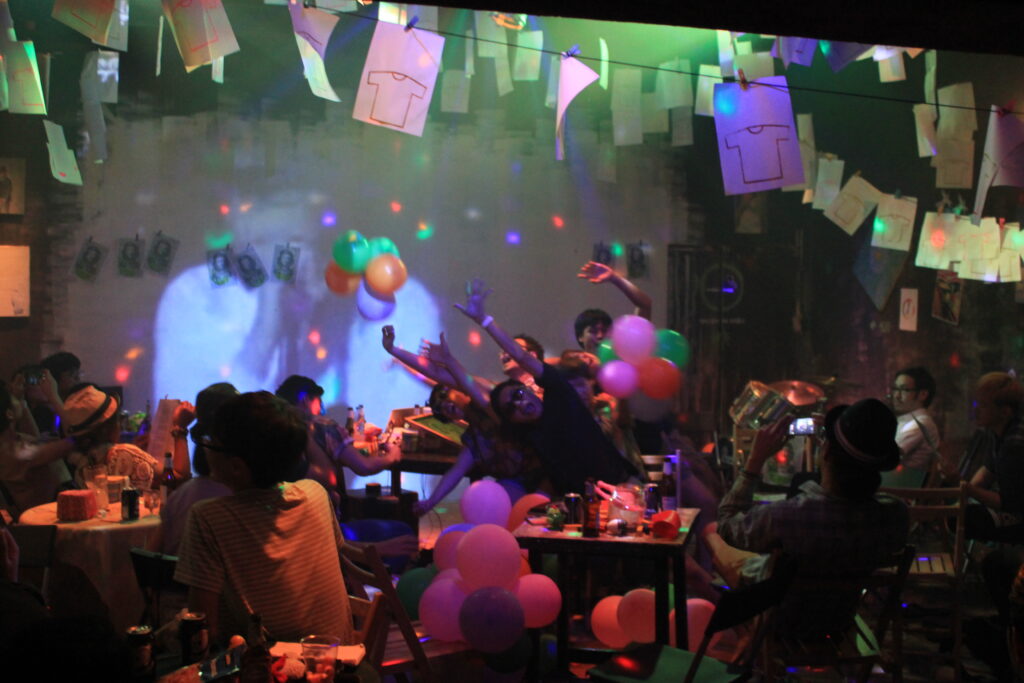
Wichaya Artamat / 6th October Party (2015) / For What Theatre
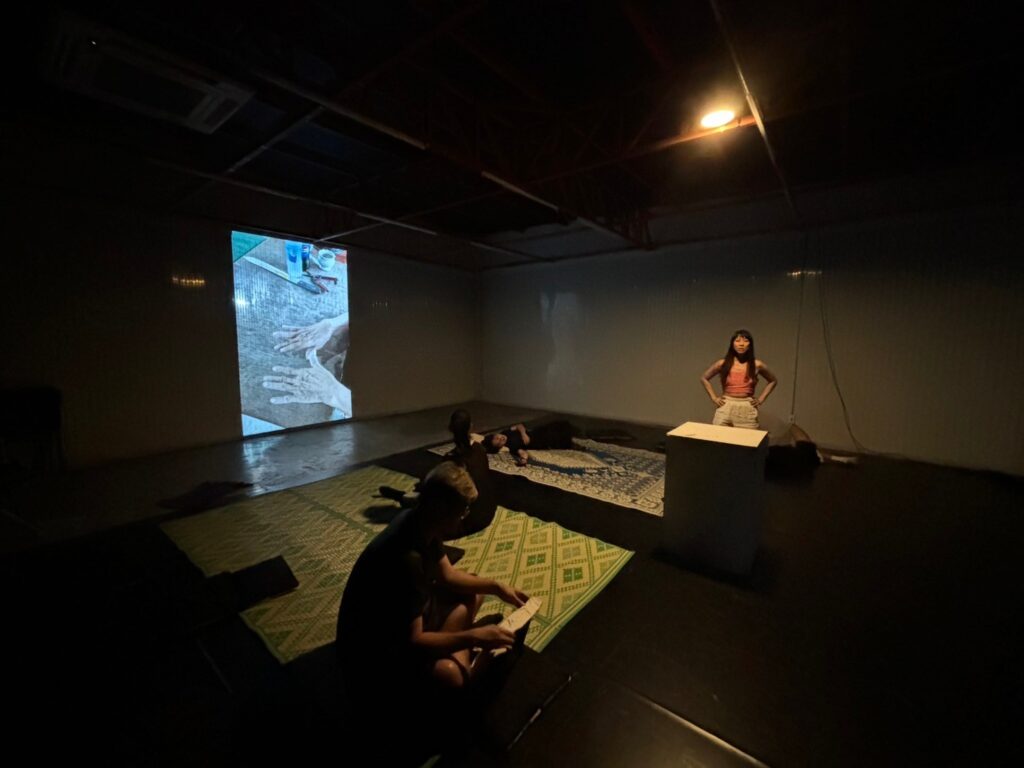
ADAM Lab 2024 in Bangkok
And money. Apparently, there is funding. There is a Ministry of Culture – isn’t there?
Well, that’s correct as a fact, although the Ministry of Culture–or the Ministry of anything in this country, really– likes to act as a chaperone rather than a champion for its citizens. Imagine yourself being a young child and being at the mercy of what your parents decide to allow you. That’s how the Thai government treats its citizens, and practitioners of arts, for that matter.
If you’re hoping to find funding within this country to make work in this country, that’s an uphill battle — like looking for a needle in the ocean. It’s not that the money doesn’t exist, it’s just incredibly hard to access and the chances of actually getting it are slim, unless you have an exceptional profile or know the right people inside the organizations or the Ministry of Culture.
“Government grants mean mountains of paperwork, enough to wear you down before you even start.”
Not only are arts practitioners grappling with an environment that is inhospitable to creating works, but they are also, in effect, battling the government’s outdated, passive mentality in its policies and operations. The ‘grant’ in question doesn’t operate within a strategy, so all kinds of arts proposals end up in the same pile as sports initiatives, cultural events, and royalty-glorifying activities. Grant results have been mostly arbitrary, often decided based on the sheer number of projects the government can proudly announce to the public (look how many projects we can support with just this amount of money – yay!) rather than on what each proposal deserves to fulfill its mission. As for the paperwork, practitioners might not have minded preparing it so much if it weren’t for the sense that the government was operating on the principles of scrutiny, distrust, and irrelevance.
For whatever reason, the love for theater is there, and precisely because the community believes in its magic and power, practitioners have consistently sought ways to make it happen in some form or another in the dry climate for art. A producer’s voice here tells us that every time, it is a lot about asking yourself how deep in the water you’re willing to plunge:
“[I have to c]heck in with myself on how much energy I actually have to push something into existence — and how much exhaustion I’m willing to sign up for. Because everything has to be conjured from scratch: helping the artist build a team (who do they want, and if there are too many people, where’s the money coming from to pay everyone), finding a venue (there are barely any theatres, and they’re never fully equipped — you have to hunt for a space, find partners), figuring out PR (like… how do you even do PR now, in this sea of digital content and social media overload), and most importantly — how are you going to sell tickets. Just thinking about it is exhausting.”
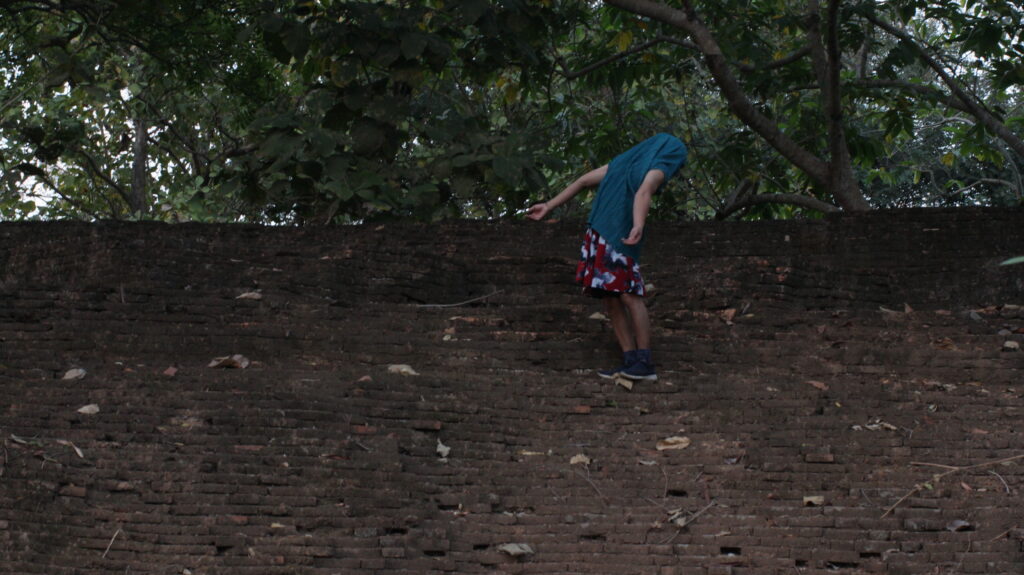
Teerawat Mulvilai and BIPAM
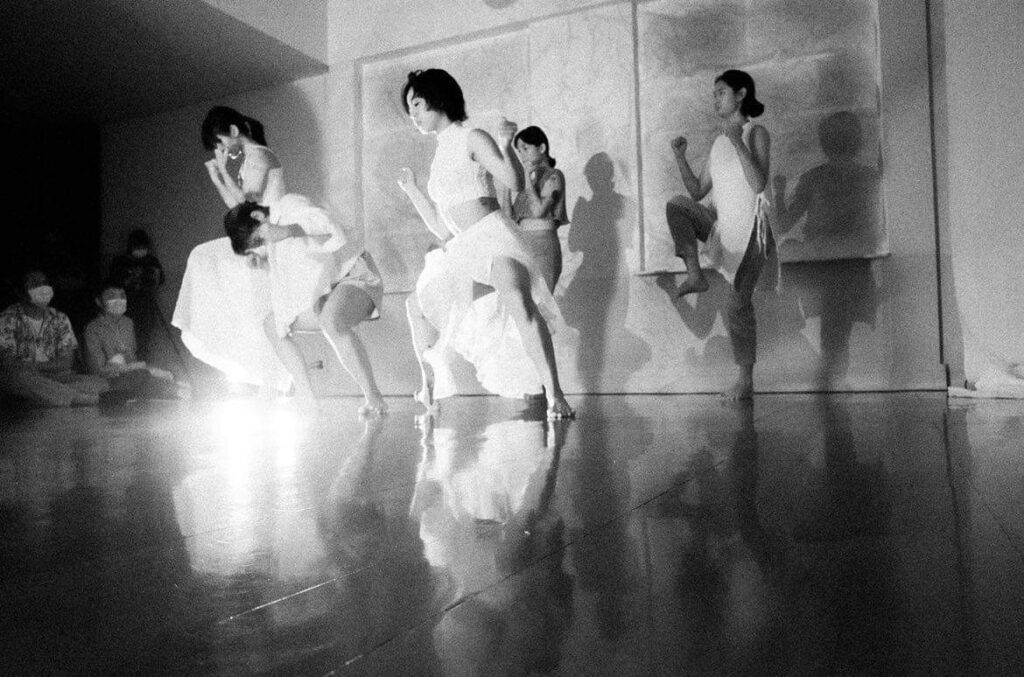
Puangsoi Aksornsawang / Vessel (2022) / by Sasapin Siriwanij
Being an artist or producer in Thailand, even though we get to make works that are deeply meaningful and rewarding for ourselves and our audience, can mean that we are in an endless cycle of exhaustion. It does get existential when you want to create without financial support, without a proper space, and potentially even without people to come see it. I once performed in a show where a total of one person turned up in the audience one afternoon–the work was not the problem. Meanwhile, this young artist, who has actively toured her work with her collaborator in quite a few countries in Asia and beyond, still finds that making work back home has a particular weight on her self-esteem:
“Once you factor in venue costs, the labour and time everyone puts in, and the disappointing ticket numbers, you really need some kind of funds to keep the project afloat. For us, without it, we’ve never actually hit our income targets after expenses. And when you measure that against the time and energy spent and the costs we’re responsible for, it always brings you back to the same uncomfortable question: what is any of this actually worth?”
Alright, perhaps you’re getting enough accounts of financial misery. Let’s turn to this sassy yet super practical tip for managing your budget and team for a theater project from another emerging artist:
“Have enough money that you’re not too dependent on ticket sales. If you’re short, cut your own pay first. Still short? Cut everyone else’s. And if it’s still not adding up — tell the whole team this is a passion project.”
This piece of advice invited a little giggle for me, less because of how it sounds and much more because it cannot be any truer. Based on my own experience, this has been true from when I started out as a young artist working with a small team in my early productions, to these days when I’m running an international platform and festival with a dedicated team and multiple projects. The same rule still applies: your fee, or your team’s, is the first place you look to cut. It is indeed a strategy to minimize impact in order to keep it all going. If you’ve been reading thus far, you will understand by now that no theater practitioners in the independent contemporary scene are ever really properly remunerated by a professional standard. Even people carrying the title of artistic director, myself among a few others, have never enjoyed the delight of having a salary. In fact, we are always half-apologetic when we invite someone to work on a theater project with us. And when the rare case happens that we have enough funds to properly pay everyone on the team, we get a little overexcited like it’s a birthday party.
But well, ‘passion’ does count for a lot, and this mysterious belief in the arts, and the mysterious joy we get from it despite everything else, has still managed to bring people together and bring ‘theater’ into a continued existence in Thailand. So far, so good– if this can be called ‘good’.
Just that when you speak to the next Thai theater practitioner, spare a little space between letting your mind run in a business-as-usual mentality, and seeing in the other person someone who has always been, and still is, doing it all pretty much from scratch.
Sasapin Siriwanij
March 2026
Special thanks to Siree Riewpaiboon, Varissara Borkird, Siraphop Attohi, Chatchai Sukanan, Naruebet Jaksusuwan, Khettawan Chantanakool, Pachaya Akkapram, Jarunun Phantachat, Parnrut Kritchanchai, Nuttapol Kummata and Nattaporn Thanhahuad for accepting my invitation to share essential tips for making theater in Thailand, and for generously sharing their thoughts and experiences.
KRIJG JE GRAAG ONS PAPIEREN MAGAZINE IN JOUW BRIEVENBUS? NEEM DAN EEN ABONNEMENT.
REGELMATIG ONZE NIEUWSTE ARTIKELS IN JOUW INBOX?
SCHRIJF JE IN OP ONZE NIEUWSBRIEF.
JE LEEST ONZE ARTIKELS GRATIS OMDAT WE GELOVEN IN VRIJE, KWALITATIEVE, INCLUSIEVE KUNSTKRITIEK. ALS WE DAT WILLEN BLIJVEN BIEDEN IN DE TOEKOMST, HEBBEN WE OOK JOUW STEUN NODIG! Steun Etcetera.
column
02.04.2026
Leestijd 10 — 13 minuten
15.12.2025
—
14.04.2026
Sasapin Siriwanij is een podiumkunstenaar, curator en producent die in Bangkok woont en werkt. Ze is sinds 2009 lid van het B-Floor Theatre dat zich toespitst op fysiek theater en improvisatievoorstellingen, steeds met een sociaal-politieke inslag. Ze was in 2014 medeoprichtster van For What Theatre en heeft samengewerkt met verschillende Thaise theaters en internationale partners. Siriwanij is tevens artistiek directeur van het Bangkok International Performing Arts Meeting (BIPAM) en is onafhankelijke producent voor internationale projecten.
Dit artikel maakt deel uit van: Outside Eyes
Sébastien Hendrickx
Mia Vaerman
column 02.04.2026
Sébastien Hendrickx
Mia Vaerman