Jonge makers, verenig u!
Waarom er niet te veel podiumkunstenaars afstuderen
Noëmi Degrauwe





After the ceasefire in April, Nasim Ahmadpour observed a strange phenomenon emerging in the streets of Tehran: state-sponsored carnivals with light shows and scantily dressed women dancing—activities for which, until recently, you would end up in prison. The regime no longer suppresses the language of resistance; it has learned to read that language and appropriate it.
Tehran, Sunday — 21 June 2026
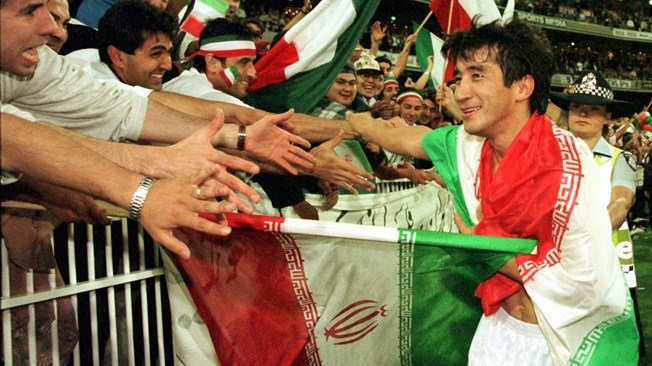
On 29 November 1997, during the historic World Cup qualifying match between Iran and Australia, Khodadad Azizi scored one of the most memorable goals in Iranian football history, sending Iran to the 1998 FIFA World Cup after a twenty-year absence. That night, millions poured into the streets. Many scholars regard those celebrations as one of the first large-scale, spontaneous occupations of public space after the 1979 Revolution—a collective presence that unsettled the Islamic Republic and challenged its established order. For this reason, the celebrations are remembered in Iranian social thought not merely as a sporting victory but as a turning point in the return of the street as a space of collective political life, a cultural prelude to later forms of public mobilization.
Twenty-eight years later, on the evening of Sunday, 21 June 2026, Iran faced Belgium in Los Angeles. The Iranian national team had managed, after considerable diplomatic difficulty and public humiliation, to enter the United States on strictly limited visas that required them to leave immediately after the match. The scene itself was already one of humiliation.
At the very same time, Iranian negotiators were in Switzerland attempting to secure a ceasefire agreement and bring an end to the war. It was yet another round of negotiations in a conflict whose protagonists had repeatedly tried—and repeatedly failed—to return to dialogue. Four months had passed since my previous essay, published on 26 February. During those months, while negotiations continued, a devastating war erupted involving Iran, Israel, and the United States, drawing much of the region into its orbit. The Strait of Hormuz was closed. According to NetBlocks, Iran experienced the longest nationwide internet shutdown in its history. Entire professions came to a halt. Theatre was among them.
“Twenty-eight years later, on the evening of Sunday, 21 June 2026, Iran faced Belgium in Los Angeles. I watched the match with a few friends. The national team no longer enjoyed broad public legitimacy. People were exhausted. At best, they felt indifferent; at worst, some openly hoped the team would lose because it had become inseparable, in their eyes, from the political establishment.”
I watched the match with a few friends. The national team no longer enjoyed broad public legitimacy. People were exhausted. At best, they felt indifferent; at worst, some openly hoped the team would lose because it had become inseparable, in their eyes, from the political establishment. Only a minority insisted on separating sport from politics. Then Iran appeared to score. Before the referee, after a VAR review, disallowed the goal for offside, almost everyone instinctively jumped to their feet. For a few suspended seconds, they celebrated.
Then the goal disappeared.
Perhaps those suspended seconds offer the most accurate image of Iran today: a society caught between instinct and judgment, unable to decide whether its emotions still belong to itself or have already been shaped by the political reality surrounding it.
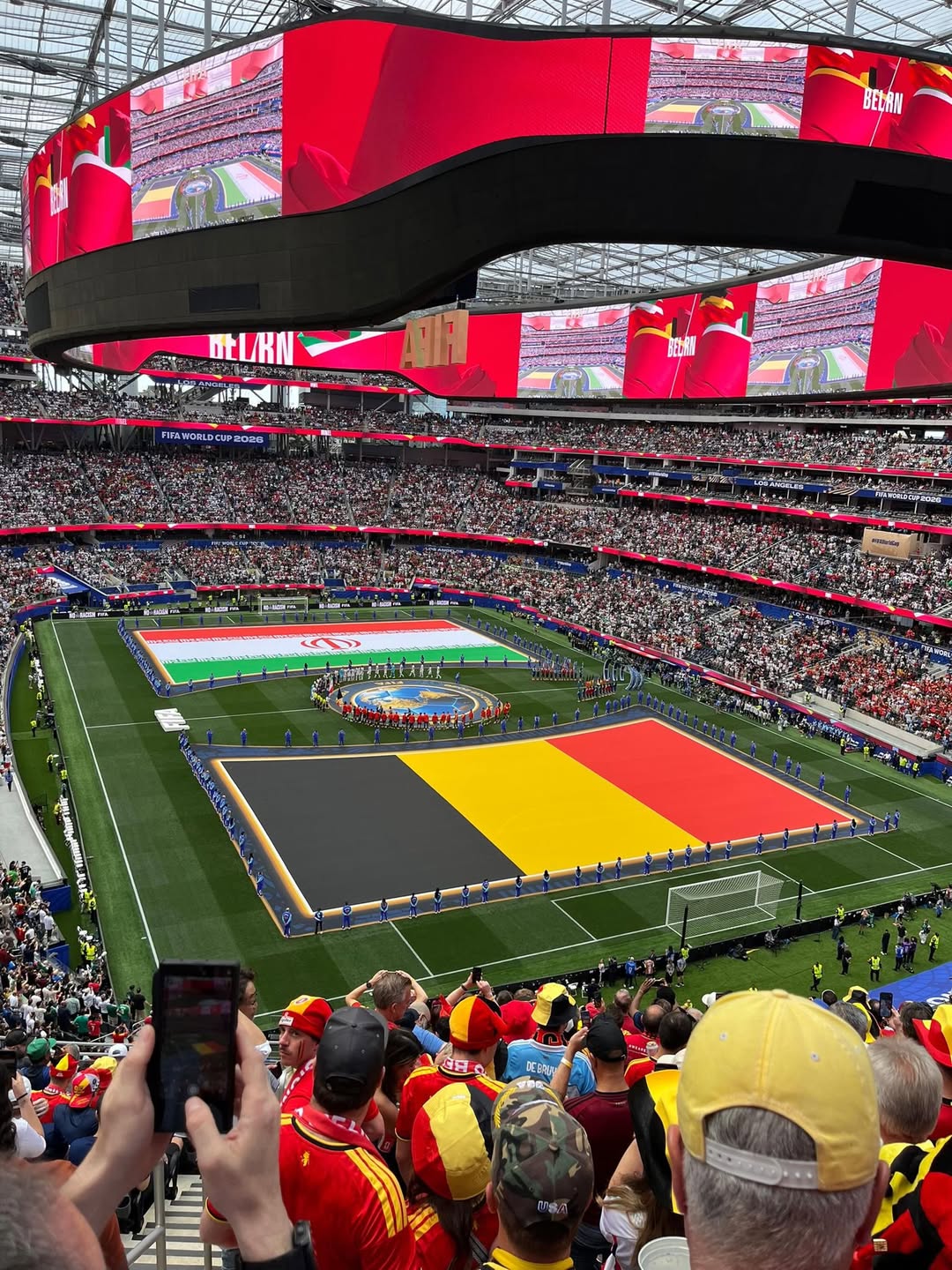
Wikimedia Commons by Teherangeles
Contemporary Iranian theatre emerged under censorship. This is not merely a historical fact; it is a formal condition. Metaphor instead of declaration, the body instead of speech, silence instead of language—these were never entirely aesthetic choices. They were techniques of survival. A theatrical language was born within constraint, carrying constraint within its own form. As a result, Iranian protest theatre never developed a fully autonomous language. It borrowed its meanings from the state and its forms from censorship.
As long as the boundary between the permitted and the forbidden remained clear, this mechanism functioned. Simply showing what had been prohibited was itself a political act. But today that boundary is collapsing—not because artists have crossed it, but because power itself has begun to redraw it.
This is where one of the deepest crises of contemporary Iranian theatre begins. An artist who has spent four decades learning to stand just beyond the limits of prohibition suddenly confronts a wall that is also moving from the other side.
“Following the ceasefire, in late April, something emerged on the streets of Iran for which we still have no adequate name: state-sponsored carnivals. Music. Lights. Dancing. Crowds. Women dressed in ways that would have been unimaginable only a few years earlier. Forms that had once belonged to the vocabulary of resistance were now being performed by the state itself.”
Following the ceasefire, in late April, something emerged on the streets of Iran for which we still have no adequate name: state-sponsored carnivals. Music. Lights. Dancing. Crowds. Women dressed in ways that would have been unimaginable only a few years earlier. Forms that had once belonged to the vocabulary of resistance were now being performed by the state itself. Women without compulsory hijab appeared on state-controlled media. Gestures that only recently could have resulted in arrest or imprisonment were now incorporated into official spectacles. Power no longer merely suppresses the language of resistance. It has learned to read it, appropriate it, and reproduce its forms for its own consolidation.
The central conflict is therefore no longer the scarcity of protest but the disappearance of the distinction between the performance of power and the performance of resistance. Both increasingly operate through the same semiotic vocabulary. This inversion may be a strategy of political survival. Yet for theatre, the consequence remains the same: what once signified resistance no longer guarantees distinction.
In the classical political imagination, power establishes itself through presence: through images, speeches, bodies, rituals, and the continual repetition of visible authority. Absence traditionally belonged to the opposite side of this equation: the disappeared artist, the imprisoned dissident, the silenced voice, the body removed from the stage. Protest theatre drew much of its force precisely from these absences—from what could not be seen but whose presence was nonetheless felt.
Today, this opposition no longer holds.
What followed the disappearance of Ali Khamenei after the war was not simply the removal of a political figure from public view. Rather, absence itself became a new technology of power. Here, absence no longer signifies the lack of presence. It becomes a particular mode of presence. Authority no longer depends upon visibility. Instead, it reproduces itself through suspension, ambiguity, and invisibility. Power often exerts its greatest force precisely when it withdraws from sight.
From this perspective, the succession of Mojtaba Khamenei as an “absent leader” is not merely a description of an individual. It names a political technology: one that organizes authority not through constant display but through distance, uncertainty, and anticipation. The less visible the image becomes, the wider the field of interpretation expands—and this ambiguity itself becomes one of the mechanisms through which authority operates.
“In the classical political imagination, power establishes itself through presence: through images, speeches, bodies, rituals, and the continual repetition of visible authority. Absence traditionally belonged to the opposite side of this equation: the disappeared artist, the imprisoned dissident, the silenced voice, the body removed from the stage. Today, this opposition no longer holds.”
Under such conditions, one of the foundational binaries of political thought begins to dissolve. Presence can no longer be identified with power, nor absence with resistance. Both now employ both strategies. The very absence that once exposed repression can itself become an instrument of authority.
Noli Me Tangere, my latest performance with Ali Asghar Dashtithat premiered at Kunstenfestivaldesarts last May, was built around the absence of Hossein Mohammadi, an actor who had been arrested and imprisoned. The central premise of the performance was to make his absence present on stage. But in the months following the war, Hossein was granted temporary leave from prison. One day I met him in a café in Tehran. I was not wearing my glasses and failed to recognize him at first. Only when he approached did I realize who he was.
The absent had returned.
Yet he had returned into a larger prison.
He was no longer incarcerated, but he could not leave the country. The very condition that had constituted his theatrical absence had changed. He was neither imprisoned nor free.
It is precisely here that protest theatre encounters a question it has never before been compelled to ask: How can the absence of resistance still be recognized as distinct? This is not merely an aesthetic problem. It is an epistemological one.
What has entered into crisis is not simply performance itself but the entire regime of signification. No sign any longer carries resistance by virtue of itself. The crisis of today is therefore less a crisis of producing performances than a crisis of reading them—a crisis of determining what any given act actually signifies. Much of the semiotic apparatus of protest art must therefore be reconsidered in order to answer a fundamental question: How is my absence different from the absence performed by power?
Sometimes the crisis of distinction begins not with the transformation of power but with the body itself.
The protesting body is never simply a natural body. It becomes political through repeated acts: standing, walking, shouting, revealing itself, concealing itself. Under particular historical conditions, each of these gestures can become an act of resistance. But gestures of vulnerability, humility, mourning, solidarity, and even certain forms of civil disobedience no longer necessarily emerge from below. They too can be appropriated, reproduced, and exhausted by mechanisms of power. The conflict therefore concerns not only who performs a gesture, but whether any gesture can still resist being turned against itself.
The crisis does not come solely from outside. Sometimes the very possibility of resistance erodes from within. Actress Taraneh Alidoosti developed DRESS-syndrome while imprisoned, losing the hair that had itself become a political sign when she publicly unveiled in support of the Woman, Life, Freedom movement. Within that movement, hair functioned as a political language. The body became the stage upon which resistance was performed.
Here, however, it was neither censorship nor the state that removed the hair. Illness did. The instrument of resistance disappeared from within the body itself. Neither defeat nor victory occurred. Instead, what collapsed was the possibility of stable interpretation. This image reveals something more fundamental than any conventional political analysis. Disarmament does not always arrive from outside. Sometimes it emerges from within the very conditions that make resistance possible—from the gradual erosion of its own instruments.
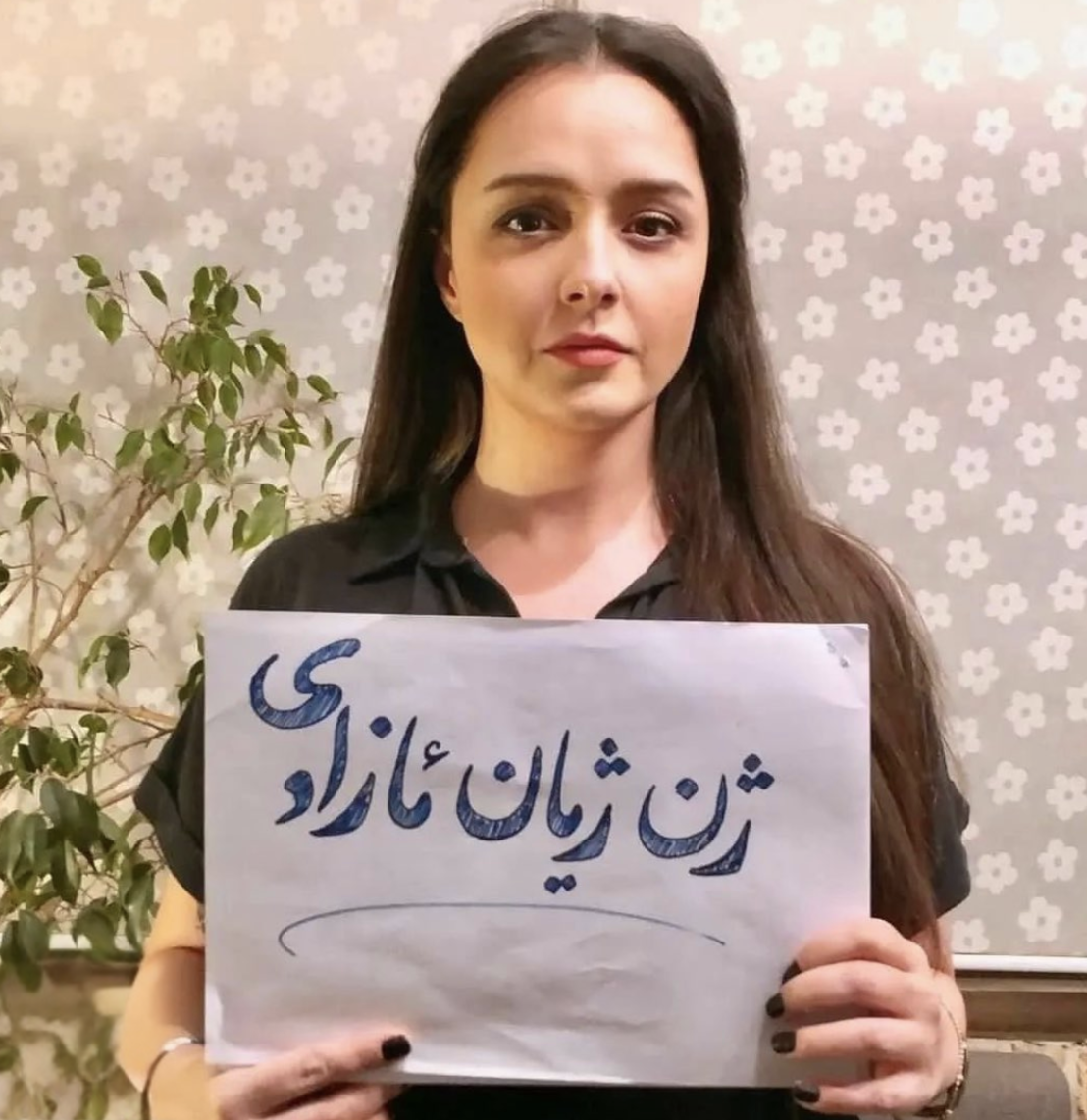
Instagram @taraneh_alidoosti
“Actress Taraneh Alidoosti developed DRESS-syndrome while imprisoned, losing the hair that had itself become a political sign when she publicly unveiled in support of the Woman, Life, Freedom movement. Within that movement, hair functioned as a political language. The body became the stage upon which resistance was performed.”
Politics here is no longer confined to power or ideology. It reaches the level of life itself. The body is no longer merely the bearer of resistance; it also exposes the limits of resistance.
The crisis of distinction therefore unsettles not only the boundary between power and resistance but also those separating ability from vulnerability, instrument from obstacle, and even body from politics.
Perhaps the crisis confronting Iranian theatre today is neither a lack of courage nor a lack of language. The crisis is that language itself no longer guarantees distinction.
On that Sunday night, when Iran scored and we instinctively rose to our feet, for a brief moment we could no longer tell whether we were happy or not. When power performs absence, reproduces the body, and appropriates the language of protest, the question is no longer how to invent a language of resistance. The question is whether distinction itself can still be performed.
Nasim Ahmadpour
June 2026
KRIJG JE GRAAG ONS PAPIEREN MAGAZINE IN JOUW BRIEVENBUS? NEEM DAN EEN ABONNEMENT.
REGELMATIG ONZE NIEUWSTE ARTIKELS IN JOUW INBOX?
SCHRIJF JE IN OP ONZE NIEUWSBRIEF.
JE LEEST ONZE ARTIKELS GRATIS OMDAT WE GELOVEN IN VRIJE, KWALITATIEVE, INCLUSIEVE KUNSTKRITIEK. ALS WE DAT WILLEN BLIJVEN BIEDEN IN DE TOEKOMST, HEBBEN WE OOK JOUW STEUN NODIG! Steun Etcetera.
column
08.07.2026
Leestijd 9 — 12 minuten
15.04.2026
—
07.09.2026

Nasim Ahmadpour is theaterregisseuse, dramaturge en scenarioschrijfster. Samen met Ali Asghar Dashti richtte ze in 2003 in Teheran de theatergroep Don Quixote op, waarvoor ze acht stukken schreef en/of regisseerde. In 2018 won ze de prijs voor beste toneelschrijver op Teheran TIFF. Daarnaast schrijft ze ook scripts voor (kort)films.
Dit artikel maakt deel uit van: Outside Eyes
Noëmi Degrauwe
Margot De Grave Loyson
column 08.07.2026
Noëmi Degrauwe
Margot De Grave Loyson