
Average Happiness – Dinsdag.org / Bas Vanderschoot
G = (GM – OGM)/t
Pepijn Loobuyck





© caterina daniela mora jara
What do ‘folklore’, ‘popular’ and ‘academic’ mean within the different dance contexts of the global North and South? What mother tongues inhabit dance and performance? And what role can translation play? Embracing the complexity of the untranslatable, caterina daniela mora jara (and also Thalia) explore how Conflicted Embodiment can be a research tool for how a body navigates through migration, colonialism and dance.
Para Adi y sus viajes incendiados
Dancing with many tongues and between different styles, techniques and methods. Dancing ballet with Spanish, reguetón1 with French, tango with Italian, samba with Portuguese. Navigating the language and the way of dancing. Writing with an English tongue and feeling like a traitor. Being able to dance and being able to reflect. Being able to reflect on what was before, what is now, and what could be. What if we struggle with dancing before, dancing in the present and dancing in a possible future? In this article we will discuss how these struggles are embodied in different geographies from the dancer’s perspective.
“Why isn’t the dance studio as much fun as a nightclub? What happens to my gaze when I feel the gaze of other people on me while dancing reguetón in the dance studio and in the nightclub?”
We write ‘we’ instead of ‘I’, using the pronoun ‘we’ to problematise our position. Our ‘I’ is more than one and our ‘we’ is conflicted. We are a non-EU PhD student at a European institution. We have a student visa and employment at Stockholm University of the Arts, and we miss entering a university that does not have lockable doors as we have come to know them in Europe.
Our dance education began in Argentina. In this first part of our career, we mainly studied ballet, Graham technique and Cunningham technique at the IUPA (Instituto Universitario Patagónico de las Artes) while we also practiced tango and folklore2 in the social events called milongas3 and peñas4. What are Argentinian dances? Is ballet one of them? When and how can we speak of Argentine dances?
One of the origin myths of the Argentine national identity, especially in Buenos Aires, is that it considers itself the leading nation in Abya Yala, meaning the most European and the most Europeanising (Dussel, 2004). The concept of dance as an erudite theatrical art was developed in Argentina with the arrival of ballet and shortly afterwards by modern dance. The idea of ‘first in Europe and later in something else’ is the main argument corresponding to traditional historicism, from which historical time is derived as a measure of cultural and developmental distance. Eugenia Cadús (2020) and Rafael Guarato (2019), among others, are recent scholars from Abya Yala who have provided a disobedient epistemology to think along with this canonised way of perceiving dance. The artist and pedagogue Fabián Barba reflects on a marginal temporality linked to a marginal specialisation provoked as a consequence of the idea that peripheral positions emanate from centres of power (2017).
In the city of Buenos Aires, the capital and ‘cultural centre’ of the country, which is not the geographical centre of the country5, the upper classes determined the first cultural agenda of dance performed for an audience, the so-called concert dance, according to their wishes. The field was initially shaped by irregular visits from several dance ensembles. Ballet companies from Italy and France began performing from 1832. The ensemble Les Ballets Russes performed between 1909 and 1929 (Cadús, 2020), and even Isadora Duncan visited Buenos Aires in 1916 (Zuain, 2021).
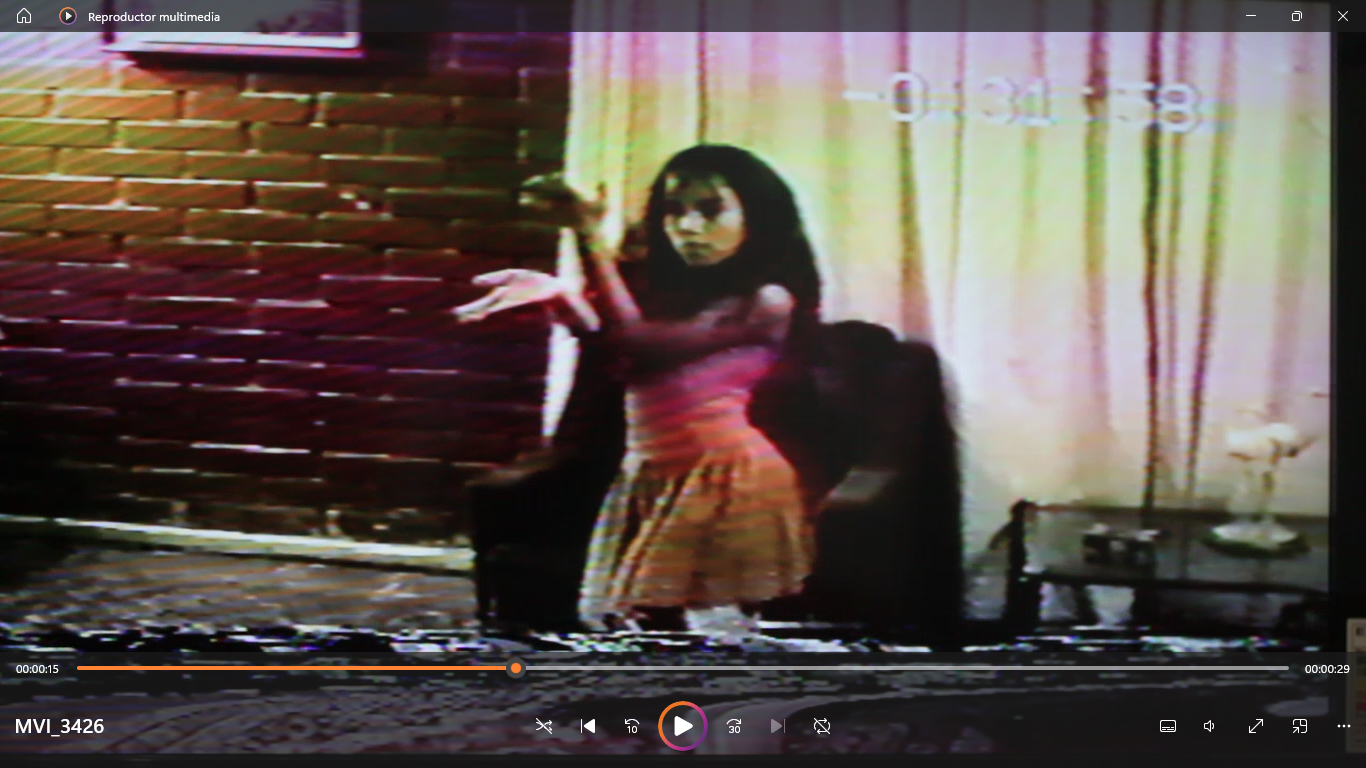
© caterina daniela mora jara
The first dance school was founded in 1919 with Natalio Vitulli as its teacher (Cadús, 2021). Its main objective was to train dancers for the first official ballet company, the Ballet Estable, founded in 1925. Alternatively, modern dance was consolidated from 1944, the year in which Miriam Winslow arrived to establish herself as a representative of modern dance and Ausdruckstanz after previous visits to the country.
The consolidation of dance education was supported by the implementation of government policy. In the course of the democratisation of the Perón government elected in 1946, a cultural plan emerged in which dance was no longer perceived as a cultural asset of the upper classes, but as something accessible to the general public. This cultural plan thus became the impetus for Argentine concert folkloric dance as a means of consolidating national cultural identity. It is not coincidental that Angelita Vélez founded the Compañía Folclórica Argentina in the same year.
During the Perón government, the consolidation of concert dance, which mainly refers to ballet, modern dance and folklore, also created specific spaces and audiences. The democratisation of access has led people to study dance in public institutions, which is a characteristic of education in Argentina. At this moment, there is a transition towards the legitimisation of ballet and modern dance as cultured, erudite art, separated from the popular classes. In this way, tango is separated from them.
Deeply embedded in this division of dance styles, our education also corresponds to these two characteristics. On the one hand, we (many Argentines, including the authors of this article) are a children of the public education system and have been able to study dance in public institutions alongside regular primary and higher education, which is also free. On the other hand, these spaces were designed as separate spaces with separate frames, as our dance education programme included dance styles as separate subjects.
In 2006, when she (caterina) was 18 years old, she graduated from the Profesorado Superior Nacional de Danzas Clásicas y Contemporáneas at IUPA, Instituto Universitario Patagónico de las Artes, in Fiske Menuco. The specific programme she studied no longer exists, but has split into four different tracks6. A rough translation of this diploma could be a teaching qualification in classical and contemporary dance, which means that she specialised in classical and contemporary dances, namely ballet (from the Vaganova school, as our teachers were Russian), Graham technique and Cunningham technique. It is important to say that she was not a specialist in the field of ‘contemporary dance’.
“Everyone comes into conflict when trying to cross spaces, institutions or unspoken boundaries. In our current situation, we live in a conflicted position. Recently we have experienced dancing in a nightclub as a stripper and my ‘I’ became a ‘we’.”
If you want to dance something, you have to dance ballet.’ That’s what her ballet teacher said to caterina when I was 9 years old, in her second year of this education. This remark provoked shame in her because at that time she was in love with other forms. She was very dramatic and a fan of telenovelas, so she stopped dancing flamenco and folklore ‘for good’. Additionally, she reduced her dose of tango and Argentine folklore and kept it hidden in her CV.
Before she completed this education, in 2004, the reguetón hit ‘Gasolina’ was known on every radio station, at every family gathering, in every nightclub, at every party. That was the time when she was introduced to nightclubs, a culture she embraced every Friday and Saturday night.She danced the phenomenon of reguetón surrounded by her friends, making gyrating movements with her hips, moving her legs between other people’s legs and singing the song with a beer in her hand. She was aware that my dance was extremely sexualised, and she had fun doing it. She was also aware that unwelcome hands might be placed around her hips during these dances. She protected herself around her friends because I knew that the nightclub was a place for that: rubbing hips, moaning, partying.
Reguetón became so popular that she played famous songs during her warm-up exercises in the dance studio. It became a companion to her dancing, teasing the spaces she comes from, and she asked: why isn’t the dance studio as much fun as a nightclub? What happens to her experience when she feels the gaze of other people on me while dancing reguetón in the dance studio and in the nightclub?
In 2014, when she was 26 years old, she graduated from the Licenciatura en Composición Coreográfica7, mención Danza-Teatro at the Department of Movement located at UNA, Universidad Nacional de las Artes, in Buenos Aires. An approximate translation of this diploma could be a Licenciatura in Choreographic Composition with a major in dance-theatre. In this degree programme there are a total of forty-five subjects, among them: four semesters of ballet, seven semesters of modern dance, seven semesters of choreographic composition, one semester of tango, one semester of clown, one semester of contact and no optional subject. The education is largely segmented, which means that you can follow your own path at your own pace and interrupt, pause or accelerate your studies at any time. In one class in Buenos Aires, sometimes there are thirty students in a room with no air conditioning and no toilet paper in the restrooms. This programme is still running, and it is rare to meet your fellow students in multiple subjects.
It is important to mention that it was a nightmare for caterina to translate these diplomas into English, as there are no equivalent words in the vocabulary proposed by the Bologna Process that fit these degrees in Europe: Bachelor, Master and PhD. Secondly, during her Licenciatura she asked so often: why is ballet taught three times a week in this curriculum and why does it have four consecutive levels? Why are there only two lessons per week in this curriculum of tango in only one semester? Why does contact have two lessons per week in this curric- ulum and why is it given its English name?
My early institutional dance education has motivated a process of ‘becoming’ different dances. The dances I studied then evoked different perceptions in my body.
First, I learned (still as caterina) that I had to displace the other dances in order to embody the Dance. Using the same metaphor of ‘first in Europe and then in something else’, I realised in retrospect that I had internalised a similar mission: first a dance from Europe and then something else from somewhere else.

© caterina daniela mora jara
In time, when ballet became not a dance but the Dance, the only place where I could resist and discuss it was my own body. In this way, ballet became a tool to disarm ballet as a hegemony over my body. Today ballet exceeds me, and I exceed ballet. I spice the ballet with Dionysus and with a question about the body, and therefore it appears as a trace of pain and a place of thinking. As a tool, as a part of my past, as an honourable part of my CV present as if it was something sacred in my biography. Feeling ballet and thinking ballet made me recognise my wounds and my knowledge.
“How does our body traverse different techniques, methods and styles of dance, considering its historical site as a site exposed to the history and politics of dance and dance education?”
With ballet I reflect by twisting ballet as a survival strategy against the tyranny of the mirror regime. To push the norm of ballet until it no longer resists its code. To need ballet to honor the pain of the wound. To reiterate ballet in order to transform it. To think ballet critically, with its fairies, princesses and witches. To find the re-enchanting spell out of its stereotypical mode of production. To live ballet as something popular.
With ballet I ask: how did my curriculum determine my education and how does it determine current dance education today? How do I laugh with ballet? How do I exceed ballet in a classroom?
Through my institutional dance education, I have come into conflict with the fact that it is difficult to have as much fun as in a nightclub. And I discovered a paradox: it is easier to enjoy dancing in a nightclub, but the moment it is taken out of context, it becomes objectified. And while it is easier, at least for me, to enjoy dancing in a nightclub, I also know that embodied pleasure can become an object that can be seen. I speak of this paradox when I consider the dry, bright, quiet and spacious dance hall as a place where pleasure and exposure to a gaze are difficult to manage.
With the gaze from the nightclub and the dance studio I ask: how has my curriculum helped me deal with these problems of gaze? How can we laugh with it? How do I exceed this gaze in a classroom?
Over the years, as much as I studied dance, I became obsessed with the idea of being a nightclub dancer to whom the only purpose of embodying a dance was to have pleasure. Of course, I knew from the beginning that I should not ‘essentialise’ pleasure, nor working at night. But the fantasy of earning money in the nightlife context, knowing that it has been so difficult in the concert dance field, had been there since my early twenties. However, out of fear, ignorance of the context, a desire to be part of ‘contemporary dance’ or simply a fear of what it would ‘look like’, I never insisted too much on this idea, even though it was hidden in my wish list.
Through my institutional dance education, I understood that dances are extremely interesting in the way they impose different rules, patrons and ways of subjecting a body to specific forms and sometimes even sensations. Over the years, I also discovered that this experience is never pure: what if I embody ballet while embodying reguetón? When I dance ballet, I sometimes also dance a bit of forró. When I dance cumbia, I sometimes dance a bit of Cunningham. When I do Klein technique, I also dance salsa. In my performer body I can perceive a body of ballet, a body of reguetón, a body of tango, a body of contact improvisation, a body of folklore and so on. And these dances never have strict boundaries.
“When I dance ballet, I sometimes also dance a bit of forró. When I dance cumbia, I sometimes dance a bit of Cunningham. When I do Klein technique, I also dance salsa.”
‘We don’t have pure bodies, we don’t have pure experiences, there are no pure techniques and there are no pure expressions of anything, everything carries all of what it has touched’ (2023), as Chrysa Parkinson proposes. Based on this idea, my body has never embodied a pure style, technique or methodology, but mixes them in different ways. Conflicted Embodiment attempts to deepen this idea, and therefore assumes that I include these different dances as the starting point of my relational practice. The combination is circumstantial, sometimes arbitrary and sometimes directed by me. I have a body whose condition is to host many dances, and which recognises conflict as a constitutive part of it. I am interested in talking about what I call Conflicted Embodiment because it conceives and experiences conflict as a generative source and force.
What if a dance education could ask: how does our body traverse different techniques, methods and styles of dance, considering its historical site as a site exposed to the history and politics of dance and dance education? To what extent are these skills for practitioners of the performing arts? I have understood that the conflicts I am dealing with may not even be perceived because they present themselves as something mixed in one body. Does this happen at the level of representation? If my body has gone through a training process, ergo has become better at navigating different dance traditions, connecting them through us, ergo has developed a mastery of mixing dances: do the audience and even the dancer’s experience perceive the conflict? Does a performed articulation of embodied conflicted dance styles pacify the conflicts that they carry? Or in other words: does the fact that the conflicts are skillfully presented perhaps erase the conflict?
The process of attuning to Conflicted Embodiment never ends. Everyone comes into conflict when trying to cross spaces, institutions or unspoken boundaries. In our current situation, we live in a conflicted position. Recently we have experienced dancing in a night- club as a stripper and my ‘I’ became a ‘we’.
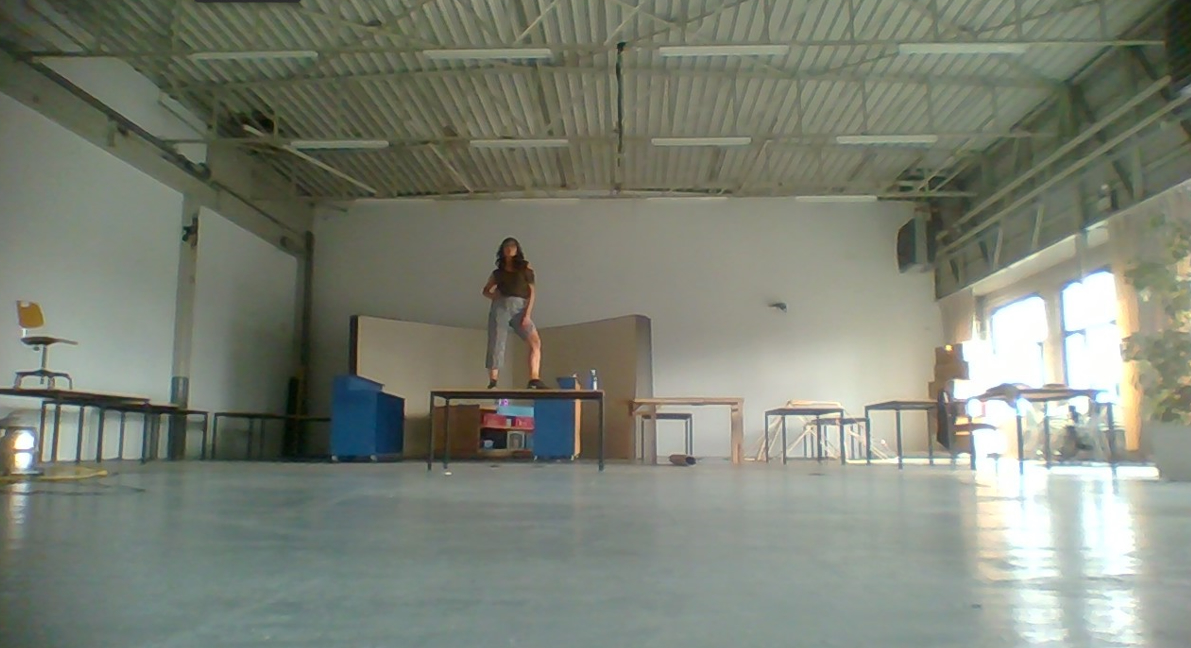
© caterina daniela mora jara
This ‘we’ is the result of a process motivated by operations we have gone through in order to be able to dance. We are a PhD candidate in artistic research in the subject area of dance. At the Research Center, caterina works as a student, which means that we take courses, complete credits and progress in our doctoral programme. A few years ago, we started writing our name without capital letters and adding our mother’s last name, as it corresponds to our Chilean citizenship.
As an Argentine-Chilean citizen and research student, we work from our office at Brinellvägen 58 in Stockholm. We use Instatext as a proofreader for our texts and admit how glad we are that we did not have to take an English exam to work in English. We have a list of the words we have learnt and over time we have gained more confidence in our English, but we can easily get nervous if we feel unsure.
We always travel with our Argentine passport, and depending on where we are travelling, we show our Belgian identity card next to our passport, as we are married to a European citizen in Belgium, or our Swedish identity card as a student in Sweden. As a concerned citizen with a migrant background who is in an employment relationship and is worried about the conditions of our employment, we work up to the maximum permitted working hours, this is 20 percent, which can therefore extend our employment contract.
As a non-EU citizen, we feel closer to the non-EU students, because our visa corresponds to the fact that we are first students and then employees for Sweden. This gives us a special position in the institution: we have advantages because we are a student, which in Sweden we think is the best role you can have in a Nordic country, and at the same time we receive a regular salary. In other words, we are a colleague of the people who usually have a hierarchical position in the institutions, the so-called employees, and we are also a colleague of the students we sometimes teach. We have always asked ourselves the same question: what are the boundaries of these roles? What do they entail?
What’s more, our current position was called into question after our experience as a stripper in a nightclub. Last year we explored the nightlife in my city out of a desire for dance practice and joy, so we went to the nightclub. So, we arrived at this club prepared for dancing and practicing something that so many times we practice in the dance studio as well in whatever social dancing situation: performing under a gaze. We finally were doing it and in order to do it we were required to not be caterina. We were required to choose another name, to re-invent this dance persona. We chose the name Thalia because she is a famous pop music singer in Abya Yala, and protagonist of the telenovelas of our child- hood. Later we learnt Thalia is also one of the Greek muses of the party.
Within this framework, we formulate our Conflicted Embodiment position in the institution. Our ‘we’ is the combination of a student who is employed, an employee who is a student, and a nightclub dancer. The inclusion of Thalia as part of my experience as a dancer/performer brought up many questions, among them: how does the motivation to ‘stay dancing’ raise questions about who has access to the institutionalised field of concert dance? What if stripping is a way of dancing that challenges all my previous experience in dancing? Have we done extractivist research to nourish our artistic practice through this experience since we did not mention to anybody in the club that we were doing research?
What is certain is that Thalia’s appearance increases the friction in our Conflicted Embodiment. After a month of experience as a stripper a question arose: how do we avoid instrumentalising this experience? We have been involved in folklore for most of our lives, but we are not active in this field because there is no Argentine folklore in the context where we currently live in Stockholm. How do we avoid romanticising our folklore dance experience? We have practiced ballet for most of our lives, but for more than a year we have not wanted to take classes. Can we claim an actual experience of ballet? When is a body entitled to speak about a dance experience?
Conflicted Embodiment follows us and at the same time there is no way to pinpoint it. If you find it somewhere, let us know. As a concept in motion, it welcomes de-stabilisation in the arc of the slow or the fast, depending on the relationality it refers to. It helps us to rethink unconscious shame and unspoken conflicts related to value systems and this is sometimes painful.
By asking the questions around a performer’s embodiment, we ask: how does something frame and mold a body, somebody and anybody? And what is the agency of what is perceived as conflicted? Conflicted Embodiment proposes conflict as a field, with blurred directions and means of struggle for coexistence, considering inherited conflicts in dance learning processes. We work in the friction of the canon, sometimes inside, sometimes outside, so that we question and reformulate it. We add to the canon by practicing dances that lie outside the canon so we can compose our own.
This article is the result of a valuable conversation with Vladimir Miller and Anne Juren. Muchas gracias to them. It meets the current needs of Conflicted Embodiment by mixing parts, urgencies and questions from the essay published last year entitled Conflicted Embodiment. Notes on Dancing Both Sides of the Atlantic. You are welcome to request a copy to our email address: [email protected]. We are in the process of translating into Spanish.
Barba, F. (2017). Quito-Brussels: A Dancer’s Cultural Geography. In M. Franko (Ed.), Handbook of Dance Re-enactment. Oxford University Press.
Cadús, E. (2020). Danza y peronismo: Disputas entre cultura de elite y culturas populares (1st ed.). Biblos.
Dussel, I. (2004). Inclusión y exclusión en la escuela moderna argentina: Una perspectiva postestructuralista. Cadernos de Pesquisa
34. https://doi.org/10.1590/S0100-1574 2004000200003
Guarato, R. (2019). Del abandono como práctica historiográfica
para una historiografía del abandono. Investigaciones en Danza y Movimiento 01(01), 3-21.
Parkinson, C. (2023) Audio recording about synthesis, personal communication, 27 August 2023. Unpublished.
Zuain, J. (2021). (Des)ordenando a Isadora Duncan. Segunda en papel.
KRIJG JE GRAAG ONS PAPIEREN MAGAZINE IN JOUW BRIEVENBUS? NEEM DAN EEN ABONNEMENT.
REGELMATIG ONZE NIEUWSTE ARTIKELS IN JOUW INBOX?
SCHRIJF JE IN OP ONZE NIEUWSBRIEF.
JE LEEST ONZE ARTIKELS GRATIS OMDAT WE GELOVEN IN VRIJE, KWALITATIEVE, INCLUSIEVE KUNSTKRITIEK. ALS WE DAT WILLEN BLIJVEN BIEDEN IN DE TOEKOMST, HEBBEN WE OOK JOUW STEUN NODIG! Steun Etcetera.
essay
25.02.2025
Leestijd 18 — 21 minuten
01.03.2025
—
14.09.2025

caterina daniela mora jara is a performing artist and researcher from Fiske Menuco (Wallmapu) and currently a PhD student at Stockholm University of the Arts. Her work aims to problematise modes of production and the colonial legacy in dance practices. She got married to have a residency permit on European territory. She has no Instagram account and has never been to an IKEA store.
Pepijn Loobuyck
Lena Meyskens
essay 25.02.2025
Pepijn Loobuyck
Lena Meyskens