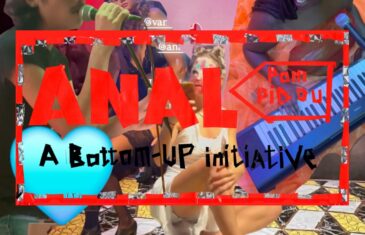
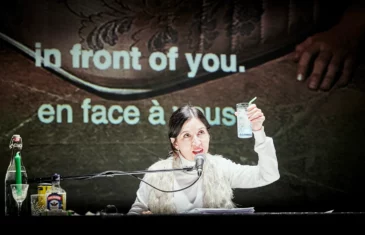
Bottoms up Anal Pompidou and satire as survival A cramped upstairs room above a Latin-American restaurant in the Sablon, sixty people crammed around tiny tables. For eight euros, three nights a week, Anal Pompidou turns this improvised stage into Brussels’ most chaotic cabaret, led by Simon Van Schuylenbergh’s delirious alter ego. Intimate, immediate and independent; it is perhaps the most vital art happening in this city wheezing under debt and bureaucracy. Brenda Guesnet essay 31.10.2025
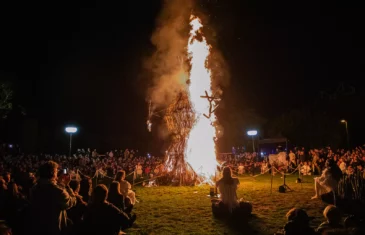
Firestarter – Barbara Raes and Alexandra Broeder A matchbox How do you write about a ritual that you have no personal connection with, in which the role of the spectator is limited to watching and not participating? Ugnė Noreikė reflects on these questions, after seeing Firestarter, a collective fire ritual that opened the new theatre season of NTGent. Ugnė Noreikė review 27.10.2025
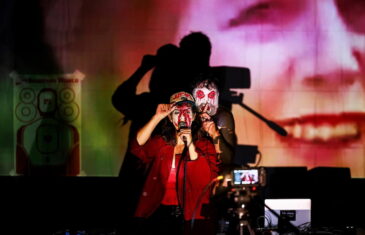
Artists’ Entrance: Carolina Bianchi In Artists’ Entrance, we ask artists about their life and work. Today: writer, director and performer Carolina Bianchi. With her São Paulo-based collective CARA DE CAVALO, Bianchi has most recently created The Bride and the Goodnight Cinderella (2023) and The Brotherhood (2025). Carolina Bianchi interview 20.10.2025
Kidnapped – Rodrigo Batista & Mariana Senne The world is a casino Kidnapped unfolds at a time when, as the opening tells us, ‘the earth was tired’. Although the subtitle promises ‘A Training Ground for the Brutality that is Coming’, any distinction between a looming future and the present moment quickly collapses. What emerges instead is a sense of inescapable urgency. Lynn Gommes review 13.10.2025
Artists’ Entrance: Luanda Casella In Artists’ Entrance, we ask artists about their life and work. Today: Luanda Casella. In recent years, Luanda created Short of Lying (2018), KillJoy Quiz (2020), Ferox Tempus (2022) and Elektra Unbound (2024). This autumn, her new performance Trouble Score will premiere in Ghent. Luanda Casella interview 22.09.2025
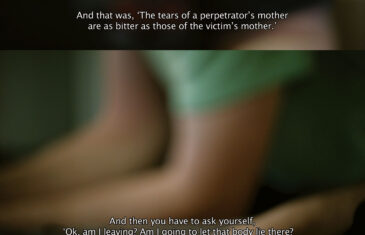
A Way Out Through Fiction The role of the imagination in three artworks with and by (former) prisoners Prisoners, we know them from TV series, true-crime podcasts and newspaper reports. But in the theatre performance De gevangenis (The prison) by Lara Staal and in the films The Making of Justice by Sarah Vanhee and Reas by Lola Arias, (former) prisoners themselves get to have their say. Can fiction offer a way out of their harsh reality? And can the imagination help us to break through entrenched paradigms about law and justice? Natalie Gielen seeks some answers. Natalie Gielen essay 18.09.2025
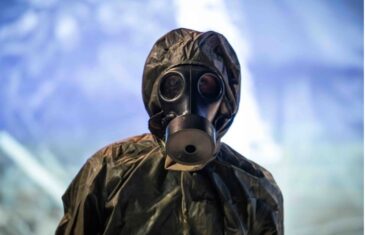
Re-embodying histories with artificial intelligence Misha Demoustier’s embodied interpretation of (AI-generated) documentary material in Arkadi Zaides’ The Cloud As AI technologies are increasingly integrated into the performing arts, the question of what we want to make art with becomes central in Arkadi Zaides’ documentary choreography. In The Cloud, visual and auditory material shapes an artificial reality that is critically re-embodied through the body. Misha Demoustier’s improvised movements respond to AI-generated data in ways grounded in his own subjectivity. How can the aftermath of the Chernobyl explosion and the work of the liquidators be (re)interpreted through both AI-generated material and the performer’s embodiment? Helen D’Haenens essay 18.09.2025