Lullabye – Anneleen Keppens
Wie zorgt er voor wie zorgt?
Tom Rummens




‘Mea Culpa’, Sidi Larbi Cherkaoui & OBV © Filip Van Roe
Building a permanent dance heritage is intimately linked to how we think about the role of tradition in dance. Although the term ‘tradition’ appears regularly in programme texts, reviews and interviews with choreographers, the precise meaning of the word often remains unclear. Timmy De Laet examines a view of tradition in which memory and heritage serve not only as repositories of the past, but also as engines for further reflection and renewal.
The renowned British critic Raymond Williams once described tradition as ‘a particularly difficult word’ which, in modern usage moreover, was increasingly equated with ‘traditionalism’ or ‘traditional’ (2015, pp. 252–53). According to Williams, this has led to the perception that tradition is at odds with innovation. The negative connotation that has been attributed to tradition, whether wilfully or not, has important political implications in the context of dance. Certainly within the realm of so-called ‘contemporary dance’ – a notion that is highly ambiguous in itself – the term ‘contemporary’ often functions as the antithesis of ‘traditional’.
In her article ‘When Is Contemporary Dance?’, US dance researcher SanSan Kwan sought to expose this false contradiction. ‘In non-Western dance’, she writes, ‘“contemporary” is a necessary qualifier when we do not mean to refer to traditional forms. Without it, “Asian dance”, “African dance” or “Native American dance” is immediately assumed to be traditional’ (2017, p. 45). A similar critique was made as early as 1970 by dance anthropologist Joann Kealiinohomoku in a widely quoted text in which she attacked the ingrained belief that non-Western, indigenous dances are part of an ‘unchanging tradition’ (2001, p. 35). She observed that every form of dance, including classical ballet, stems from cultural traditions that are constantly changing.
Tradition is thus anything but a neutral concept, seeing that it almost always carries with it a value judgement. The term usually serves as the negative counterpart of everything that stands for innovation, experimentation and, more generally, so-called ‘contemporaneity’. This tendency has also left a strong mark on the dance landscape in Flanders and Brussels. It is a legacy that stems from the period of and shortly after the Flemish Wave. Not coincidentally, Pieter T’Jonck writes in his overview of the dance landscape from 1980 to 2016 that, towards the late 1990s, the notion of dance went through a ‘considerable broadening’: ‘dance was seen less and less as a discipline with its own traditions and methods’ (2023). In the wake of American postmodern dance (with choreographers such as Yvonne Rainer, Trisha Brown and Lucinda Childs) and French conceptual dance (with choreographers such as Jérôme Bel, Boris Charmatz and Xavier Le Roy), choreographers in our corner of the world also began to increasingly question the standard parameters of their discipline. ‘Contemporary’ thus came to be equated with experimental, while tradition became the accursed enemy.
“The term ‘tradition’ usually serves as the negative counterpart of everything that stands for innovation, experimentation and, more generally, so-called ‘contemporaneity’. This tendency has also left a strong mark on the dance landscape in Flanders and Brussels.”
But is the position of the contemporary dance field towards tradition really as one-sided as may seem at first glance? Choreographer Yvonne Rainer’s remark speaks volumes in this respect: ‘I consider everything I have done as an avant-garde tradition, which is an oxymoron’ (Perron, 2021). Rainer is known as someone who has fundamentally pushed the boundaries of dance, among others by introducing everyday movements as a valid choreographic form. However, by linking the avant-garde to tradition, she acknowledges that even the most radical artistic innovations consolidate over time into established practices. This is the paradox that haunts every avant-garde: breaking with known traditions almost inevitably leads within the existing art systems to the integration and institutionalization of those innovations. However, the avant-garde ethos holds that existing traditions within the arts serve primarily to be broken with, something which often also promotes a mythologizing perspective. It makes it difficult to see how artists – and contemporary choreographers in particular – often actually pursue a certain continuity, not only within their own oeuvre, but also within the broader history of their art form.
Corps de Ballet, Noé Soulier © Laurent Philippe
A more nuanced view of the role of tradition in contemporary dance is thus key in determining how we can develop productive and topically relevant forms of dance heritage. After all, like tradition, the notion of heritage suffers from the stigma of normative practices that seek to perpetuate a single well-defined vision of (mostly local) histories. Political ideologies are never far away here: heritage is a convenient vehicle by which to render a cultural or national identity tangible. This makes it an attractive means for predominantly right-wing conservative politicians to promote the perceived uniqueness of a local culture. The way the policy of former Flemish Culture Minister Jan Jambon (N-VA) explicitly tied culture to Flemish identity is a clear symptom of this.
At the same time, we can ask ourselves how ‘Flemish’ the contemporary dance scene in Flanders and Brussels actually is. Shortly after the turn of the century, several studies by the former Flemish Theatre Institute (VTi) already pointed to the increasing internationalization of the dance landscape, a trend that has only intensified in recent years. The question, then, is mainly which dynamics can be identified in the relation of contemporary choreographers to such charged concepts as dance traditions and dance heritage. Such a question cannot be answered unequivocally, of course, but a potentially useful angle could be to place the notion of ‘tradition’ within a broader history of ideas that sheds light on what forms tradition can take. After all, various thinkers have already addressed the role of tradition in artistic and cultural practices. In this sense, it is useful to delve briefly into that history and then consider how the notion of tradition is being addressed or not in contemporary dance. This will enable us to better understand how dance moves between permanence and innovation and how tradition helps to create the conditions for a relevant dance heritage for the future.
“The question, then, is mainly which dynamics can be identified in the relation of contemporary choreographers to such charged concepts as dance traditions and dance heritage.”
In his 1981 study Tradition, sociologist Edward Shils emphasized that transmission or handing down is an essential characteristic of tradition. Cultural customs, artistic forms and community practices become tradition only when they are handed down over several generations. It is only in recent years that this question of transmission has become more central to both the practice and theory of dance. The handing down of specific choreographies, embodied knowledge and pedagogical techniques is crucial to keep a body of work or repertoire alive and is increasingly supported by new technologies, such as annotation software and motion capture. Consider, for example, the dance capsules developed by the Cunningham Dance Foundation to keep eighty-six key works from Merce Cunningham’s oeuvre available for re-staging after the choreographer passed away in 2009. The Pina Bausch Foundation, too, has invested heavily in digitizing and making accessible the choreographer’s archives via a website that is easy to navigate. Closer to home, within her company Rosas, Anne Teresa De Keersmaeker has for some time already been setting up a repertoire project that allows new generations of spectators to rediscover such iconic pieces as Fase (1982) and Rosas danst Rosas (1983). But De Keersmaeker is also actively working to preserve and pass on her choreographic heritage with A Choreographer’s Score. This series consists of books and videos in which, working alongside Bojana Cvejić, she explains in detail the creation process and underlying ideas of various choreographies via dance notations, drawings, texts, photos and other documents.
While the transmission of choreographic oeuvres is gaining in importance, the relation to tradition in dance remains generally underexposed. This is not only due to the negative connotations attached to the term, but also to the historically rooted tension between tradition and individual expression. We are still indebted to the nineteenth-century Romantic ideal that saw art as the unique and personal expression of an individual artist. This view translates, for instance, into the tendency to associate performances with the name of a choreographer, whereas, certainly in contemporary dance, the movement material is often created collectively and collaboratively. Such a narrow conception of authorship also hinders a proper understanding of tradition. Moreover, this is encouraged by the high pace of production in the contemporary performing arts landscape. The required pace for the creation of new work leaves hardly any room for a clear positioning with respect to existing traditions, and even less for the permanent consolidation of choreographic practices that can form new traditions.
‘Mea Culpa’, Sidi Larbi Cherkaoui & OBV © Filip Van Roe
Nevertheless, more systematic attention to tradition in dance could lead to greater historical awareness. Poet and playwright T.S. Eliot came to this insight in the early twentieth century already. In his 1919 essay ‘Tradition and the Individual Talent’, he argued that tradition should not be limited to slavish imitation or mechanical transmission. When tradition is nurtured by a genuine historical consciousness that recognizes how the past lives on in the present, Eliot claimed, it makes an artist ‘more acutely conscious of his place in time, of his own contemporaneity’ (Eliot, 1982, p. 37). From this point of view, tradition is not static, but open to change. It acts as a prism that connects present and past – or, precisely, sets them against each other. This forms the basis for what I would call a ‘dialectic of tradition’: rather than a one-way street where traditions are moulded on the basis of contemporary norms or, conversely, are adopted unquestioningly from the past, a more productive form of tradition would be a two-way street that allows present and past to cross – or crash into – each other.
“When we broaden our view to non-Western dance practices, we encounter a different perspective on tradition.”
This dialectical approach goes back to another thinker who repeatedly wrote about tradition. In a preparatory note to his famous ‘Theses on the Philosophy of History’, Walter Benjamin wrote the following typical aphorism:
Tradition as the discontinuity of what has been in contradiction to history as the continuity of events … The history of the oppressed is a discontinuity. The task of history is to get a grip on the tradition of the oppressed. (Benjamin, 1991, p. 1236)
Benjamin’s equation of tradition with discontinuity appears counterintuitive. As mentioned above, we usually associate tradition with the transmission of cultural and artistic heritage in order to ensure its continuity. For Benjamin, however, there is a powerful political potential in the discontinuity he attributes to tradition: after all, it is not just about recognizing traditions as dynamic and changeable processes, but also about their ability to be subversive rather than merely normative. Thus, in Thesis VI of his ‘Theses on the Philosophy of History’, Benjamin writes: ‘In every era the attempt must be made anew to wrest tradition away from a conformism that is about to overpower it.’ Indeed, for Benjamin there is a ‘danger’ that ‘affects both the content of the tradition and its receivers …: that of becoming a tool of the ruling classes’ (1999, p. 247). This position also explains why, in his preparatory note, Benjamin redefines ‘the task of history’ as the attempt to ‘get a grip on the tradition of the oppressed’. Instead of a classical historiography that seeks to capture ‘the continuity of events’ in an often chronological order, he argues for an alternative form of historiography that makes room for discontinuities and marginalized voices.
For those whose traditions were oppressed, claiming – or indeed, celebrating – their traditions and heritage is an essential strategy, one that helps not only to gain a legitimate position within dominant power structures, but also to counter what Argentine feminist philosopher María Lugones calls ‘the colonization of memory’ (2010, p. 745). These power structures are not limited to social and political realities, but are also contained in the categorical dividing lines between so-called ‘contemporary’ and ‘traditional’ dance, or ‘Western’ and ‘non-Western’ dance.
Such labels are often employed carelessly, but they expose deep-rooted power relations. In the current dance landscape, more and more choreographers are emerging – such as Moya Michael, Fernando Anuanga’a and Germaine Acogny – who, drawing on their personal cultural background, implement non-Western traditions in their work. At the same time, the question arises to what extent the current production system expects – or requires – that choreographers from a diverse background make identity politics the focus of their work.
“Several of Sidi Larbi Cherkaoui’s performances make clear how a focus on memory, heritage and the canon can help to redefine the role of tradition in dance.”
At the same time, it is remarkable that the principle of discontinuity, which Benjamin attributes to the traditions of the oppressed, appears less visible in the work of choreographers who are often (or too quickly?) categorized in this group. More so still, discontinuity appears to be a far more persistent leitmotif in the discourse surrounding supposedly experimental Western dance. For instance, dance researcher Yvonne Hardt has rightly observed that the avant-garde in dance is often praised for its urge for innovation and its fleetingness, while other dance practices – like the Hungarian folk dances she refers to – are often dismissed as ‘a culture frozen in time’ (2011, p. 29). The way continuity and discontinuity with existing traditions are deployed to interpret – or rather, position on a value scale – diverse practices shows that these notions are anything but unambiguous. In principle, every form of dance – whether we call it ‘contemporary’ or ‘traditional’ – rests on a dialectical or reciprocal interaction between perpetuating and breaking with choreographic traditions. A number of practical examples will clarify this further.
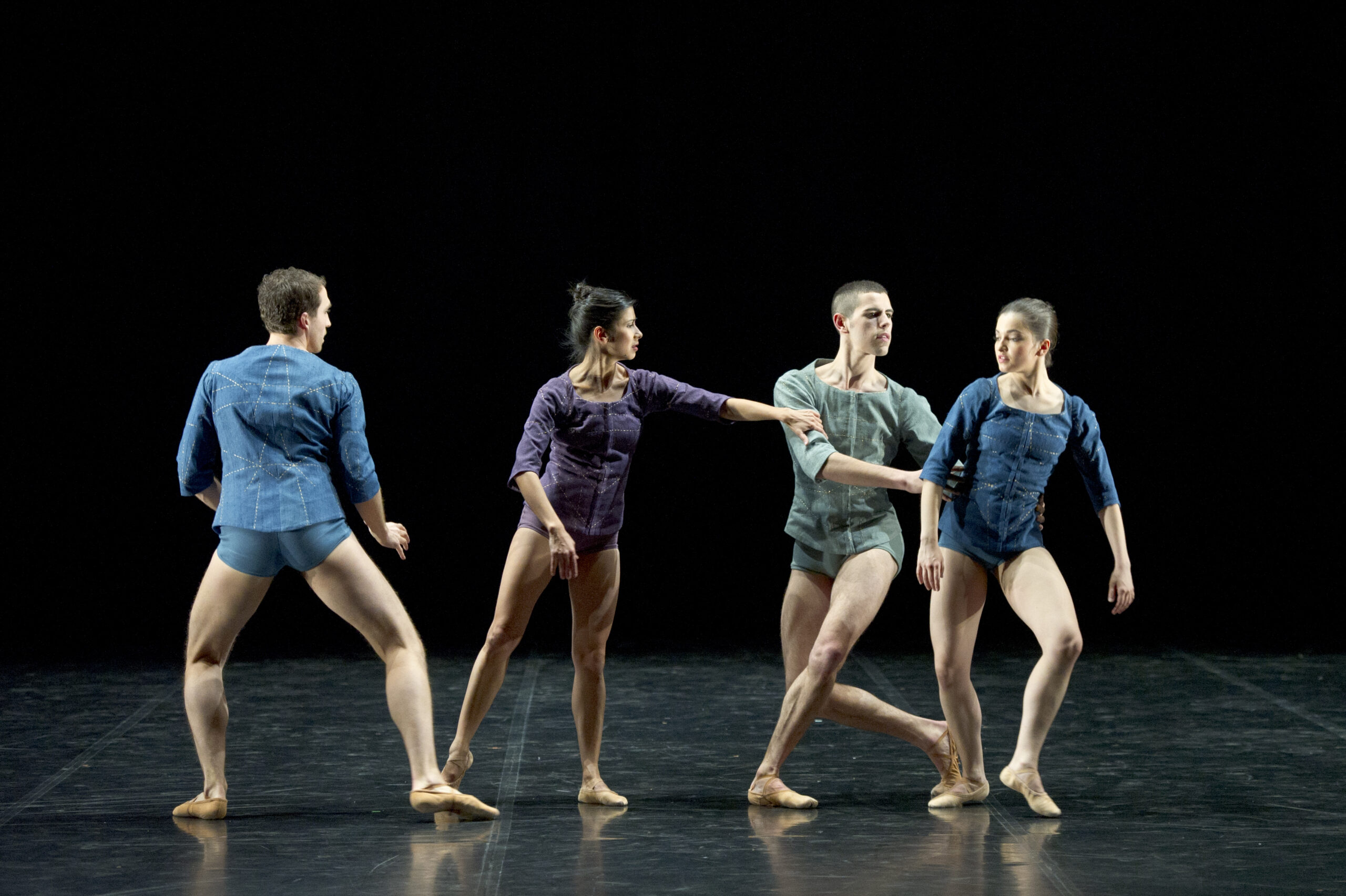
Trained in both classical ballet and contemporary dance, French choreographer Noé Soulier also holds a master’s in philosophy. In pieces such as Le royaume des ombres (2009–12), Signe blanc (2012) and Corps de ballet (2014), he developed an idiosyncratic and critical approach to the strict movement language of classical ballet. In a 2012 interview, Soulier shed light on his attitude to tradition in dance:
… many structural features from ballet run through modern and contemporary dance, even in the work from people that wanted to break away from ballet. I find it necessary for myself to acknowledge this legacy and to work through it. It is often easier to emancipate from a tradition when you are aware of its inescapable influence than when you try to deny it, because the danger is to reproduce exactly what you are trying to avoid. (Aesthetics, 2012)
Soulier emphasizes that emancipation from a tradition – like that of classical ballet – is only possible by consciously dealing with the legacy one is trying to transcend. This view again goes back to a dialectical relation with tradition, in which continuity and discontinuity are inseparable, like two sides of the same coin.
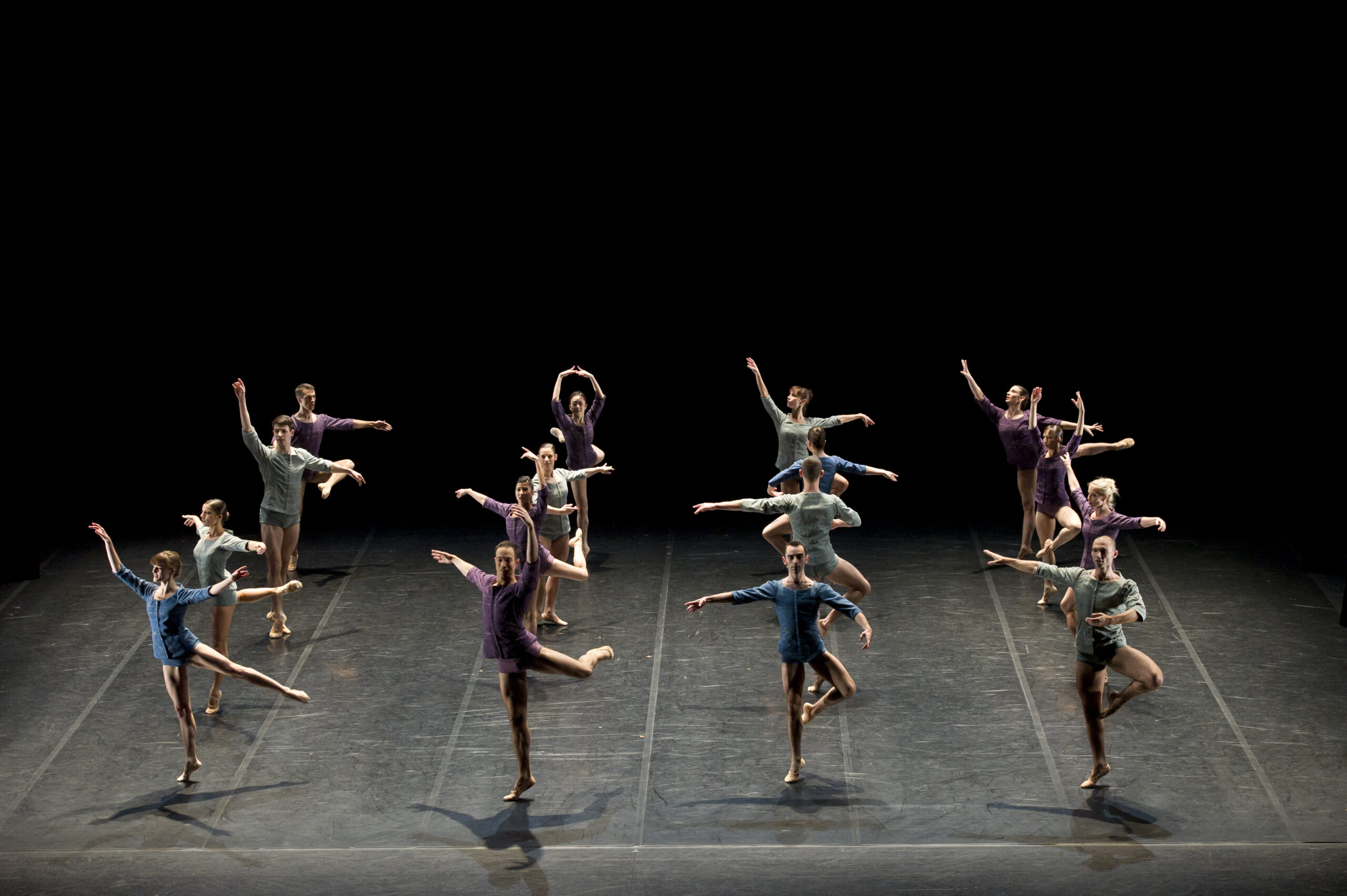
Corps de Ballet, Noé Soulier © Laurent Philippe
There are clear echoes in Soulier’s practice of how the perhaps better-known choreographer William Forsythe deals with the tradition of classical ballet in a similarly iconoclastic way. Despite the aesthetic differences in their work, especially compared to Forsythe’s earlier choreographies, Forsythe too has adopted a dialectical view of ballet by emphasizing in his choreographic world both continuity and discontinuity with that tradition. And yet in the discourse on Forsythe’s work, the term ‘deconstruction’ is often used to underline the fact that he so to speak unilaterally breaks down the tradition of classical ballet in a typically avant-garde style. This narrow interpretation of ‘deconstruction’ – which, incidentally, does not coincide with the philosophical meaning of the term – does not make sufficiently clear that tradition is also the basis of Forsythe’s choreographic language. What at first glance looks like a dismantling of tradition actually reveals the fundamental building blocks that have always been embedded in it.
When we broaden our view to non-Western dance practices, we encounter a different perspective on tradition. Surprisingly enough, here too, the principle of discontinuity often plays a crucial role, a fact that contradicts the stereotypical belief that a close bond between dance and tradition prevents innovation. In her book Revolutionary Bodies: Chinese Dance and the Socialist Legacy, for example, dance researcher Emily Wilcox discusses the concept of ‘dynamic inheritance’ as one of the core principles that has driven the development of Chinese dance through the centuries. Wilcox describes this as a process whereby cultural traditions, by definition, are constantly changing and innovating to remain relevant in the modern world. This dynamic inheritance is aptly summarized in a phrase central to Chinese dance, jicheng yu fazhan, or ‘inherit and develop’ (2019, p. 9). Similar flexibility is also seen in other so-called ‘traditional’ dance practices. For instance, the Indian Ramayana tradition not only consists of numerous retellings of the Hindu epic, but also crosses the boundaries between theatre, dance, mime and music through various stagings. It is precisely for this reason that theatre researcher Rustom Bharucha argues in Performing the Ramayana Tradition that ‘no tradition is ever static or entirely pure; if so, it would have died a long time ago’ (2021, p. 31).
“Tradition is also the humus layer or binder necessary for building a permanent and, above all, living dance heritage.”
Of course, it is impossible to name here all the dance practices that would be labelled ‘traditional’ from a Western perspective, let alone do justice to their origins or development. Nevertheless, the above examples show that the principle of discontinuity is a connecting factor rather than a sharp dividing line between so-called ‘traditional’ and ‘experimental’ dance. The difference lies in the way discontinuity is positioned within the discourse of these practices. In this perspective, two different approaches to tradition can be distinguished: discontinuity as tradition on the one hand, and traditions of discontinuity on the other. In many non-Western dance movements, tradition proves elastic enough to integrate a more gentle form of discontinuity with earlier forms (which amounts to discontinuity as tradition). By contrast, more Western-oriented experimental dance often emphasizes the break with its predecessors (which leads to a tradition of discontinuity). As Andreas Huyssen aptly put it, the ‘embodiment of anti-tradition’ (1981, pp. 23–24) has the paradoxical effect of becoming a tradition itself.
Irrespective of differences in aesthetics, origins or choreographic methodology, the dialectical relationship between continuity and discontinuity thus seems to be an overarching principle that connects dance traditions. The more fundamental question, however, is what drives this dialectical dynamic and how it contributes to the perpetuation of traditions through time. This is also where the role of heritage resurfaces.
‘There is no eternal canon’ (1993, p. 79), Adorno argued in his essay ‘About Tradition’, first published as ‘Über Tradition’ in 1969. Twenty years earlier, Adorno had returned to Germany after an eleven-year exile in the United States during the Nazi regime. In this text, he paints a typically bleak picture of the decline of tradition in both American and European culture. At the same time, he proclaims a more nuanced view of tradition: for him, tradition must be protected from ‘the fury of disappearance’, but this is only possible when tradition shakes off its ‘mythical authority’ (1993, p. 80). In other words, the permanence of traditions – and, by extension, heritage – depends on the extent to which they do not get stuck in a predominantly conservative or merely conservative canon. On the contrary, Adorno argues rather for a reorientation of traditions, with hidden or forgotten works and ideas being exposed once more, beyond the limits of conventional traditionalism.

‘Mea Culpa’, Sidi Larbi Cherkaoui & OBV © Filip Van Roe
Adorno’s vision is clearly indebted to Walter Benjamin: both thinkers want to rescue tradition from its close association with cultural conservatism. There are also echoes of these ideas in the discourse on dance, even if they are not always made explicit as such. A good example is British-Bengali choreographer Akram Khan. He sees choreographic traditions and dance heritage as living organisms that are constantly evolving and subject to change. ‘Heritage is like a museum’, Khan argues, ‘but one that keeps collecting, because its doors are always open. It is a living museum’ (Mitra, 2018, p. 35). This view of heritage also defines Khan’s relation to tradition: ‘I am trained in the classical Indian dance of Kathak’, he writes, ‘a tradition passed on through non-technological means, carried in the memory, the body and the mind. So each time we share it, it’s evolving’. While Khan acknowledges the importance of digital technologies as an important tool for creating and passing on dance, he warns of their limitations. Overemphasis on technological media as a form of documentation and archiving can, he claims, lead to a ‘more sterile transmission mechanism’, compromising the dynamic, embodied and living nature of traditions and heritage. For this reason, it is important that ‘the tradition of oral history of the arts is not lost’ (The Stage, 22 May 2018), as this is the only way to ensure the flexibility of traditions and heritage as much as their renewal.
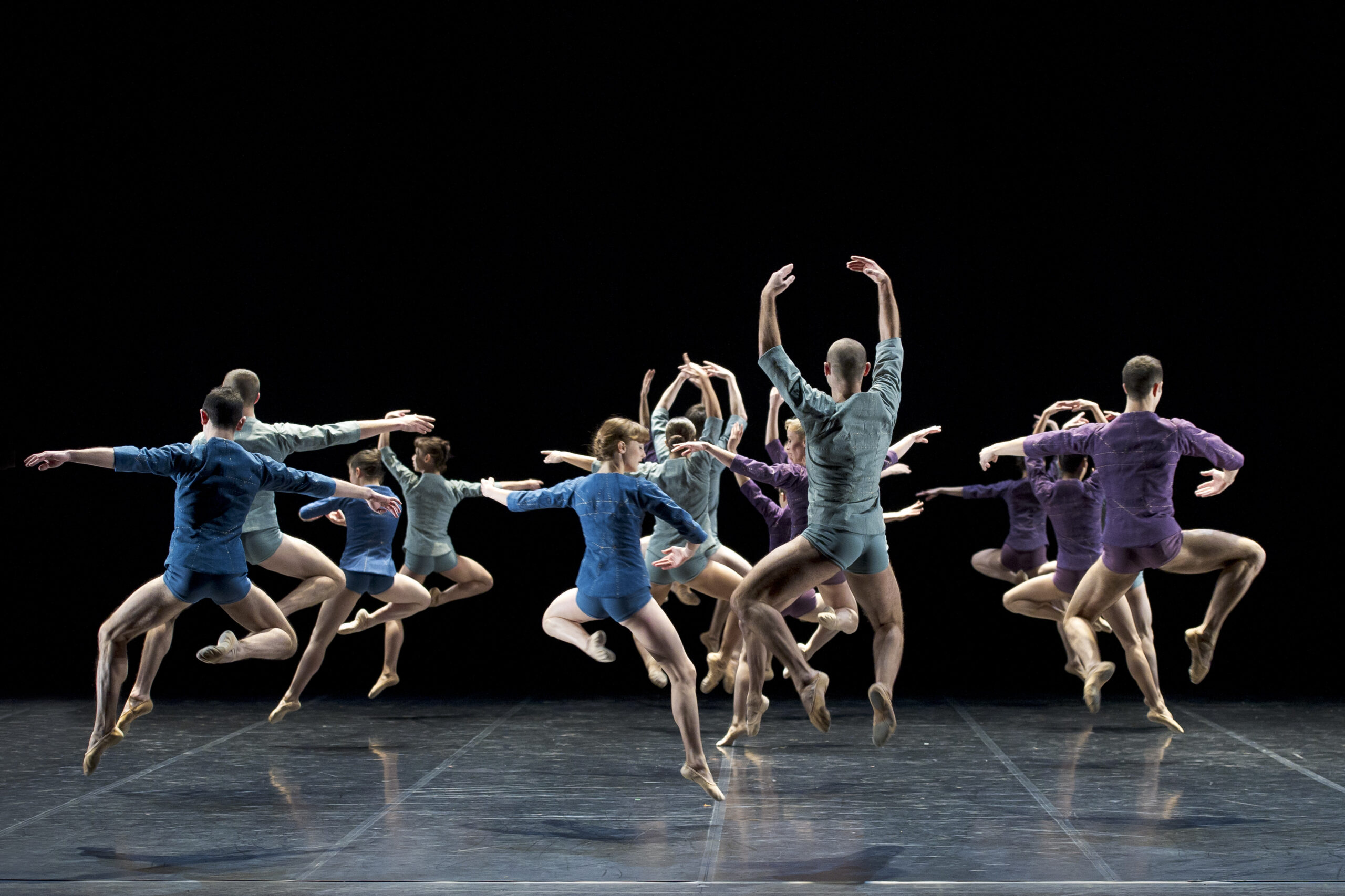
Corps de Ballet, Noé Soulier © Laurent Philippe
Benjamin and Adorno thus argue for a fundamental reconsideration of how we approach the past, including the traditions and heritage practices that are part of it. Strikingly, both thinkers reject empathy in this regard: the goal is not to lose oneself in an often vague nostalgia, but rather to remember – and reconsider – the past. Of course, some will object that empathy precisely is essential to bring the past closer to the present or to maintain the connection between traditions, heritage and the present day. Such a view, however, ignores the crucial insight we owe to Adorno and, in particular, Benjamin. Indeed, for the latter, rejecting empathy did not mean opting for a cold, objective approach. On the contrary, in Das Passagen-Werk he suggests replacing empathy with the Vergegenwärtigung of the past, the recalling or ‘presentification’ of the past, which he describes as ‘making things present’ (cited in McCole, 2018, p. 248). That presence then acts as a foundation for a truly historical position that ensures the continuity of traditions, albeit often in discontinuous forms. Yet the question remains: what does the dialectical approach to tradition and the interplay between continuity and discontinuity proposed by Benjamin and Adorno look like in practice?
“A lot of well-known classics from the ballet repertoire are permeated with racial stereotypes, orientalism and the appropriation of so-called ‘exotic’ cultures.”
When Belgian-Moroccan choreographer Sidi Larbi Cherkaoui was appointed artistic director of Opera Ballet Vlaanderen’s ballet company in February 2015, it was at once a rather unexpected choice, but also a conscious move to renew the company’s image. The press release accompanying Cherkaoui’s appointment put it plainly: ‘It is a misonception to limit the role of Ballet Vlaanderen to highlighting historicity.’ Tradition would remain central to the company, but ‘memory’ had to be ‘a source of renewal’ (De Tijd, 5 February 2015, p. 13). As with Adorno and Benjamin, it appears here that memory is the basis for the renewal of traditions.
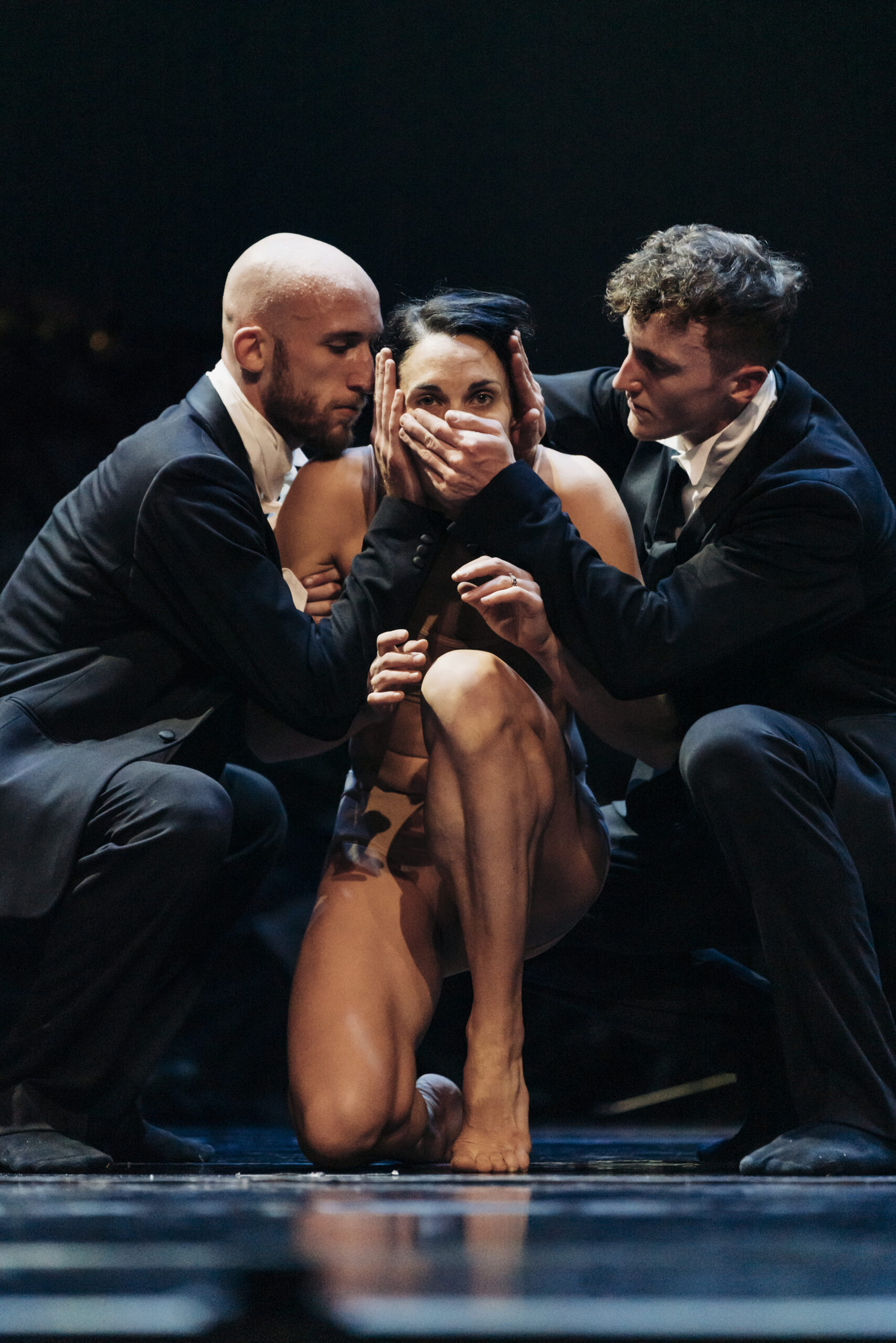
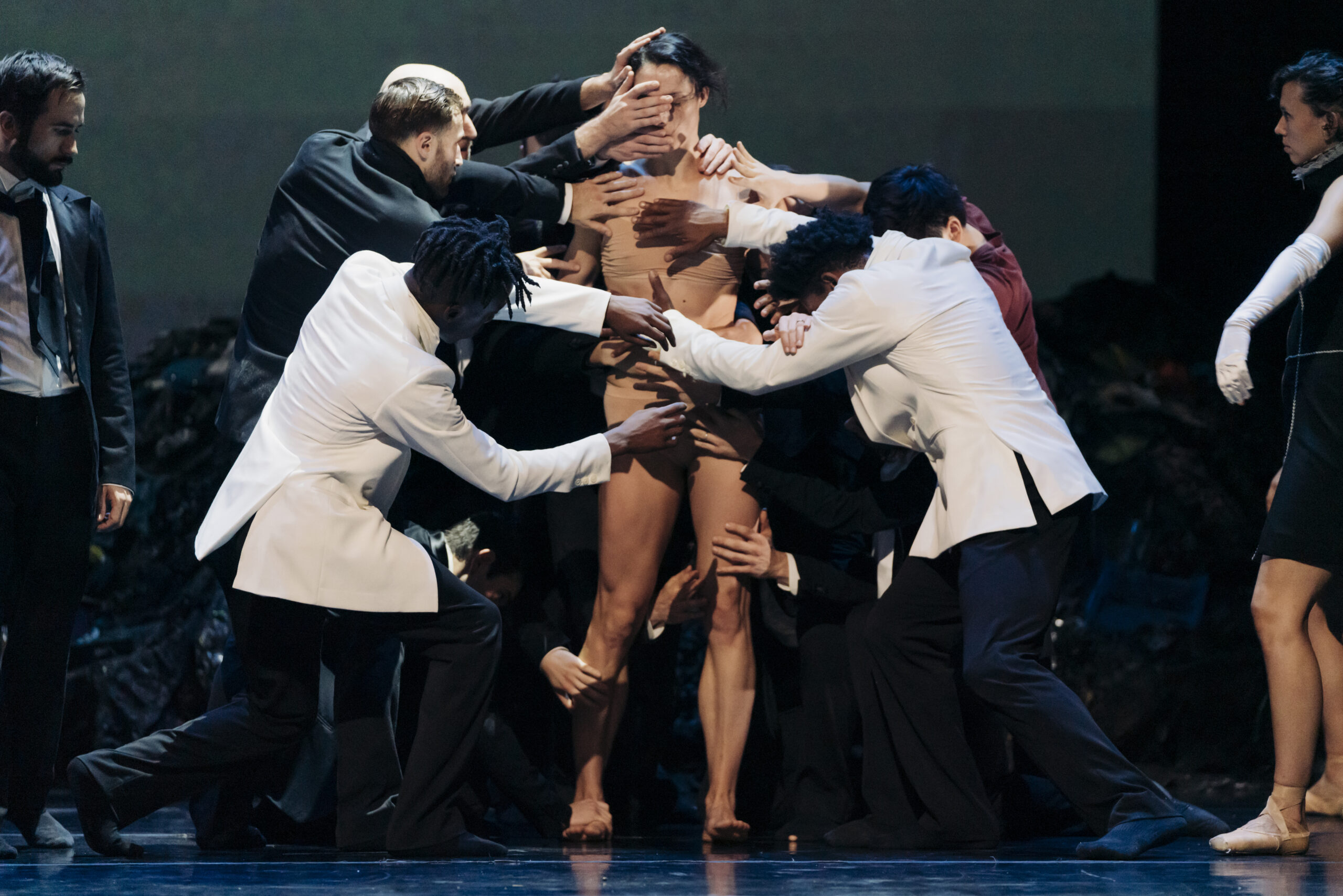
Several of Cherkaoui’s performances make clear how a focus on memory, heritage and the canon can help to redefine the role of tradition in dance. For Mea culpa (2006), a piece he reprised with Opera Ballet Vlaanderen in 2019, Cherkaoui outlined, in a text posted on the website of his company Eastman, his vision in terms that seem markedly Benjaminian: ‘Mea culpa explores the world our ancestors and roots left us. What are the foundations of our current civilization? What price tag is attached to the comforts we enjoy today and that were handed down to us by our parents and grandparents?’ It is not a coincidence that transmission or handing down lies at the root of the word ‘tradition’. Adorno reminds us that ‘tradition comes from tradere: to hand down. It recalls the continuity of generations, what is handed down by one member to another’ (1993, p. 75). And yet Cherkaoui, like Adorno, rejects a conservative conception of tradition as a straightforward and fixed transmission. Indeed, in Mea culpa, the choreographer confronts the classical ballet tradition with the lasting impact of Western colonialism in order to question the hierarchical power relations that still structure our world. On a stage-wide screen (with video images designed by Gilles Delmas), for example, we see scenes showing the impact of colonialism and consumerism: a polluted river, slums, a boat full of refugees, the interior of a European church. By bringing the outside world inside the aesthetic microcosm of his choreography, Cherkaoui highlights the dark side of Western prosperity, which often comes at the expense of other cultures and populations.
“In Mea culpa, Cherkaoui confronts the classical ballet tradition with the lasting impact of Western colonialism in order to question the hierarchical power relations that still structure our world.”
The explicit critique of colonialism made Mea culpa an unusual choice for the ballet company but also for the audience of Opera Ballet Vlaanderen. Indeed, in the classical ballet tradition, there are hardly any pieces that denounce the colonial legacy. On the contrary, a lot of well-known classics from the ballet repertoire – such as Scheherazade, The Nutcracker, La Bayadère and Petrushka, among others – are permeated with racial stereotypes, orientalism and the appropriation of so-called “exotic” cultures. Contemporary choreographers and ballet companies are increasingly aware of these problematic aspects and seek to critically reconsider them through reinterpretations. For example, Argentine choreographer Daniel Proietto created RASA [after La Bayadère] in 2020, also for Opera Ballet Vlaanderen. The original Russian ballet, which revolves around a temple dancer in India, has been heavily criticized in recent years for its inconsiderate, caricatured and, to some, offensive portrayal of Indian culture. With his innovative version, which does not shy away from humour and references to pop culture, Proietto pursued the path taken previously by Cherkaoui. With their work, both choreographers break through the supposed continuity of the classical ballet tradition, long considered an untouchable monument.
Despite this pronounced discontinuity, both Cherkaoui and Proietto retain a connection to that tradition by not completely renouncing the classical ballet vocabulary. Their work bears the stamp of their own choreographic signature, of course, but many movements, positions and formats can also be recognized from the standard ballet repertoire. In that respect, these are not purely formalist experiments that seek only to deconstruct the classical ballet tradition. Rather, their work is a radical thought exercise that explores how a contemporary ballet company can use its traditional techniques to critically reflect on the weight of history, both within and outside the dance world. As such, their performances embody a vision of tradition in which memory and heritage serve not only as repositories of the past, but also as engines for reflection and renewal.
‘Mea Culpa’, Sidi Larbi Cherkaoui & OBV © Filip Van Roe
The question of the role of tradition in dance has its origins in the age-old opposition between memory and history. Whereas subjective memories are often subordinated to so-called objectified historiography, tradition forms a bridge between past and present. On the one hand, it is rooted in the historical context of a specific practice; on the other, it lives on in the embodied and constantly renewed (re-)staging of that practice. As such, tradition is also the humus layer or binder necessary for building a permanent and, above all, vibrant dance heritage. At the same time, tradition cannot serve as a licence to focus only on its own history and isolate dance from the world that surrounds it. This world encompasses not only those dance traditions that at first glance seem ‘other’, but also that ‘other’ social and societal reality that takes place outside the aesthetic microcosm of choreography.
“The challenge is to wrest the notion of ‘tradition’ away from its restrictive association with traditionalism.”
As I have argued, the interplay between continuity and discontinuity lies at the heart of traditions. A better understanding of this dynamic can help to more clearly highlight the potential not only of traditions, but also of heritage in dance. Instead of capturing traditions in canonized masterpieces, formal rules or normative labels, they can serve as relational rather than exclusive frameworks for mapping out both connections and differences between choreographic oeuvres, regions, cultures or time periods. The challenge, however, is to wrest the notion of ‘tradition’ away from its restrictive association with traditionalism. This traditionalism is at odds with the dynamic and even emancipating potential that, in line with Benjamin and Adorno’s redefining of traditions, ensures that traditions continue to deserve our critical attention.
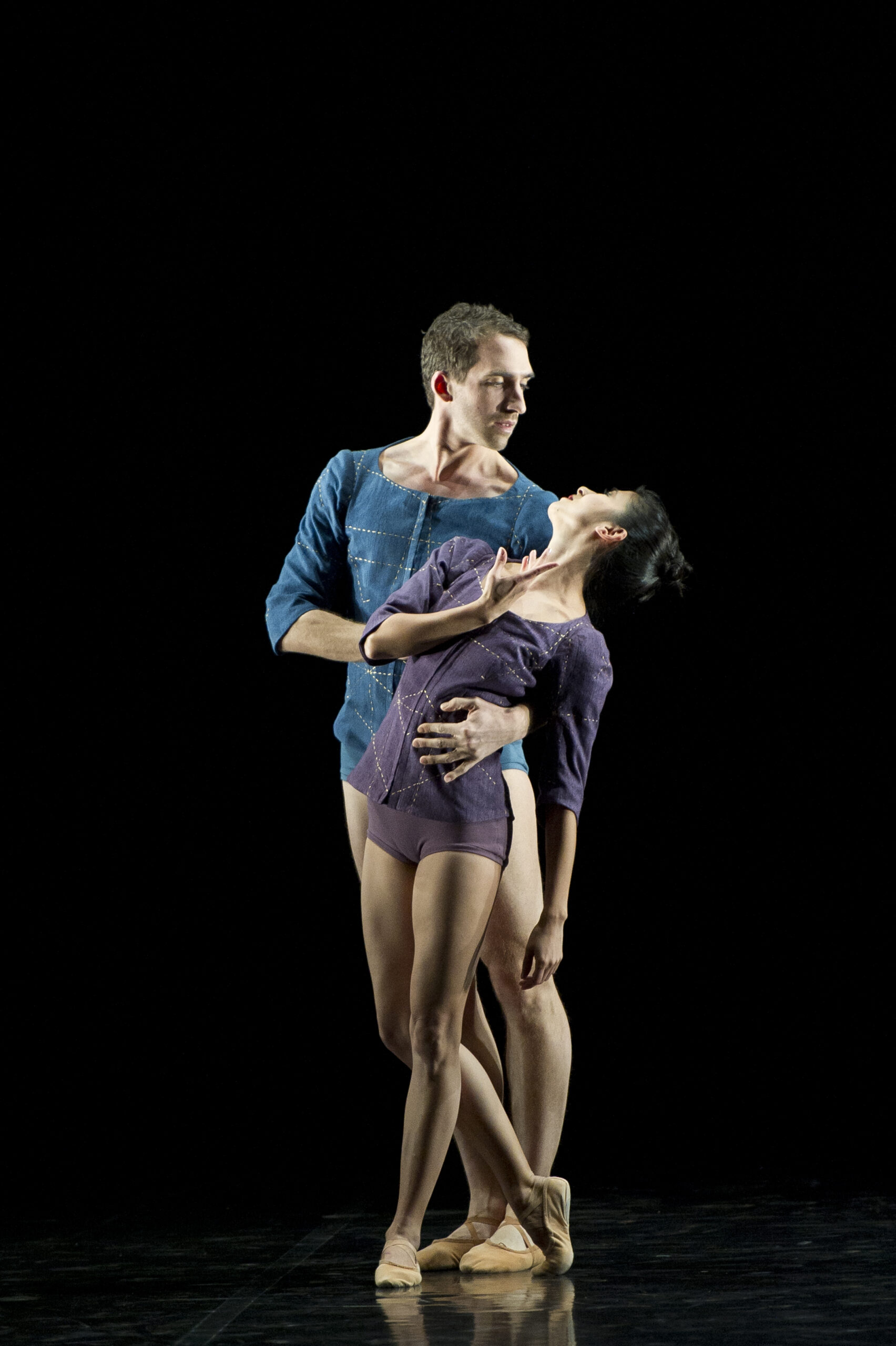
Corps de Ballet, Noé Soulier © Laurent Philippe
‘Tradition and innovation feed each other’, wrote Marianne Van Kerkhoven twenty-five years ago, adding: ‘Whether the bond an art enters into with its tradition is loose or close-knit, whether its heritage is considered a burden or a blessing, there is no escaping the fact that every painting, every text, every dance is related to all previous paintings, texts and dances. Every text finds its source in past texts, every dance in what was danced before’ (Etcetera 71, 2000).
Perhaps this insight should be called visionary. The realization that dance needs to safeguard its own history by thinking more actively about how tradition – and such related notions as heritage, archiving and documentation – can take shape has only become common in recent years. Choreographic oeuvres have a limited expiration date, but traditions only have a future if we conceive of them as dynamic processes that, averse to traditionalism, refuse to get stuck in the fossilization of canonization. Only then will dance make full use of its potential to set things in motion – and to keep these things in motion.
This article is based on the chapter I wrote for The Oxford Handbook of Dance and Memory entitled ‘The Dialectics of Tradition in Dance: Between Continuity and Discontinuity’. This book is forthcoming from Oxford University Press in 2025 and was edited by Susanne Franco and Marina Nordera. The present version has been abridged and thoroughly revised in view of the focus on dance heritage in this issue of Etcetera.
Translation: Patrick Lennon
Adorno, T. (1969) 1993. ‘On Tradition’. Telos: A Quarterly Journal of Critical Thought 94.
Benjamin, W. (1940) 1991. ‘Theses on the Philosophy of History.’ In Gesammelte Schriften (Bd. 1), edited by Rolf Tiedemann and Hermann Schweppenhäuser. Suhrkamp Verlag.
Benjamin, W. (XXXX) 1999. ‘Theses on the Philosophy of History.’ In Illuminations, edited and with an introduction by Hannah Arendt, translated by Harry Zorn. Pimlico.
Bharucha, R. 2021. ‘Thinking the Ramayana Tradition Through Performance’. In Performing the Ramayana Tradition: Enactments, Interpretations, and Arguments, edited by Paula Richman and Rustom Bharucha. Oxford University Press.
Cherkaoui, S.L. 2019. Mea culpa. https://www.east-man.be/ nl/16/41/.
Eliot, T.S. (1919) 1982. ‘Tradition and the Individual Talent.’ Perspecta: The Yale Architectural Journal 19.
Hardt, Y. 2011. ‘Staging the Ethnographic of Dance History: Contemporary Dance and its Play with Tradition.’ Dance Research Journal 43 (1).
Huyssen, A. 1981. ‘The Search for Tradition: Avant-Garde and Postmodernism in the 1970s.’ New German Critique 22.
Kealiinohomoku, J. (1970) 2001. ‘An Anthropologist Looks at Ballet as a Form of Ethnic Dance.’ In Moving History / Dancing Cultures: A Dance History Reader, edited by Ann Dils and Ann Cooper Albright. Wesleyan University Press.
Khan, A. 2018. ‘Digital has revolutionised dance, but we mustn’t abandon tradition.’ The Stage, 22 May, https:// www.thestage.co.uk/opinion/akram-khan-digital-has- revolutionised-dance-but-we- mustnt-abandon-tradition.
Kwan, S. 2017. ‘When Is Contemporary Dance?’ Dance Research Journal 49 (3).
Lugones, M. 2010. ‘Toward a Decolonial Feminism.’ Hypatia 25 (4).
McCole, J. 2018. Walter Benjamin and the Antinomies of Tradition. Cornell University Press.
Mitra, R. 2018. ‘Beyond Fixity: Akram Khan on the Politics of Dance Heritages’. In Rethinking Dance History: Issues and Methodologies (2nd ed.), edited by Geraldine Morris and Larraine Nicholas. Routledge.
Perron, W. 2021. ‘Wendy Perron on Grand Union: Democracy or Anarchy?’ PillowVoices: Dance Through Time, podcast, 25 min. 43 sec., 26 June, transcript available on: https://pillowvoices.org/episodes/wendy-perron-on-grand-union-democracy-or-anarchy/transcript.
T’Jonck, P. 2023. ‘Hedendaagse dans uit Vlaanderen (1980–2016).’ https://www.kunsten. be/nu-in-de-kunsten/ hedendaagse-dans-uit- vlaanderen-1980-2016/.
Van Boxem, K. 2015. ‘Mijn enthousiasme is groter dan mijn angst.’ De Tijd, 5 February.
Van Kerkhoven, M. 2000. ‘Aantekeningen omtrent geheugen en lichaam, traditie en vernieuwing.’ Etcetera 71, https://e-tcetera.be/aantekeningen-omtrent-geheugen-en-lichaam-traditie-en-vernieuwing/.
Wilcox, E. 2019. Revolutionary Bodies: Chinese Dance and the Socialist Legacy. University of California Press.
Williams, R. (1976) 2015. Keywords: A Vocabulary of Culture and Society. Oxford University Press.
KRIJG JE GRAAG ONS PAPIEREN MAGAZINE IN JOUW BRIEVENBUS? NEEM DAN EEN ABONNEMENT.
REGELMATIG ONZE NIEUWSTE ARTIKELS IN JOUW INBOX?
SCHRIJF JE IN OP ONZE NIEUWSBRIEF.
JE LEEST ONZE ARTIKELS GRATIS OMDAT WE GELOVEN IN VRIJE, KWALITATIEVE, INCLUSIEVE KUNSTKRITIEK. ALS WE DAT WILLEN BLIJVEN BIEDEN IN DE TOEKOMST, HEBBEN WE OOK JOUW STEUN NODIG! Steun Etcetera.
artikel
25.04.2025
Leestijd 24 — 27 minuten
01.03.2025
—
14.09.2025
Timmy De Laet is hoofddocent Theater- en Danswetenschap aan de Universiteit Antwerpen en gastdocent aan de dansafdeling van het Koninklijk Conservatorium Antwerpen. Hij is co-hoofdredacteur van het European Journal of Theatre and Performance en coördinator van ‘CoDa │ Cultures of Dance – Research Network for Dance Studies’.

Tom Rummens
Floris Baeke
artikel 25.04.2025
Tom Rummens
Floris Baeke