Iphigenia – De Roovers
Geef mij maar het verzet van Klytamnestra
Mia Vaerman





documenta fifiteen © Nicolas Wefers
With the war in Gaza filling the screens of our TVs and smartphones, the world can no longer look away from the Israeli-Palestinian conflict. In a number of neighbouring countries, open support for the Palestinians is systematically being opposed, banned and punished. In Belgium, we have not reached that point yet, but Flemish Culture Minister Jan Jambon and his party, the N-VA, among others, are already making efforts to discredit pro-Palestinian positions. In this opinion piece, Jan Goossens argues for collective action from the cultural sector and questions whether we can still avoid the BDS movement.
Rarely had I seen a theatre performance that made violence as palpable as H2Hebron (2019) by French-Israeli company Winter Family. Actress Ruth Rosenthal and composer Xavier Klaine took the audience on a visual and auditory visit to H2, the old neighbourhood in the heart of Hebron in the West Bank. Israel is responsible for the security of H2’s residents: 34,000 Palestinians and 700 settlers. Seated around a huge scale model of H2, we were confronted with an overwhelming wave of text fragments, songs and images from Hebron.
For the text material, Rosenthal had spent time in residence with her sister, one of the 700 settlers. Her fanatical monologues made up the skeleton of the play, which was dotted with snippets of conversation with both Israeli soldiers and Palestinian residents. The result threw me back in time, to the moment when I was walking along the shops on Shuhada Street in the middle of H2 a few years earlier. Just above our heads hung the nets with which Palestinian merchants tried to protect their customers and themselves from the projectiles that settlers kept dropping down on them from the upper floors of the Palestinian houses they had annexed.
“What I experienced in Hebron defied all imagination. Apartheid live and in the making, in the West Bank’s most populous city.”
Before going to Hebron, I had visited on several occasions Goma in eastern Congo, an almost permanent battlefield on the border with Rwanda. But what I experienced in Hebron defied all imagination, including my experiences in the Congo. Apartheid live and in the making, in the West Bank’s most populous city, every hour of every day, by illegal settlers who imagine that they can act with impunity, that they are untouchable, thanks to the ubiquitous IDF, the Israeli Defence Forces. The show H2Hebron achieved what political speeches, newspaper articles and even TV footage rarely do: ensuring that the violence of the illegal Israeli occupation and the expulsion of Palestinians from their homes, shops and neighbourhoods cut into your skin and made your hair stand on end. Had more people seen H2Hebron, surely fewer people today would avert their gaze from Israel’s systematic destruction of Gaza and its people. Or would continue to think comfortably that Palestinians, even in the territories that are supposedly theirs, could ever enjoy true freedom and sovereignty. H2Hebron made sure we could almost taste the creeping poison of apartheid in the West Bank.
Since then, the situation in Hebron has not improved, to put it mildly. The war in Gaza, which has been raging for more than a month now, is a direct offshoot and the logical culmination of this same Israeli colonization of Palestine. The inhumane attack by Hamas on innocent Israeli civilians on 7 October deserves unconditional condemnation but, as UN head António Guterres said, it ‘did not happen in a vacuum’. At the same time, when the number of dead in Gaza reached 10,000, our own Belgian prime minister called the Israeli violence that followed the attack ‘disproportionate’ and the Belgian government – spurred on by Minister of Development Caroline Gennez (Vooruit) and Deputy Prime Minister Petra De Sutter (Groen) – is working on sanctions against Israel.
Israeli violence is also having far-reaching consequences beyond the hermetically sealed Gaza Strip. In various parts of Europe and in the US, it is becoming clear that the war in Gaza is amplifying and spreading less visible but no less problematic forms of systemic violence that affect artists, cultural institutions and civil society. Renowned Israeli historian Ilan Pappe put it this way: ‘… it is a pretext for some European countries to violate and limit democratic freedoms in the name of a new “war on terror”.’
Examples abound in Germany and France. The Frankfurt Book Fair refused, for no valid reason, to award the Literaturpreis 2023 to Adania Shibli for her novel Minor Detail – an example of pure cancel culture, this time to the detriment of a Palestinian writer. Berlin’s ‘committed’ Maxim Gorki Theater cancelled the play The Situation, in which Palestinian actors also spoke out about the conflict. In a statement, the theatre placed itself unequivocally in Israel’s camp. In the summer of 2022, long before the current war in Gaza, the Indonesian collective Ruangrupa’s formidable Documenta 15 was systematically undercut with accusations of anti-Semitism. American historian Susan Neiman, who lives and teaches in Germany, stated in the October issue of The New York Review of Books: ‘In Berlin the word “apartheid” [in reference to the Israeli-occupied territories, JG] can get you canceled faster than the N-word will get you canceled in New York.’
In France in 2016, I was taken to task by the mayor of Marseilles for wanting to show, during my first Festival de Marseille as artistic director, Badke, a performance with an all-Palestinian cast of dancers. For years, peaceful protest against performances by Israel’s quasi-state company Batsheva has been out of the question there. Since 7 October, things have gone even further: all pro-Palestinian demonstrations have been banned and a bill criminalizing any criticism of Israel is being discussed in the Senate. In New York, David Velasco, the widely respected editor-in-chief of the prestigious magazine Artforum, was fired because his magazine had published an opinion piece advocating a ‘Free Palestine’ after 7 October. A bit later, auction house Christie’s withdrew two paintings by leading Lebanese artist Ayman Baalbaki from a public sale, following several complaints.
“Is it inconceivable that Jan Jambon will also cast suspicion in the near future on cultural organizations that criticize Israel or support Palestine? Will the sector then also fall silent collectively?”
Collective silence
What is the situation in Flanders? Things are not as bad as in Germany and France yet, but we cannot let our guard down. Not least when Flemish Prime Minister Jan Jambon (N-VA) has found nothing better to do than to have inspections carried out of the non-profit organizations De Wereld Morgen and Vrede for ‘taking sides in this conflict’. In particular, their support for BDS – Boycott, Divestment and Sanctions, the movement that advocates a cultural boycott of Israel – is being denounced. ‘Some link BDS to Hamas’, the N-VA has said. It is striking that there have hardly been any reactions, including from the cultural sector, to Jambon’s actions, nor to the completely unfounded and ridiculous imputations around BDS. But is it inconceivable that Jambon, who is also culture minister, will also cast suspicion in the near future on cultural organizations that criticize Israel or support Palestine? Will the sector then also fall silent collectively?
‘We’d better keep quiet and listen and show others how to listen.’ – ‘It’s complicated, it’s not black and white, we shouldn’t take sides.’ – ‘We have to keep connecting, especially in this overly impassioned fratricidal dispute that goes back to the Bible and in which we Europeans are lost.’ – These are just some of the many excuses that are going round, including in the cultural sector. And yet, aren’t they all expressions of an admission of apolitical weakness? Aren’t we burying our heads in the sand in the face of an inescapable reality that has a clear history, with marked beginnings and benchmarks (the 1917 Balfour Declaration, the 1948 al-Nakba, the 1967 Six-Day War, both intifadas, all five recent Gaza wars)? Don’t we have a duty to face and contextualize that reality before we can credibly listen and connect? Isn’t that also what we are actually good at, or should be, as cultural workers? Shouldn’t we of all people dare to use the right words for injustices that have been extensively documented and described, for instance by Rashid Khalidi in the formidable and crystal-clear The Hundred Years War on Palestine? As regards the West Bank, those words are: illegal occupation, colonization and apartheid. As regards Gaza: ethnic cleansing and more than solid indications that a genocide is under way, making official investigations inevitable, as argued by Israeli historians such as Raz Segal and Ilan Pappe and by UN human rights director Craig Mokhiber, who resigned in the face of the UN’s impotence. What is in any case irrefutable: with the killing of more than 4,500 babies and children – 1 child every 10 minutes for more than a month – an entire generation of children is going to emerge from this war traumatized.
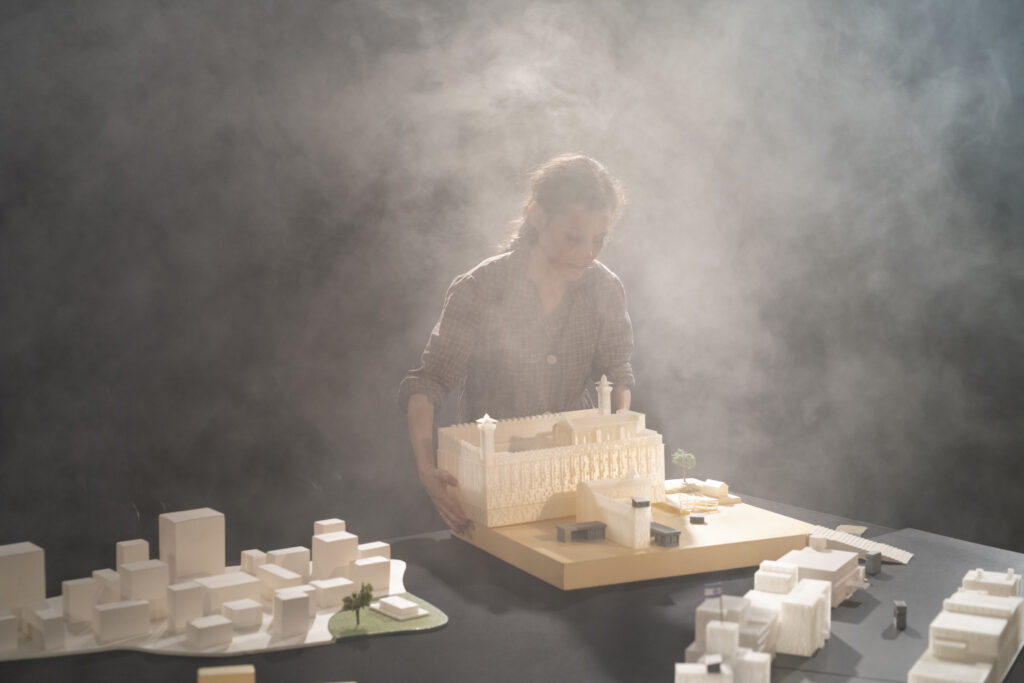
Winter Family - H2Hebron © Martin Argyroglo
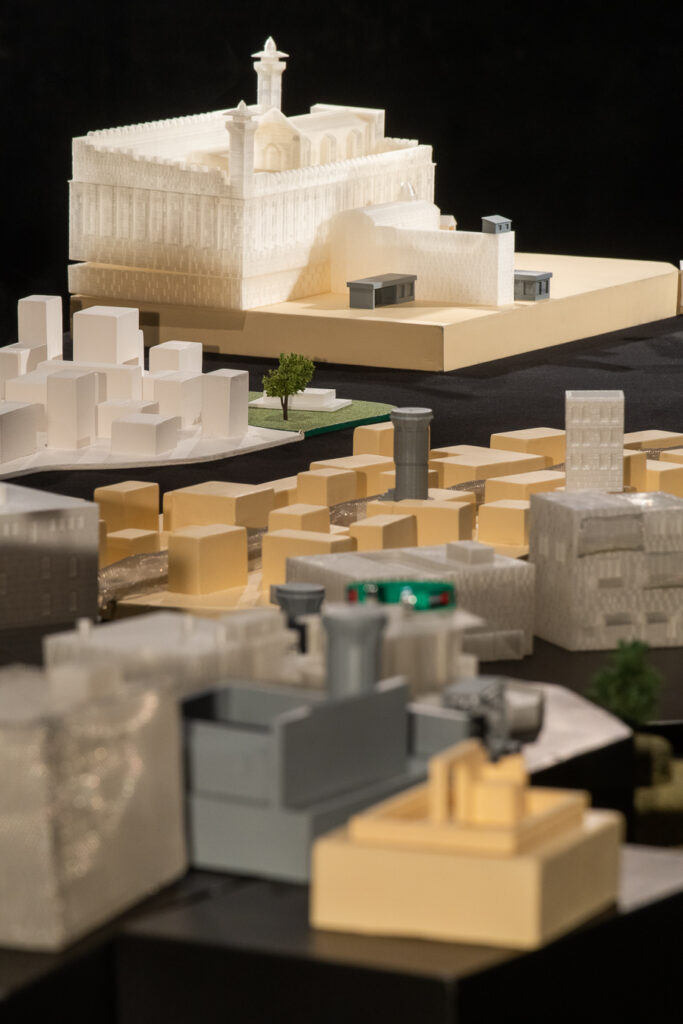
Winter Family - H2Hebron © Martin Argyroglo
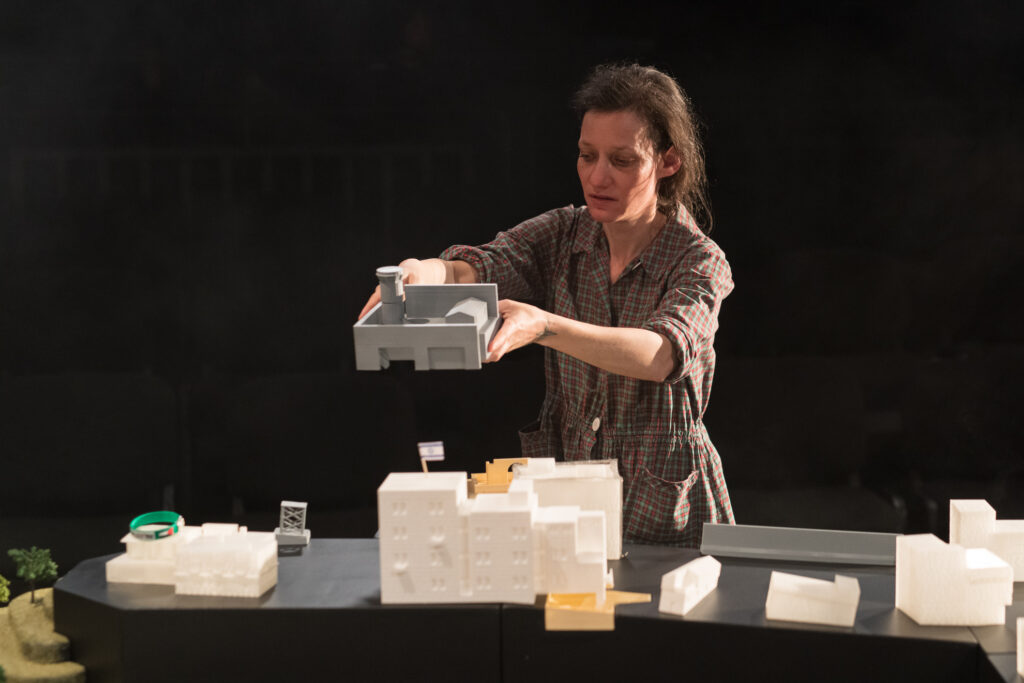
Winter Family - H2Hebron © Martin Argyroglo
In a cultural sector that is a forerunner and defender of social emancipation and that, quite rightly, wants to contribute to an inclusive, solidary and decolonial society, it seems untenable to remain on the sidelines in the great colonial conflict of our time. Moreover, it is a conflict that is directly linked culturally, relationally and digitally to many young people in all our major cities. Remaining silent, turning a blind eye, doing nothing, not taking sides: isn’t this leading us straight to highly problematic internal contradictions? How can you contribute to the decolonization of your own institution, programme, neighbourhood and city if you don’t take into account the fact that today Gaza and Palestine are also part of Brussels, Antwerp and Ghent? Isn’t an active or activist stance on these issues the best defence against a possible curtailment of our autonomy and freedom of expression? If an entire sector is committed to a free Palestine, in a country that is itself on the verge of imposing sanctions on Israel, will the Flemish culture minister carry out inspections of all cultural organizations? Or draw up blacklists of pro-Palestinian artists, as is already happening in Germany? With the 2024 elections approaching, a collective and emancipatory gesture for a free Palestine might very well be the best defence.
International cultural solidarity
But what can we do that will go a bit beyond a well-intentioned benefit event? Major international foundations that have helped to prop up Palestinian civil society in recent decades are already warning, discreetly but explicitly, of the disastrous impact this war in Gaza will have. That American and European money for Palestine will dry up as a result of imputations and the general dehumanization of the Palestinians cannot be ruled out. International cultural solidarity with artists, companies and structures in Palestine is therefore needed more than ever. The Palestinian A.M. Qattan Foundation can be a partner in this, but certainly not the only one. That we give Palestinian artists, both from the occupied territories and in Israel itself, a prominent place and effective support in our programmes will be culturally and politically crucial in the years to come.
“Is it possible today from the perspective of Flemish cultural organizations to be consistently intersectional and decolonial, without taking sides in the conflict between Israel and Palestine?”
Lastly, of course, there is BDS. The Boycott, Divestment and Sanctions movement has had such an impact since it was founded in 2005 that Israel panicked and did everything in its power to discredit the movement. And successfully so. In Germany, BDS has de facto been criminalized; in part because of this, the smear campaign against Documenta 15 gained a lot of traction. In France, that point hasn’t been reached yet, but any position that is critical of Israel is increasingly being litigated. And yet BDS is the same peaceful and efficient tool as the widely supported cultural boycott of the apartheid regime in South Africa in the 1980s. Many important Belgian and international artists and activists have openly expressed their unconditional support and use their arguments to shoot down in flames the nonsense spouted by the N-VA that BDS is linked to Hamas. Author and activist Naomi Klein has explained clearly how BDS was widely initiated from within Palestinian civil society: it is how Palestinians themselves decided they wanted to oppose Israel. Theatre-maker Alain Platel has refused to show his work in Israel for many decades and is more than ever convinced that this is a necessary choice; at the same time, this has never stopped him from collaborating with individual Israeli artists. Tamer El Said, a prominent Egyptian film-maker, puts it this way: if we want to use peaceful means to have a real impact on political regime change in Israel, without which nothing will ever change, BDS is the tool.
Is it possible today from the perspective of Flemish cultural organizations to be consistently intersectional and decolonial, without taking sides in the conflict between Israel and Palestine, and to support BDS? In the extremely harsh light of the colonization of Palestine and the ethnic cleansing under way in Gaza, it seems urgent to stand on that fault line, averse to any consensual and lazy status quo that Palestinians, as well as more and more young people from Flanders and Brussels, no longer see any point in. The climate crisis needs us to join forces for an inclusive society that respects all minorities equally. But let us not skirt around the less consensual hot potatoes that have to do with structural inequality and racism. Palestine and Gaza are such a hot potato. That is precisely why it is a real test. For our own principles and claims. For our capacity and courage to step out of our houses of culture and our programmes – which are sometimes too much of a bubble – and step into the midst of society and the world. And for our resistance and resilience in the face of a very strong political pull to the right, which will undoubtedly come in Flanders in 2024.
The German tabloid Bild, which has millions of readers, recently published its manifesto in response to the 7 October attack. ‘This Is Our Germany’ is a feminist, queer, secular, green and sustainable manifesto, but it is also Islamophobic, racist, asocial and unequal, xenophobic and nationalist. Let’s hope we will be spared that in Flanders, although the potentially largest party in Flanders after 9 June 2024 will no doubt agree with what Bild proposes. That is why we need real, transversal commitments, especially from the cultural sector. For a green world that respects minorities. But at the same time also for a free and decolonized Palestine in which everyone is equal before the law. Otherwise, we’ll talk the talk, but we won’t walk the walk.
KRIJG JE GRAAG ONS PAPIEREN MAGAZINE IN JOUW BRIEVENBUS? NEEM DAN EEN ABONNEMENT.
REGELMATIG ONZE NIEUWSTE ARTIKELS IN JOUW INBOX?
SCHRIJF JE IN OP ONZE NIEUWSBRIEF.
JE LEEST ONZE ARTIKELS GRATIS OMDAT WE GELOVEN IN VRIJE, KWALITATIEVE, INCLUSIEVE KUNSTKRITIEK. ALS WE DAT WILLEN BLIJVEN BIEDEN IN DE TOEKOMST, HEBBEN WE OOK JOUW STEUN NODIG! Steun Etcetera.
opinie
14.12.2023
Leestijd 12 — 15 minuten
15.12.2023
—
14.03.2024

Jan Goossens divides his time between Tunis, where he co-directs L’Art Rue with artists Selma and Sofiane Ouissi and organizes the Dream City festival, and Brussels, where, together with Fatima Zibouh, he is preparing the candidacy of Molenbeek and the Brussels-Capital Region to become European Capital of Culture in 2030. Previously, he worked, among others, for KVS in Brussels and for the Festival de Marseille, from where, together with Hildegard De Vuyst, he set up many cultural collaborations with Palestine. He wrote this contribution in his own name.
Mia Vaerman
Tom Rummens
opinie 14.12.2023
Mia Vaerman
Tom Rummens