Confessie – Raven Ruëll & Bruno Vanden Broucke
De kunstmarkt maakt de kunstenaar
Klaas Tindemans




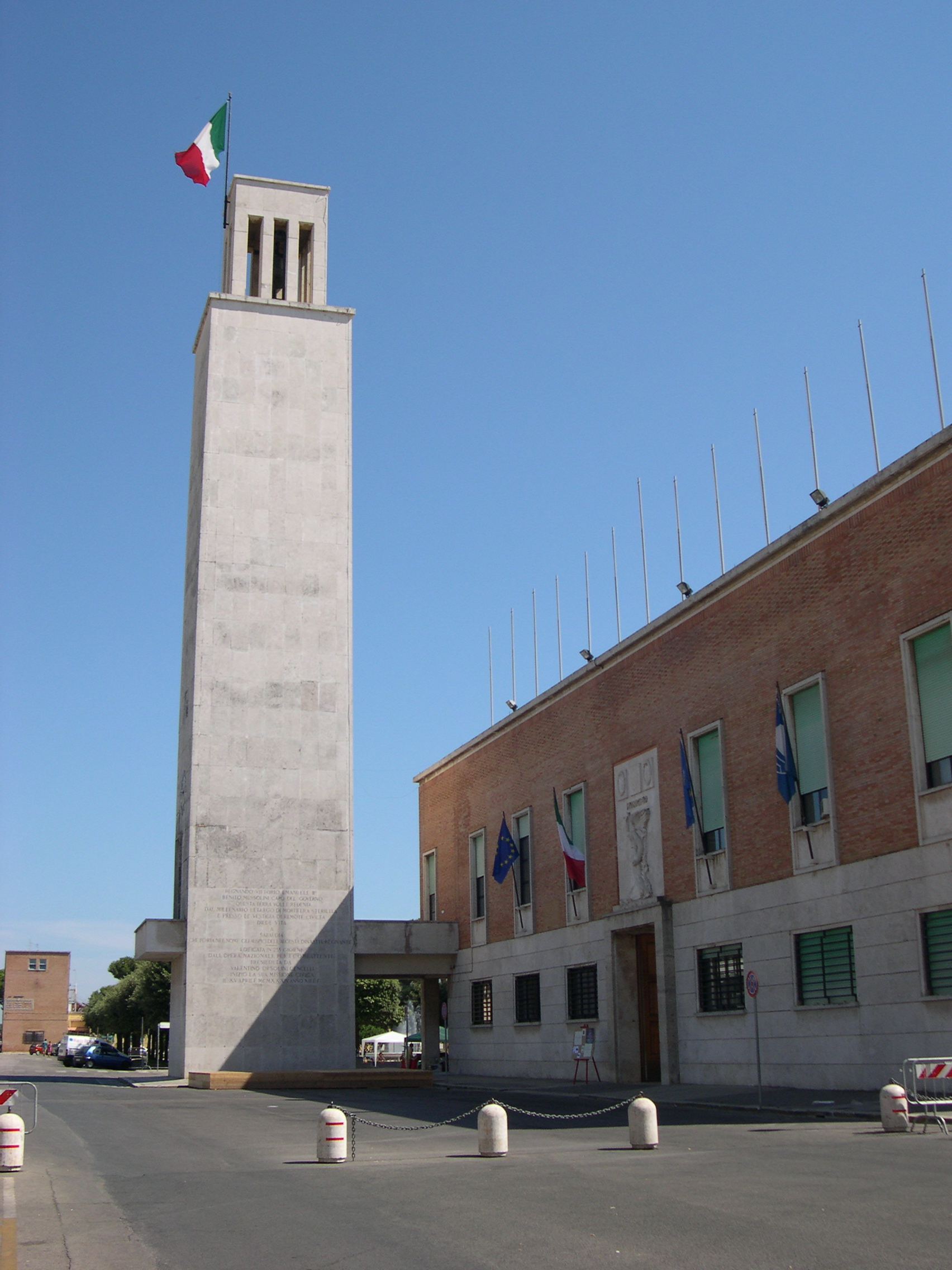
Sabaudia © Alessio Antonietti
Historical fascism wasn’t unique in its modus operandi or its goals, writes Rodrigo Batista. On the contrary: where it failed – in trying to impose “total inner adhesion” – neoliberal capitalism has stepped in to finish the job. When consumerism becomes the sole conceivable ideology, where does that leave the arts? Are artists really bound to operate within the language of homologation and commodification, as has become the norm, or is there another way?
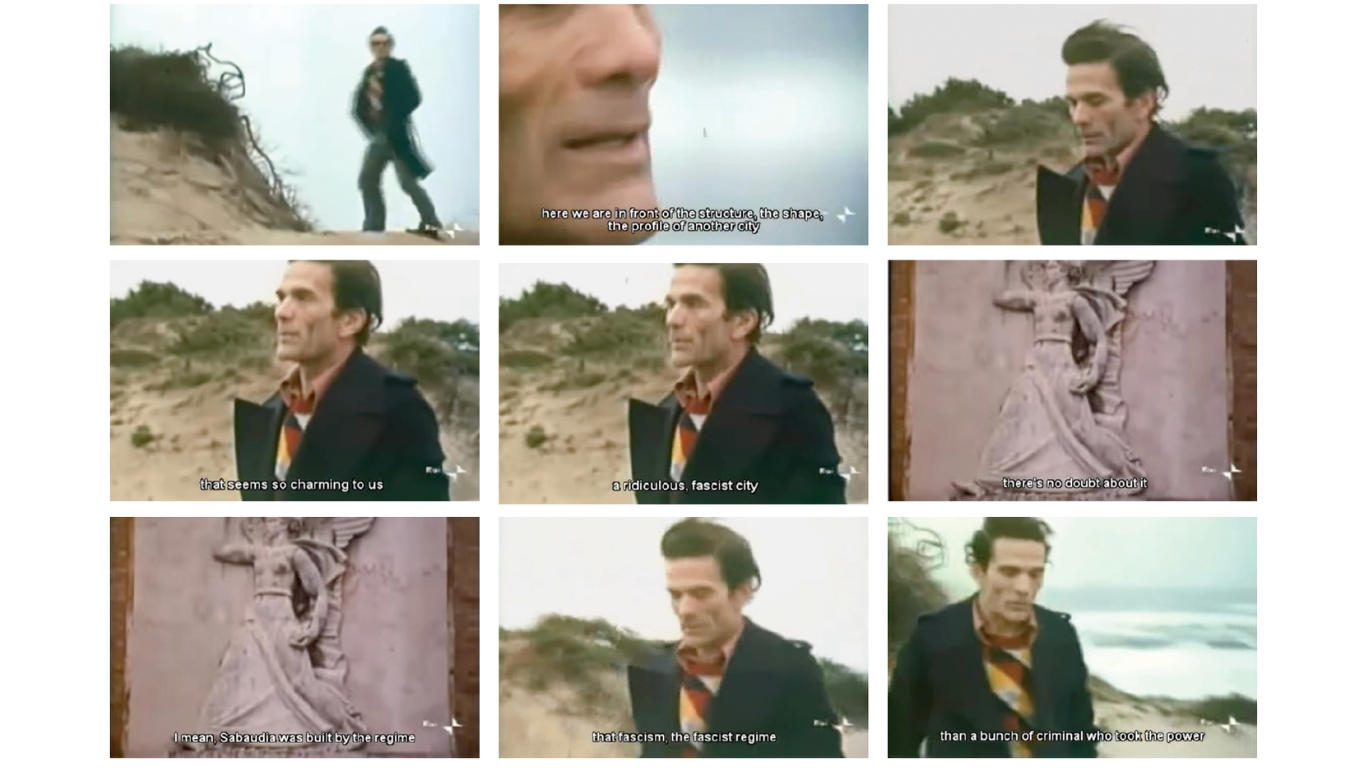
In 1974, Pier Paolo Pasolini stood in front of Sabaudia, a city built under the Italian fascist regime. Walking on the beach in his black winter overcoat in a windy landscape, he looks, observes, and contemplates.
“Here we are in front of the structure, the shape, the profile of another city immersed in a strange, grey, lagoon light. […] It is Sabaudia. How we made fun – we, the intellectuals – of the regime architecture of cities like Sabaudia, and yet looking at this city now, we feel something completely unexpected. […] You really feel like there are regular families in there, human people, complete living beings, whole, full in their humbleness. How do we explain such a thing? […] A ridiculous fascist city that seems charming to us. We have to examine this fact. I mean, the Regime built Sabaudia; there is no doubt about it, but in fact, there is nothing fascist about it, if only for some exterior traits.” (from e la forma della città, 1974)
Pasolini continues by saying that fascism, the fascist regime, in the end, was nothing more than a “group of criminals who took power”. It killed, dominated, organised violence, built cities, and produced fear. It left behind ruins, monuments, trauma, and death. However, for Pasolini, this violence did not necessarily mean a deep transformation of Italian reality. According to him:
“those empowered criminals, in fact, were unable even to scratch the surface of Italian reality. Thus, Sabaudia, even if the Regime built it […], does not find its roots in the Regime that built it. It is rooted in that reality that Fascism dominated with tyranny. I mean, it is the small town, rustic, paleo-industrial, etc., that sprouted Sabaudia, not Fascism.”
Its model remained, in his words, “reactionary and monumental”. Local and working-class cultures continued to live according to forms of life that pre-existed fascism. The Regime could impose obedience, but not total inner adhesion. In that sense, it was unable to complete the work of homologation. Pasolini then makes a brutal distinction:
“nowadays, it is the opposite, the Regime is a democratic one, even so, that indoctrination, that kind of homologation that Fascism could not obtain at all. The power of today’s society, which is the consumerist civilisation, instead, realises it perfectly, destroying all specific realities, taking away reality from the different ways of being human […] So I can say without a doubt that true Fascism is exactly this power of the consumerist civilisation.”
Therefore, in my interpretation of Pasolini’s contemplation, true fascism is not only the fascism of uniforms, monuments, flags, and criminals in power. It is also the power that enters language, imaginaries, bodies, desires, territories, and makes different forms of life disappear under the sign of sameness – or, in other words, of commodity. The old fascism wounded reality. The new one decides in advance which reality can appear. Moreover, it entered our hearts.
Pier Paolo Pasolini op het strand van Sabaudia. https://www.youtube.com/watch?v=bipWHxTi-3c
A word that sounds bureaucratic, but that describes a massacre of ways of being. In his text Acculturazione e acculturazione (1973), Pasolini writes that “no fascist centralism had managed to do what the centralism of consumer civilisation had done”. Through infrastructure, television, and the new system of information, the centre of consumerist civilisation assimilated countries that had been historically differentiated and rich in particular cultures. In this way, he writes, “an operation of homologation began”, harmful to authenticity and multiplicity. The new industrial power no longer wanted only a human being who consumes; it wanted a human being for whom no ideology other than consumption was conceivable. A kidnapping of reality through the appearance of freedom and individual choice.
What does this have to do with artistic freedom today?
Maybe everything.
When we speak about censorship, we usually imagine prohibition: a politician, a government officer, a fascist group, a right-wing newspaper, an angry audience, an online threat, a cut in funding, a door closed, a dismissal letter, and so on. Of course, these forms exist. They are not imaginary. In Europe today, reports on artistic freedom describe pressures that include restrictive rules, political interference, attacks by non-state groups, online threats, manipulation of public funding, and less visible forms of institutional pressure that lead cultural workers toward self-censorship.
“I am interested in the censorship that does not yet need to censor, because the mouth has naturally learned the form of the expected content.”
However, I am interested in this at a previous moment – a more sophisticated one. The moment before someone says: “You cannot say that.” The moment when cultural workers, already trained by a homologated vocabulary, begin to imagine what should not be said, how it should be said, contextualised, formatted, translated, made useful, made marketable, made readable. I am interested in the censorship that does not yet need to censor, because the mouth has naturally learned the form of the expected content.
If Pasolini gives us the name of this process – homologation – Mark Fisher helps us understand its contemporary ontology, the vocabulary of sameness that takes specific realities away.
In Capitalist Realism (2009), Fisher argues that capitalism is not only an economic system but also a “pervasive atmosphere” that conditions the production of culture, the regulation of work, education and care, and even the limits of what is possible to imagine. What counts as realistic, Fisher writes, is “politically produced”. Neoliberalism succeeds when it no longer appears as an ideology, but as reality itself.
Here is where Fisher’s concept of business ontology becomes crucial to understanding the kind of vocabulary that is training us. It installs a world in which it becomes simply obvious that everything in society – including education, healthcare, culture, public life, and subjectivity – should be run as a business, and ultimately, by a private business.
To glimpse how this ontology has entered our hearts, instead of thinking about what we cannot say and why, think about the words we say all the time: feedback, career, innovation, entrepreneur, maker, lobby. All these words are closer to Silicon Valley than to experimental theatre practices, and why have we naturalised them so much? What kind of homologation has happened here? What kind of experimental theatre field results from that process? What specific realities does that homologation take away from the landscape?
In the political imagination in which I was formed, these words belonged to another vocabulary. Feedback was critical thinking. Career was not an individual competition, but a relation to research, history, and trajectory. Innovation mattered less than rupture, contradiction, or necessity born from precariousness. Networking and lobbying were closer to social organisation, alliance, or political articulation. And the artist was not yet a maker-entrepreneur, but a worker among other workers.
“Feedback, career, innovation, entrepreneur, maker, lobby. All these words are closer to Silicon Valley than to experimental theatre practices, and why have we naturalised them so much?”
In the political imagination produced by capitalist realism, these words are reorganised. Feedback becomes a tool for improvement aimed at profit and productivity. Career becomes an entrepreneurial fantasy that makes us believe we can detach ourselves from the working class. Innovation remains hard to define, while entrepreneurship sounds like a fairytale built by countless self-help books from the last century. The word maker, despite its practical truth, confuses artistic labour and, by pretending that one artist is making theatre, somehow sabotages collectivity; therefore, it is a distraction. And lobby… Lobby is corruption – I learned that from House of Cards, the Netflix show.
What this vocabulary creates is an inner, hyper-privatised way of dealing with the public. Theatre helps me understand this absurdity: it comes from older forms of public life, but is forced to speak the language of the commodity. Like Sabaudia, it may be formatted by a regime that is not its root.
Theatre is not a business because it does not fit into any convincing business model. It rarely pays for itself only through tickets, and it cannot become an app or be reproduced endlessly without losing the very condition of its existence: a group of bodies, in a specific room, at a specific time, sharing something that will soon disappear.
“Its ‘dependency’ on public funding does not mean that theatre is a failed business. Public funding exists because a society decides that some things must exist outside the logic of profit.”
That is not a defeat of theatre. That is exactly its political force. Its ‘dependency’ on public funding does not mean that theatre is a failed business. Public funding exists because a society decides that some things must exist outside the logic of profit. When we push theatre to justify and assimilate itself into the vocabulary of private business, we are not only asking for a plan, context, or relevance; we are asking theatre to translate itself into the language of the system that makes theatre almost impossible.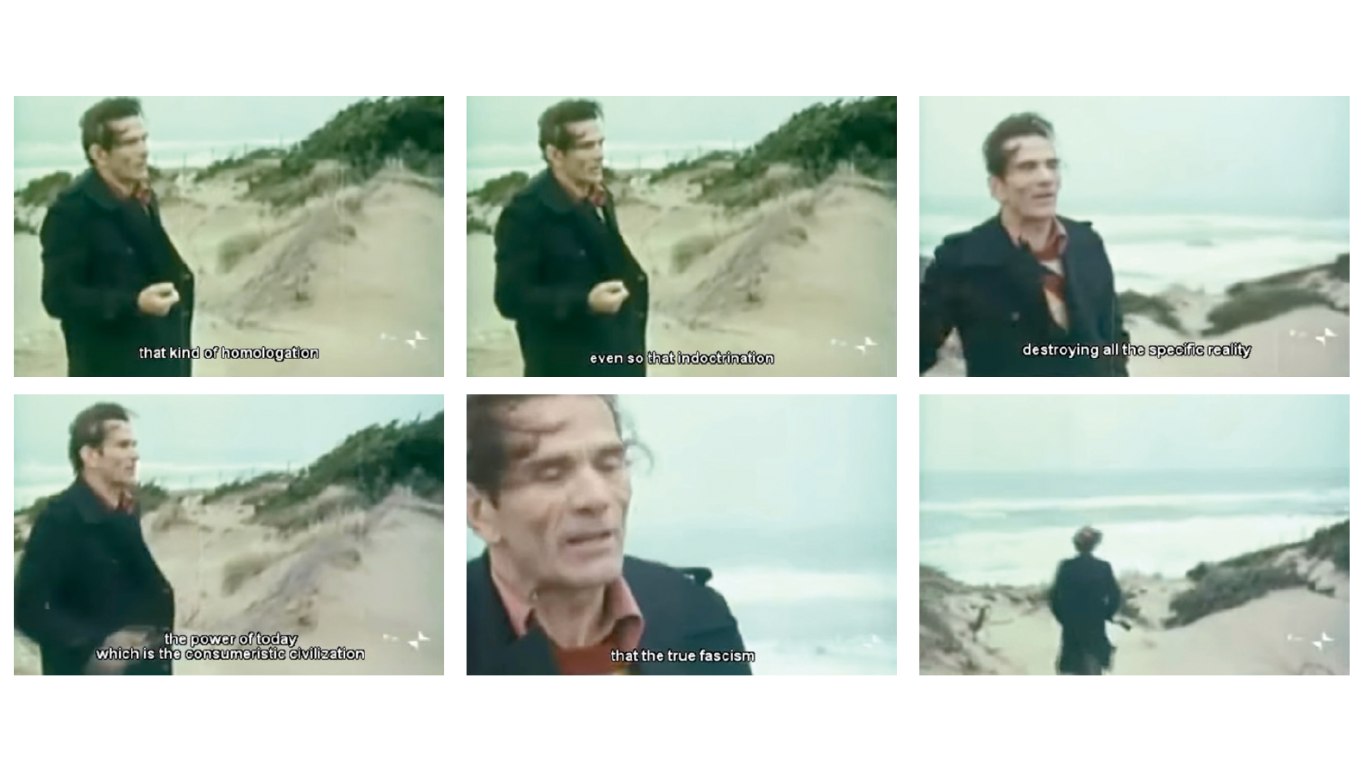 I am not against plans, context, relevance, responsibility, mediation, or the necessity of thinking about whom we are speaking to. However, I am against the moment when all these questions become indistinguishable from the grammar of the market. Because then the artist is asked to become readable inside a regime that has already decided what reality is.
Near the end of Capitalist Realism, Fisher writes about the “need to revive the idea of a public space that cannot be reduced to the aggregation of individuals and their interests”. Theatre still belongs to this fragile possibility. But only if we stop translating it, in advance, into the vocabulary that makes it acceptable. Before censorship, there is homologation. And perhaps the first gesture against self-censorship is to recover the words with which theatre can still name itself as a public practice.
Lees hier de Nederlandse vertaling.
KRIJG JE GRAAG ONS PAPIEREN MAGAZINE IN JOUW BRIEVENBUS? NEEM DAN EEN ABONNEMENT.
REGELMATIG ONZE NIEUWSTE ARTIKELS IN JOUW INBOX?
SCHRIJF JE IN OP ONZE NIEUWSBRIEF.
JE LEEST ONZE ARTIKELS GRATIS OMDAT WE GELOVEN IN VRIJE, KWALITATIEVE, INCLUSIEVE KUNSTKRITIEK. ALS WE DAT WILLEN BLIJVEN BIEDEN IN DE TOEKOMST, HEBBEN WE OOK JOUW STEUN NODIG! Steun Etcetera.
artikel
08.09.2026
Leestijd 8 — 11 minuten
08.09.2026
—
14.01.2027
Rodrigo Batista is a Brazilian theatre director, actor and teacher based in Belgium. He holds a BA and an MA in Theatre Directing from the University of São Paulo, as well as an MA from DAS Theatre in Amsterdam. From 2007 to 2017, he was the founder and director of the São Paulo collective [pH2]: Estado de Teatro, where he developed performances and public seminars addressing biopolitics, tragedy, and debt. Since moving to Europe in 2017, his work has focused on insurrection, explicit political language, necropolitics, decolonial disputes and capitalist realism, through projects such as The Furious Rodrigo Batista and KIDNAPPED: A Training Ground for the Brutality that Is Coming. He teaches in the BA Drama – Play & Make programme at the Royal Conservatoire Antwerp and has also taught at LUCA School of Arts, KASK, DAS Theatre and other institutions in Europe and Brazil. His artistic practice translates philosophical, political and historical material into embodied theatrical procedures.
Klaas Tindemans
Mia Vaerman
artikel 08.09.2026
Klaas Tindemans
Mia Vaerman