HUNTER – Liesa Van der Aa / B O D I E S
Let’s play!
Evelyne Coussens




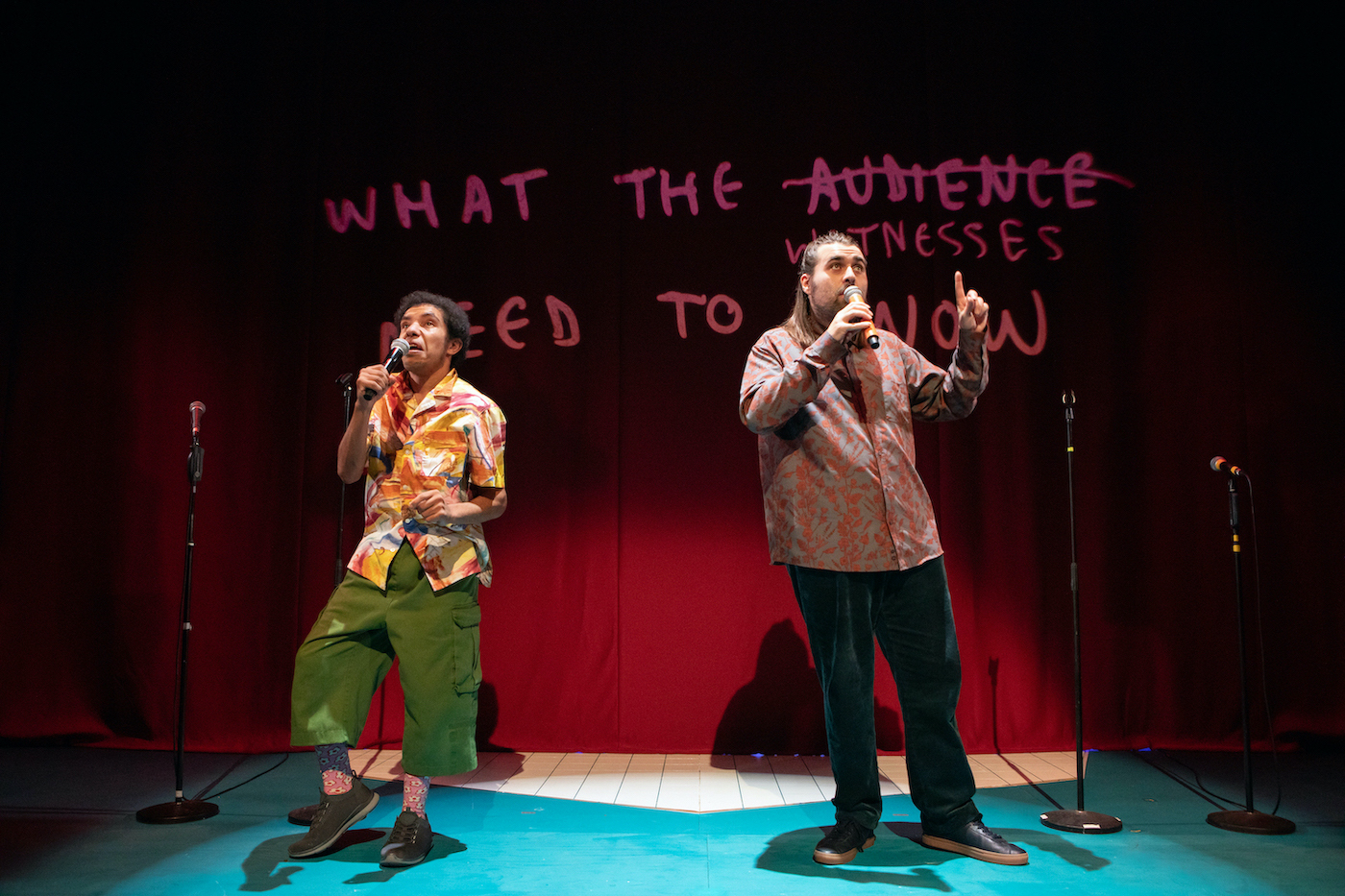
Imposter 22, Royal Court Theatre and Access All Areas © Ali Wright
Terms such as ‘inclusion’, ‘accessibility’, ‘solidarity’ and ‘participation’ have figured in the policy plans of cultural institutions for at least a decade. And it must be said: a lot has changed. But not enough. If the theatre sector wants to be truly, radically inclusive, we cannot be complacent. Here, Kelsie Acton talks about her own experiences, makes a case for relaxed performance and asks – from the bottom of her theatre heart – for more, sincere and sustained attention to those who look, listen, feel and experience differently.
I am sitting in an old theatre in London. I am doing one of my favourite things – attending a Saturday matinee of the ballet. Today, however, some of my ribs have rolled out of place. I know this because if I run my hand just below my collar bone, I can feel the long ridge of the bone sticking up under my skin. More pressingly, I know this because there is a band of pain and tension running down my right arm, terminating in my little finger. Similarly, I can feel the sheets of muscle that lie under my right cheek and wrap around the right half of my skull alive with tension. But I live with pain and if I stayed at home every time I was in pain I would never get to watch stunning dance performances like this one. I watch the choreography unspool onstage, marveling at the clever musicality, shifting restlessly in my seat, seeking a more comfortable position. A tap on my shoulder. The person seated behind me hisses, ‘Can you stop moving? So distracting!’ I freeze. Unable to watch the performance, unable to think about anything but the pain, the tension and the task of not moving, I leave.
There are strict rules for audiences of theatre, dance and other forms of live performance. Sit still. Be silent. Only leave your seat at intermission. Applaud, but not too much, and only at the right times. Be impressed by the sound levels and bright flashing lights but never overwhelmed or distressed. These rules can be barriers that keep people from attending performances.
“Around the world relaxed performances all generally acknowledge that there’s not just one way to pay attention to a performance and find innovative ways to give audiences choice and agency over their experiences.”
These rules, both spoken and unspoken, are being questioned and challenged by a movement called ‘relaxed performance’. Relaxed performances are a collection of practices developed with autistic people, people with learning disabilities and their families, although relaxed performances can benefit a broad range of people. They try take their needs into account in order to make watching live performances more inviting and accommodating for people who otherwise feel that performance spaces are not designed for them.
A word about language. Disability language around the world is complex and shifts as people find new words and ways of understanding their experiences. Here, I’ll use ‘disabled’ to reflect the social model of disability. The social model of disability asserts that people are not disabled by their bodies or minds, but by the ways they are excluded from society by inaccessible architecture, policies and other people’s attitudes. For example, in the UK people with learning disabilities have the right to vote, but are frequently turned away from polling stations by workers who assume they are not allowed to vote. In this case, attitudes towards disabled people are a barrier to participating in a basic function of democratic society. I also use the language that is often preferred by particular groups of people. For example, many autistic people prefer ‘autistic’ instead of ‘people with autism’ to reflect that autism is part of them and not something that can be removed. In contrast, people with learning disabilities often prefer this because it emphasizes their personhood.
These practices remove barriers to autistic people, people with learning disabilities and many other people attending performances by providing comprehensive information about the venue and performance and adjusting expectations about audience behaviour. They may also make adjustments to the lights and sound to make performances friendly to people with sensory sensitivities, offer discounted tickets and give audiences additional choice and agency over their experience.
Relaxed performances began simultaneously in England, France and the United States around the late 2010s, developing from the autism-friendly cinema movement which welcomed families with autistic children to movie screenings. These screenings kept lights on and lowered sound levels to make movies accessible to children with sensory sensitivities. They also took a relaxed attitude to sound and noise, allowing children and their families to move and make noise during the movies. Relaxed performance is practiced all around the world, so there are multiple ways to ‘do’ relaxed performance. Culture Relax in Paris does relaxed performances differently from Access All Areas in London, who are different from People’s Light Theatre in Pennsylvania, who are different from the West Kowloon Cultural District in Hong Kong. But around the world relaxed performances all generally acknowledge that there’s not just one way to pay attention to a performance and find innovative ways to give audiences choice and agency over their experiences.
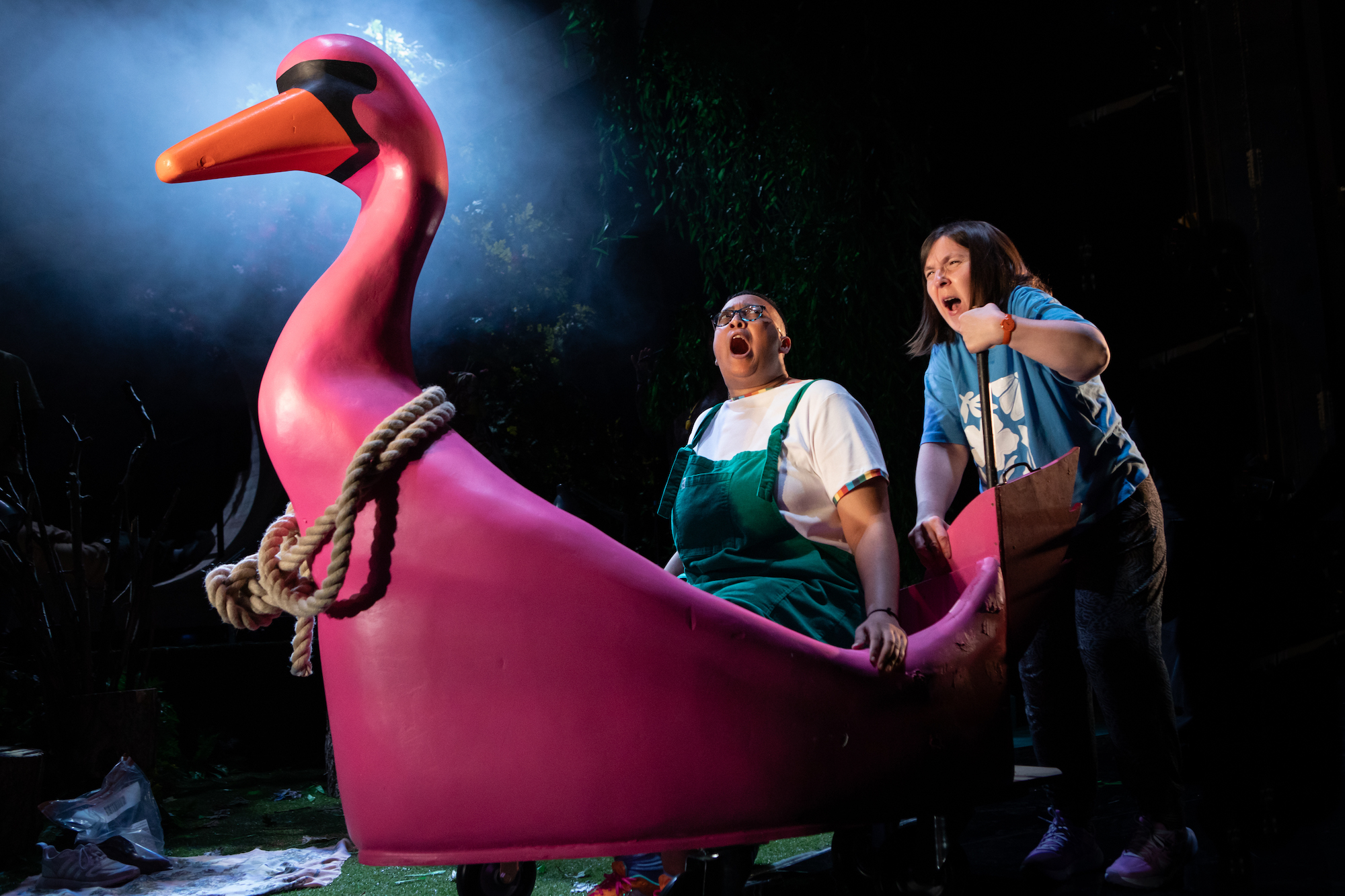
Imposter 22, Royal Court Theatre and Access All Areas © Ali Wright
I am seated in a theatre in my hometown in Canada. It’s a much nicer seat than I’m used to – usually I buy a ticket for the cheap seats and sit at the very back. But I’m about halfway down the rake. I’ve spent the extra money because I’ve heard amazing things about this production of the Citadel Theatre’s The Tempest. The show starts. The set is beautiful – wood and projection screens. The costumes have lush colours. And I can understand nothing. The sound design has layered music and the sound of waves and whispers under the entirety of the performance. I have differences in my auditory processing, the way my brain understands sound, and as soon as there is noise I struggle to understand what people are saying. I stay for the whole performance, trying to appreciate the visuals. But I leave angry and disappointed, with a splitting headache from trying to catch a word here or there.
“When we imagine an audience, why do we imagine people who are so similar to each other?”
When you’re disabled, seeing performance is often just an exercise in disappointment. Often, venue information will say they’re ‘accessible’ without saying what they mean by that. So, you pay money, turn up and find you can’t get in. Or maybe you can get in, but you can’t understand what’s going on. Or maybe you can understand, but the cost of staying in that space is pain and fatigue. You’re never given enough information to know if the performance you want to see is actually accessible to you.
Around the world, relaxed performances almost always involve comprehensive pre-performance information to let disabled people decide if a performance will be accessible to them. Pre-performance information also helps audiences plan their visit to the venue. This usually involves information about:
Comprehensive pre-performance information is important because disabled people need to know exactly what to expect. Someone who uses a mobility tool like a wheelchair will probably want to know how far the venue is from the nearest bus stop and if there’s a well-paved flat sidewalk. There are many, many reasons that people might want to know the location and type of washroom in the venue before arriving. People who are hard of hearing and who want to have a conversation with their companions will want to know which parts of the building are quieter and which are louder. Similarly, people who need extra processing time, or who have a visual disability such as prosopagnosia might want to look at pictures of performers in costume to help them figure out who is who. Someone who suffers from migraines and who is light sensitive will want to know about any flashing lights.
Not everyone finds surprise pleasurable. Because of this, it’s generally advisable to divide up pre-performance information and make it something that people can opt into. For example, someone who needs information about the layout of the theatre building and to know where the washrooms are, might not want to know about the contents or visuals of the performance. It’s also very important that this information be in an accessible form like plain language or Easy Read. Plain language is writing that people can understand the first time they read it. Easy Read (or Easy to Read) is a style of writing used by people with learning disabilities that pairs images with simple sentences and familiar words. Above all, it’s important to be honest in pre-performance information. In my experience, venues and artists do not want to admit the ways in which spaces and performances are not accessible. But failing to mention difficulties that disabled audience members will encounter travelling to the venue, within the venue itself, or during the performance will simply frustrate and alienate them.
Almost every relaxed performance involves a welcome address to the audience where they are invited to move, make noise, and come and go as they need to. Often these welcome addresses are delivered by someone from the theatre staff. London-based company ZooCo, all of whose performances are relaxed, suggest however, that the invitation to move and make noise, to come and go and generally respond naturally to the performance feels more real to audiences when it is made by the performers.
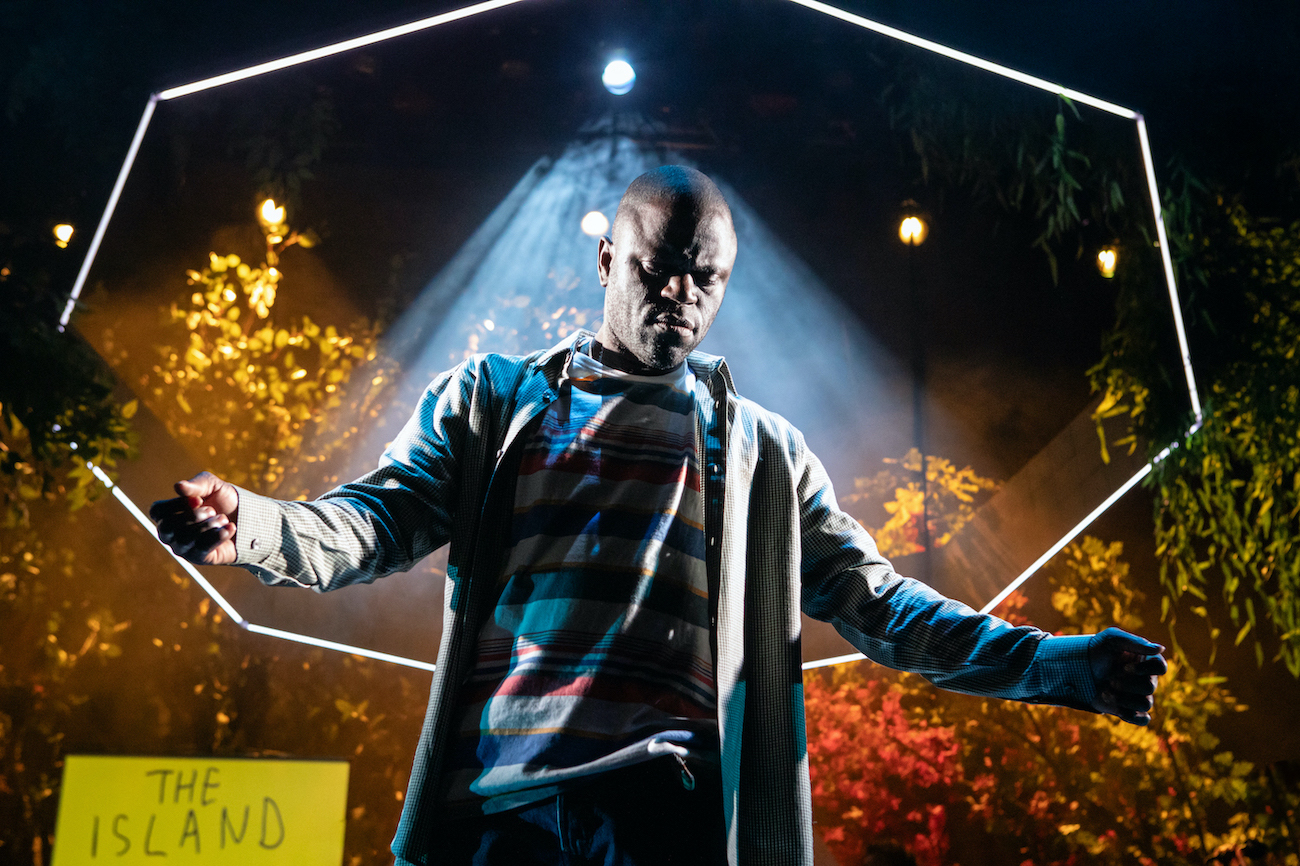
This also opens up a creative space to allow the relaxed performance announcement to match the feeling of the performance. For example, in Imposter 22 at the Royal Court, Access All Areas artists use the relaxed performance announcement to set the scene. Imposter 22 is a mystery that follows a group of autistic and learning disabled people trying to reconstruct the final days of Joe, who has died under mysterious circumstances. They’re afraid that because they’re autistic and learning disabled they won’t be believed, so they recruit the neurotypical members of audience as witnesses. They add, ‘We hear there are some disabled and neurodivergent people in the audience. We guess it’s okay that you’re here too’. They then go on to make the relaxed performance announcement. Too often, performances about disability and ableism assume non-disabled audiences. In their relaxed welcome Access All Areas makes explicit the critique of the performance – that autistic and learning-disabled people are rarely believed about their own experiences – without alienating disabled and neurodivergent members of the audience. Or, in the relaxed performance welcome of 24 Italian Songs and Arias, a performance about opera and failure, Brian Lobel tells the story of being so moved by the music at ‘a fancy schmancy music hall’ that he clapped enthusiastically when he was not supposed to. The relaxed performance announcement goes on to reassure the audience that this, ‘is not a fancy music venue… and your applause is welcome anytime’. Relaxed performance announcements, done creatively, are an opportunity to frame the performance and the audience’s relationship to it.
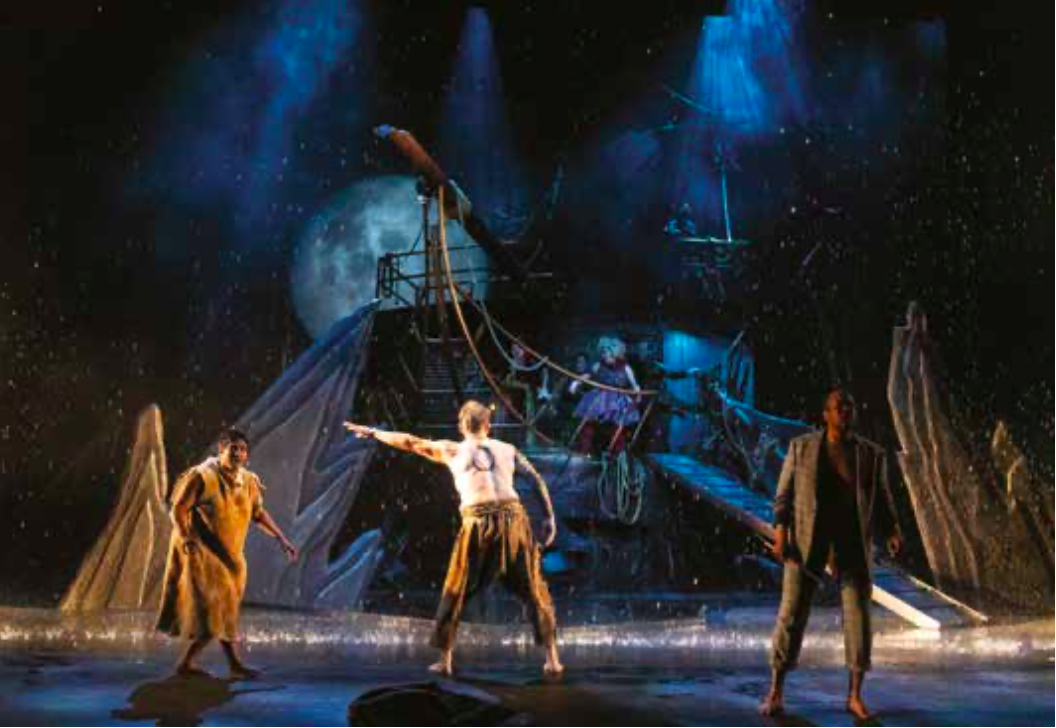
The Tempest, Citadel Theatre © Ian Jackson
I’m sitting in a theatre, my ear defenders in my hands. Ear defenders are padded ear muffs, often worn by people who work in noisy environments to protect their hearing. I carry a pair with me all the time. As the lights dim, I slide them over my head. The dance show starts with a literal bang, and I flinch. The show is loud, and it never lets up. Ten minutes in, I’m fumbling in my bag for ear plugs, which I slide into my ears under the ear defenders. Forty minutes in, I give up. Overwhelmed by the sensory onslaught I slowly and carefully make my way down the stairs, disoriented, worried that I might trip. Outside, I remove my ear defenders and ear plugs, just in time to hear one usher say to another, ‘ – disruptive. If you’re going to be rude and leave, at least do it quickly’.
Relaxed performances can also involve adaptations to the sensory environment of the performance. These can involve: keeping the house lights on (which can also make coming and going less dangerous depending on the venue architecture); lowering the sound levels and sometimes simplifying the sound (this can include taking out atmospheric music underneath people talking); and removing flashing lights and quick lighting transitions. Venues and artists have sometimes found this element of relaxed performances difficult. As a result, relaxed performances that only provide pre-performance information and a relaxed attitude to audience noise and movement are far more common in England than relaxed performances that consider people with sensory sensitivities.
Jess Thom, an English performer, and an advocate for relaxed performances recently wrote a blog post advocating for venues and artists to consider people with sensory sensitivities in their relaxed performances. She argues that relaxed performances that only adjust attitudes about audience behaviors are a form of ‘cultural curation’, where venues and artists decide that some performances are not for disabled and neurodivergent audiences. The National Institute for Health estimates that between 5 and 16% of the population have differences in sensory processing. This means that a large group of people are deeply underserved by contemporary performance aesthetics that value pyrotechnic displays of venues’ technical capacities. Even if artists and venues don’t see the use of rapidly flashing lights and high sound levels as cultural curation, these aesthetic choices exclude people from engaging with performance.
In addition, many relaxed performances offer discounted tickets, acknowledging that disabled people and their families often live in poverty. Finally, relaxed performances can also involve adjustments that give disabled audiences more agency over their experience of the performance. For example, CRIPSiE, a disability dance company in Western Canada offers a variety of seating including mats on the floor, cabaret seating, and couches. They also encourage audiences to reconfigure the seating, as long as aisles and fire exits remain clear. This is an acknowledgement that disabled people, particularly those who use mobility tools, are frequently offered very limited seating options and often ones that mean they cannot sit with the people they came with. Similarly, Ophira Calof, a Toronto-based disabled artist offers disabled audience members who need particular seating (for example, aisle seats or seats directly in front of the sign language interpreter) or time to familiarize themselves with the space the chance to enter the auditorium early.
Imposter 22, Royal Court Theatre and Access All Areas © Ali Wright
I’m sitting in a theatre. And I’m thinking about how venues and artists never anticipate someone like me. I live with pain. I’m also neurodivergent and sensitive to sound and some lights. And I love theatre and dance. But, as might be obvious from the stories I’ve told, dance and theatre does not love me. Distracting. Disruptive. Difficult. Disrespectful. I know all the words for people like me.
“In reality, there are many ways to pay attention. In reality, we all experience the world differently.”
The major barriers to relaxed performance are always attitudinal. We’ve been taught to think that anything other than sitting perfectly still and quiet in the dark means that we aren’t paying attention. That anything other than sitting perfectly still and quiet in the dark means we’re disrespecting the artists onstage and off. We’ve been taught that when we sit together in an audience, looking and listening to a performance, we’re all having the same experience. But in reality, there are many ways to pay attention. In reality, we all experience the world differently.
This is the last, and probably the most important part of relaxed performance. Relaxed performances need venues, artists and other audience members who are excited to question their assumptions about how audiences should behave. Resentful, begrudging access is sometimes worse than no access at all.
I’m sitting in a theatre. I’m thinking about how performance is a public space. Disabled people have spent so long fighting for access to public space. I’m thinking about how I have so much more access to the world than some other disabled people I know. I can often include myself even if it’s painful, tiring, or people judge me. Other people can’t and they are almost never in audiences. Performance is somewhere where strangers come together to experience something collectively, to feel and think together. When we imagine an audience, why do we imagine people who are so similar to each other?
Relaxed performances ask us to rethink who is in our audience and why we engage with performance. Why do we leave our houses and sit in the dark with other people just to pretend they’re not there? If those other people are essential to the experience, does it take away anything to be reminded that they are there? The magic we are looking for in performance, when the audience breathes together and is changed, can and should include the hiss of BiPAP machines, the click of fidget toys, the low squeal of a hearing aid and the murmur of someone checking in with the person they came with. That magic can, and should, include people fidgeting, pacing, coming in and out of the theatre and, depending on the performance, dancing in their seats.
I am sitting in a theatre. Most of the time when I am sitting here, I am reminded, in one way or another, that I am not welcome. At the same time, I love dance and theatre. I’m stubborn and I will keep coming and fidgeting and walking out and being frustrated. On the bus ride home, I’ll dream of the day when relaxed performances with lights and sound that are friendly to my sensory processing differences make up half of all runs and I can go see whatever I want, confident that I am anticipated and welcome. I’ll imagine that I am just one disabled person in an audience full of disabled people, an audience that reflects the full range of humanity.
KRIJG JE GRAAG ONS PAPIEREN MAGAZINE IN JOUW BRIEVENBUS? NEEM DAN EEN ABONNEMENT.
REGELMATIG ONZE NIEUWSTE ARTIKELS IN JOUW INBOX?
SCHRIJF JE IN OP ONZE NIEUWSBRIEF.
JE LEEST ONZE ARTIKELS GRATIS OMDAT WE GELOVEN IN VRIJE, KWALITATIEVE, INCLUSIEVE KUNSTKRITIEK. ALS WE DAT WILLEN BLIJVEN BIEDEN IN DE TOEKOMST, HEBBEN WE OOK JOUW STEUN NODIG! Steun Etcetera.
essay
14.03.2024
Leestijd 15 — 18 minuten
15.03.2024
—
31.05.2024
Kelsie Acton is a neurodivergent access consultant and researcher working between England, Canada and the United States. Between 2019 and 2023 she was the Inclusive Practice Manager at Battersea Arts Centre, the world's first relaxed venue following a methodology developed by Touretteshero. She also wrote the plain language version of Alice Wong's Year of the Tiger.

Evelyne Coussens
Timeau De Keyser
essay 14.03.2024
Evelyne Coussens
Timeau De Keyser