Lullabye – Anneleen Keppens
Wie zorgt er voor wie zorgt?
Tom Rummens





My Body, My Archive © Sarah Imsand
DE SINGEL presents a double bill by Congolese dance artist Faustin Linyekula. By asking ‘Where are the women?’ and ‘Who is my grandmother?’, both My Body, My Archive and Mamu Tshi, Portrait pour Amandine trace along the disrupted lineage to the performers’ female ancestors, looking for and summoning them through dance, told stories and documentary artefacts.
‘What should I tell you about my country?’ Faustin Linyekula poses bluntly with a hint of resignation—as if anticipating a Belgian audience’s expectation on what this could be about. He reveals the tiredness of stories about ‘mud, blood, ruins, dying and people trying their best’, often associated with his birth place, the Democratic Republic of Congo.
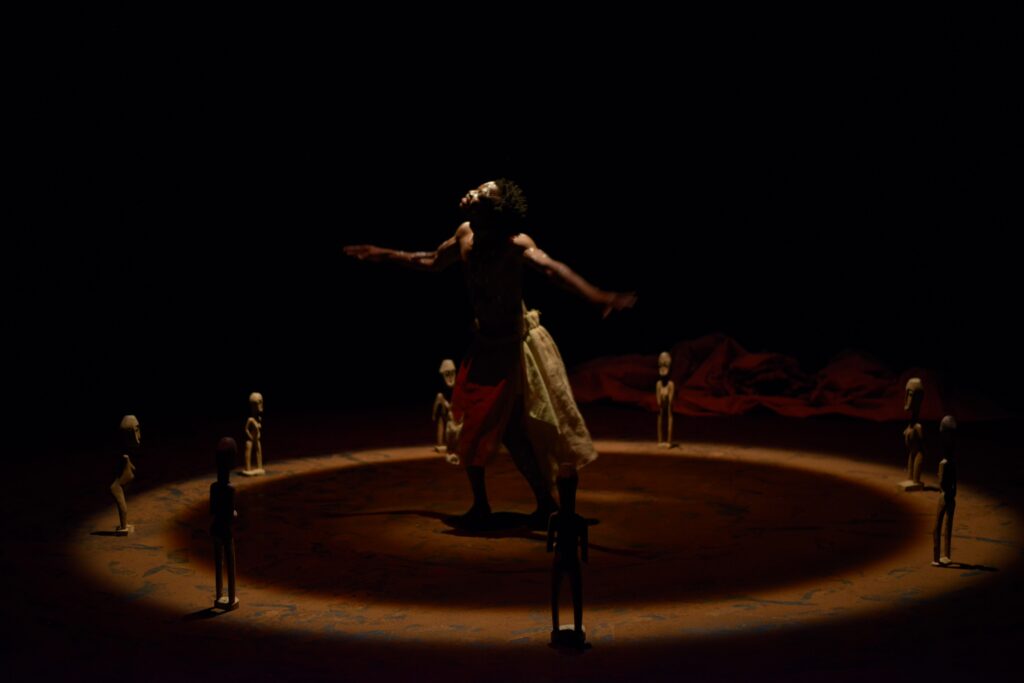
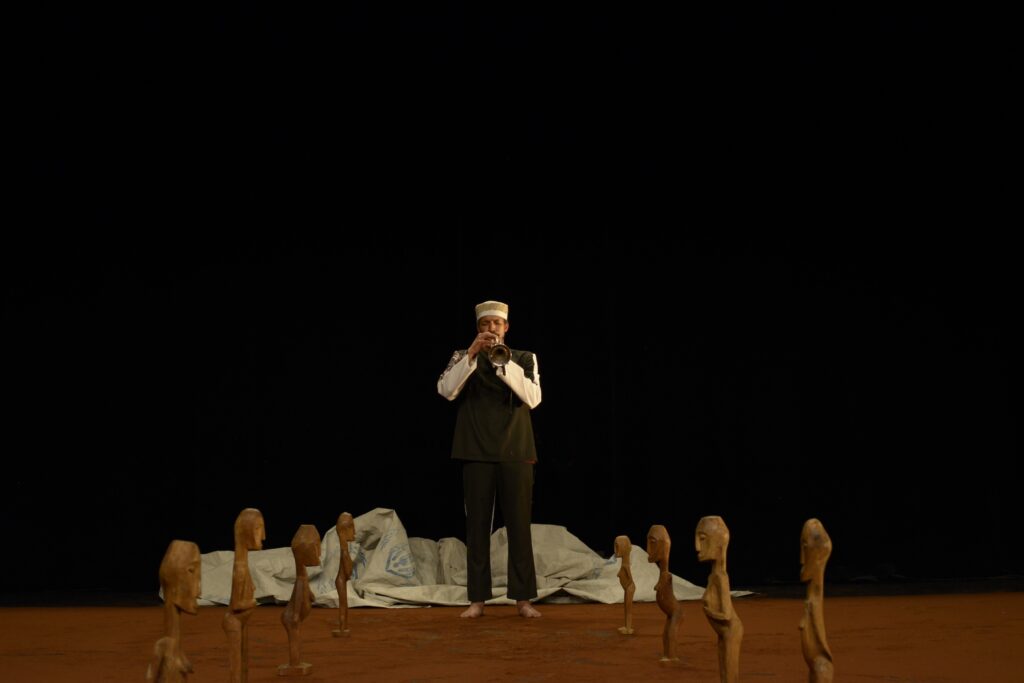
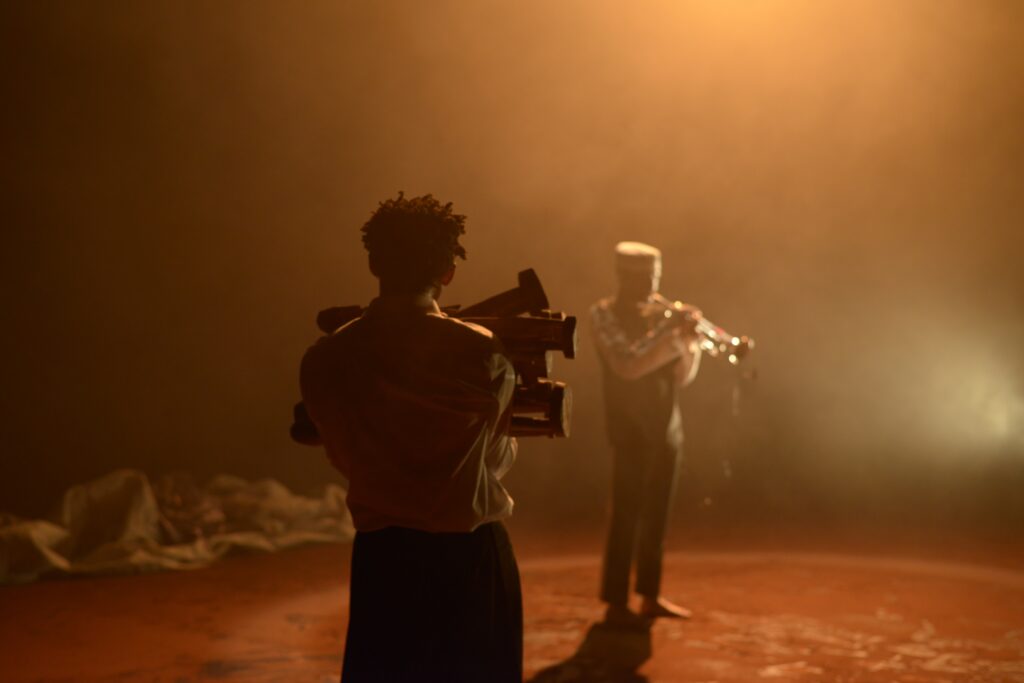
In My Body, My Archive, the piece that opens the night, Linyekula chooses to recount his search for the disappeared women of his mother´s clan and how he revives them—as bodily reminiscence and in the form of eight carved wooden statues by sculptor Gbaga. His encounters with and within the land of his ancestors are unfolded alongside Heru Shabaka-Ra, musician of the renowned Sun-Ra Arkestra, whose trumpet calls are meant to open the door.
Linyekula welcomes us in the role of storyteller Kabako to the hospitable, almost sacred landscape that the Theaterstudio in DE SINGEL has transformed into. We find the opposite of a depiction of ruin or misery. The smell of the entirely coffee-covered floor is streaming into my nostrils. Recordings of chirping birds and a video projection of grey waters, softly blurred by fog that obscures any sense of place being played. A gesture that shall become emblematic for Kabako throughout the evening: his outstretched arms, indicating and embracing, forming a container and receptor of his surroundings—his fingers like flickering, searching sensors.
“My Body, My Archive embarks on a series of dances, as if only dance can be entrusted with an answer, the body as the last resort.”
How is it possible to be so extensively informed about the male lineage of his family while not even knowing the names of the female relatives who came before him, Kabako asks himself. From there, the performance embarks on a series of dances, as if only dance can be entrusted with an answer, the body as the last resort, and I am reminded of a line from an interview with Linyekula in which he says: ‘My body might not tell the truth but at least it hasn’t lied to me either.’ I wonder if the distrust in the official historiography of the DRC can also be related to a distrust of choreography in the form of fixed and defined movement patterns: the dances seem to be improvised, sometimes like navigators, searching, pointing, referring; other times as if the movement ambushes Linyekula from within, eyes closed or wide open, a sudden hit of a past or present sensation that instantly decides how to dance in the here and now.
There is something absorbed, lost-to-the-world in the way Linyekula and Shabaka-Ra gravitate around each other on the earthy coffee floor. Their pathways only cross in the form of their footprints, not a single glance exchanged, mysteriously connected with something beyond the physical space of the theatre. In the dim light, I too feel thrown back to the sensorial powers of my own body: listening, smelling, sensing. Also image and sound recordings are not strictly used as documentary tools but evoke place and past in ominous ways. What first alludes to the subtle bother of a persevering insect culminates into a horrific soundscape of screams, shots, a helicopter, people in fear for their lives. When I see a teenager playing with a drone in the little park next to where I live that same night, it dawns on me, and I have to swallow: it was never just the almost pleasant buzzing of a fly I had heard. The stories of blood and violence were never entirely gone.
My Body, My Archive is another of Linyekula´s iterations on how to search along the delicate geo-choreography of his native land, and on how to narrate a story of a place and its people without confining their identity. It is also a reflection on how Linyekula himself has chosen to narrate and who he has invited into his artistic collaborations over the past 20 years.
“The central question of the piece hangs in the air unresolved: where are the women?”
The central question of the piece, however, hangs in the air unresolved: where are the women? Regardless of how carefully Linyekula carries the wooden signifiers of his female ancestors in his arms, undoubtedly treating them as soulful objects with feelings of their own, to me they remain absent and ghostly. And I cannot help but noticing the hard-wired alarm bell going off inside me when ideas of women* and object are overlapped.
When the statues are placed in a circle to hold Linyekula’s dance in their middle, when they form a guard of honour, or when they face the audience admonishingly, they only seem to reiterate: ‘Where are we? Where are we? Where are we?’ Other than that, they do not speak and no other female* voice is heard in the recordings, no female* face is seen on the screen. I can only suspect them in Linyekula’s dedicated dances and in his body itself. I leave the Theaterstudio still missing the women, but even more so does Linyekula, I speculate.
My Body, My Archive © Sarah Imsand
My Body, My Archive © Sarah Imsand
My Body, My Archive © Sarah Imsand
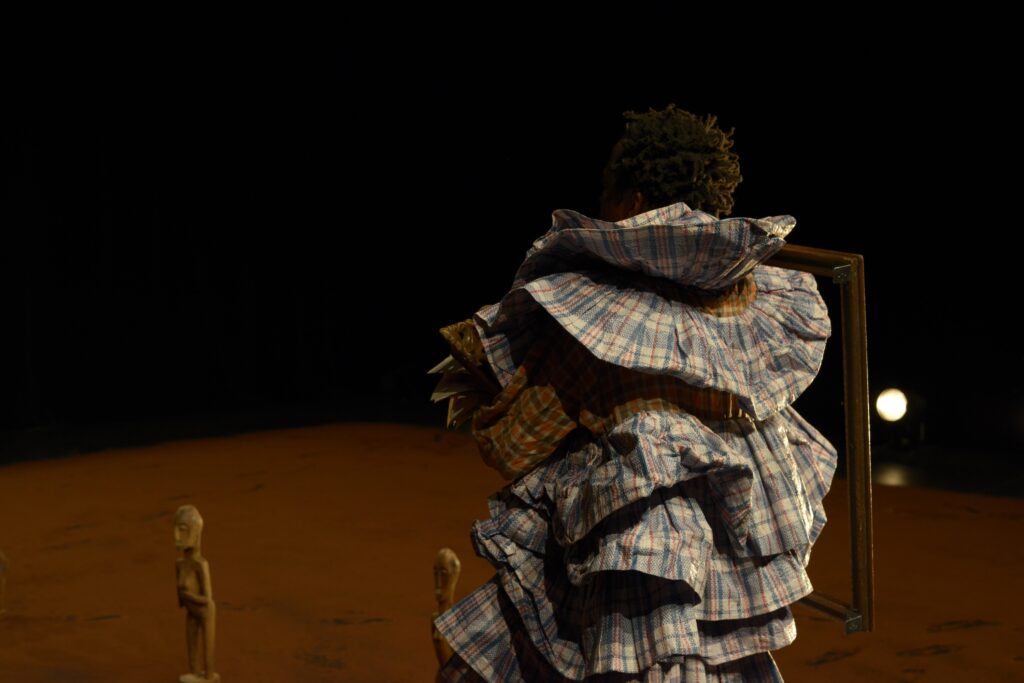
My Body, My Archive © Sarah Imsand
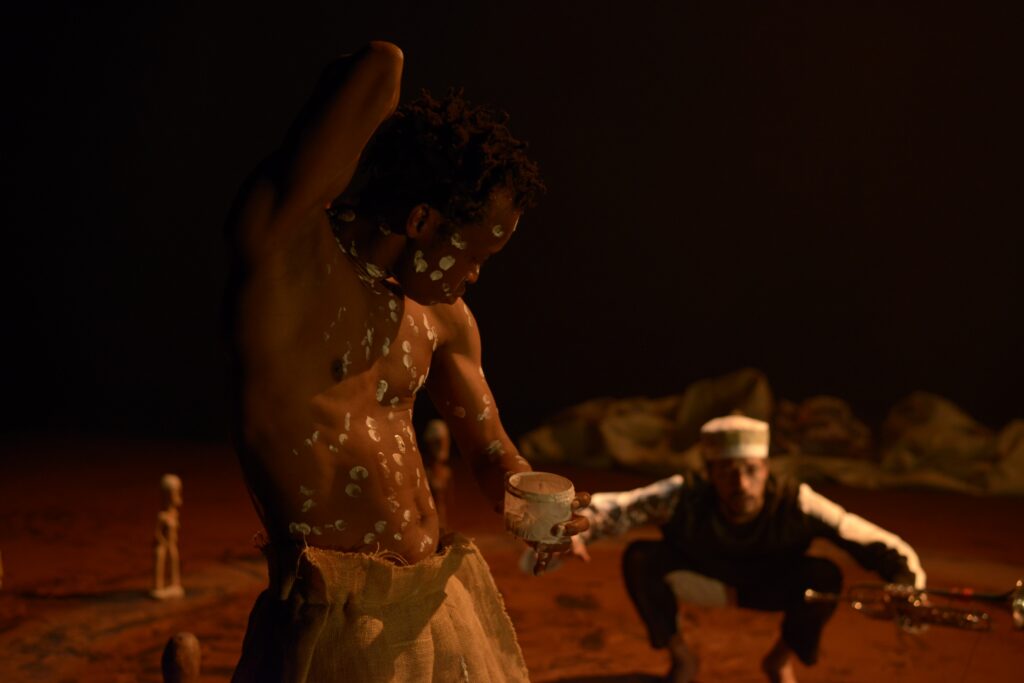
My Body, My Archive © Sarah Imsand
In the second part of the night, Krump-dancer Amandine Tshijanu Ngindu, alias Mamu Tshi, continues to unearth family bonds, disrupted by more than 30 years of diaspora. The point of departure is her and Linyekula’s journey to the Congolese Kasaï region in 2022, homeland of her grandmother, whom she encounters alive, though whose language has become foreign to her. Mamu Tshi, Portrait pour Amandine discloses the namesake’s deeply personal insight into her migrant experience, suspended between connectivity and rupture.
In compassionate reflections, some anecdotal, others like overheard streams of thought, Mamu Tshi grapples with the obstacles and enablers of interconnectedness across borders, language barriers, landlines, Western Union transfers, and privileges. ‘How is it that one person’s luck is another’s tragedy? How is my well-being so closely connected to the misery of my family?’ We are all, to some extent, equipped with political and historical answers to these questions. At the same time, we live with the cognitive dissonance they evoke day by day. The stunned bewilderment and perplexity with which Mamu Tshi speaks them aloud strikes me as far less naïve than any explanatory attempt could have been in that moment. Throughout the piece these dilemmas are given intriguing form when the sound foreshadows the video image on a domestic television. Only when young children appear on the screen—clonking their tools in what I assume to be one of the many cobalt or copper mines in the Kasaï region—does the noise I had just begun to enjoy as soothing, bell-like chimes take on an entirely opposite emotional reading.
“Unlike Linyekula, who in My body, My Archive takes on the role of a story-teller, Mamu Tshi speaks for and as herself without evidently fictionalizing her identity.”
Unlike Linyekula, who in My body, My Archive takes on the role of a story-teller, Mamu Tshi speaks for and as herself without evidently fictionalizing her identity. The flowy blouse she wears on stage is also her outfit in the video documents of her journey; we hear her real name being called by her relatives several times in the audio recordings. Krump seems somewhat her natural habitat—and at the same time, it is the most virtuosically crafted element of the piece. When Mamu Tshi starts krumping she is the mastermind plotting her movement, witnessing and producing her own transformation into a sensitive machine. The urban dance style Krump has always been considered an artistic response towards the oppression of systematically discriminated populations and a non-violent outlet of rage and grief—a range of expressions Mamu Tshi accommodates between her clenching fists and pulsating chest. Yet I wonder: how can struggle be conveyed within a technique one masters that brilliantly, in which the tiniest muscle twitch seems crafted and controlled?
In this aspect the two performances of the night complement each other: while Linyekula once called his improvisational approach to movement a ‘search for original life’, leaving it unpolished and less calculated, the perfection in Mamu Tshi’s dance seems to be the claim for agency: with every wave and impulse she sends into the farthest reaches of her body, she withdraws from any external control and interpretation, as if shouting: I am alive, you can not catch me!
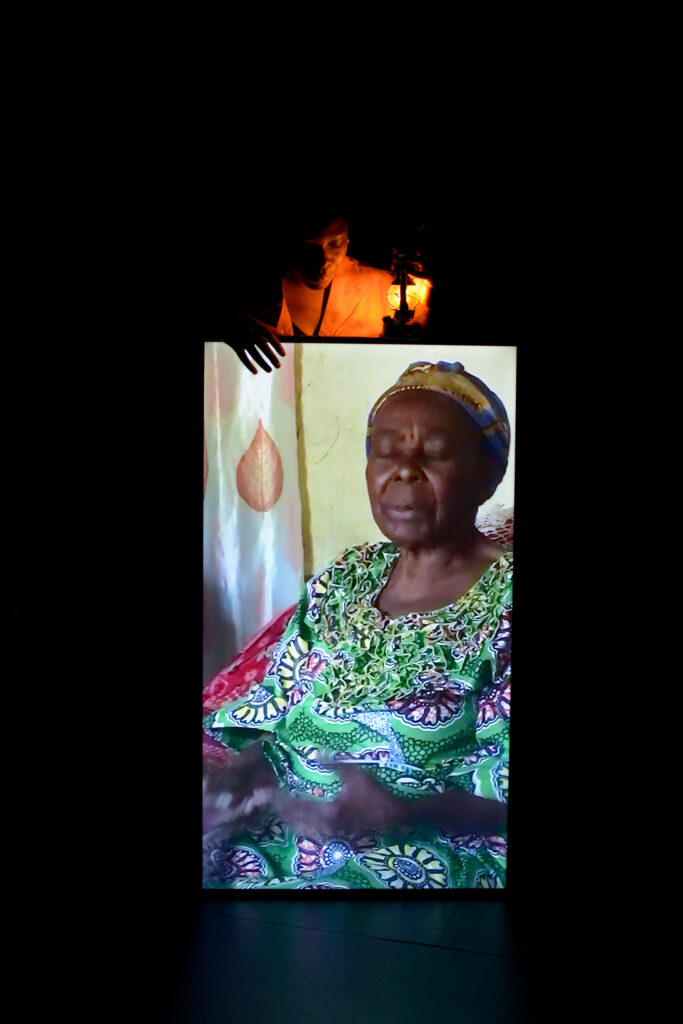
Mamu Tshi, Portrait pour Amandine © Sarah Imsand
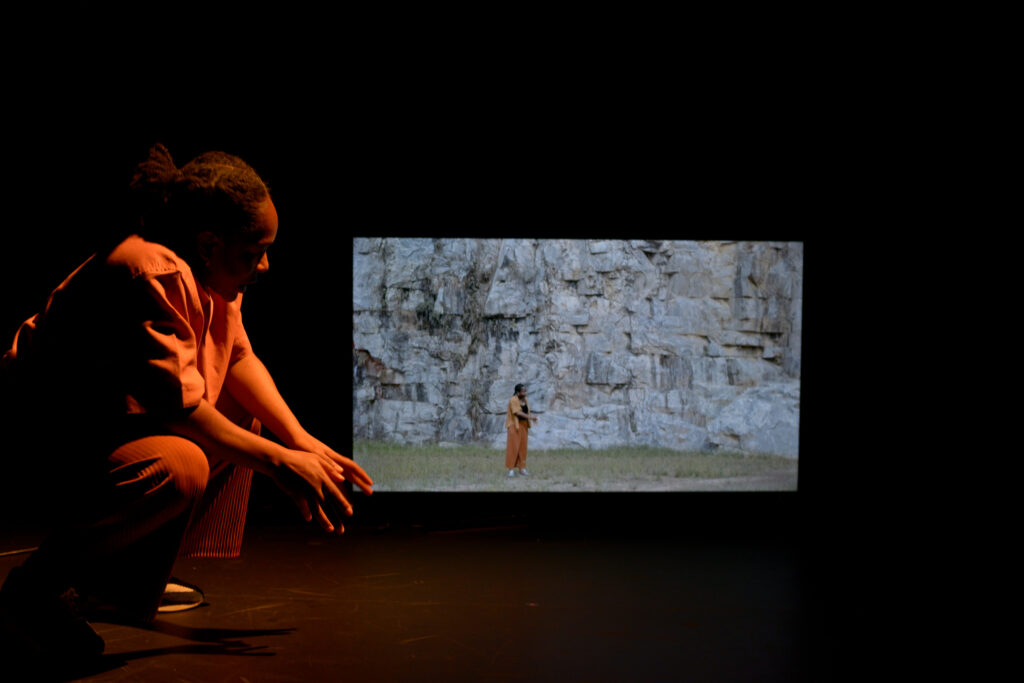
Mamu Tshi, Portrait pour Amandine © Sarah Imsand
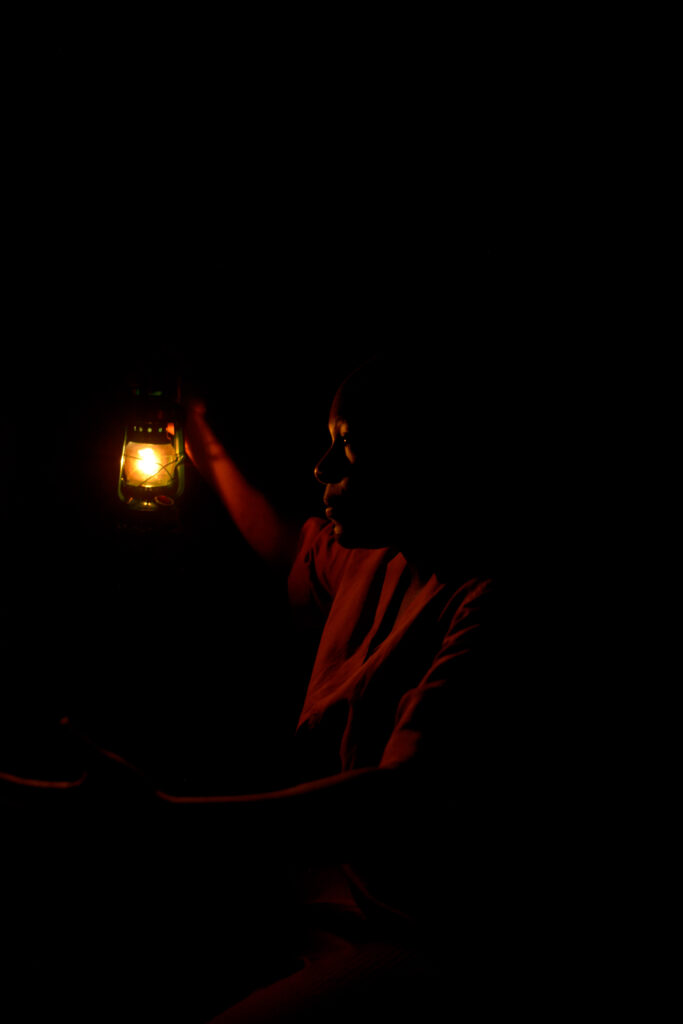
Mamu Tshi, Portrait pour Amandine © Sarah Imsand
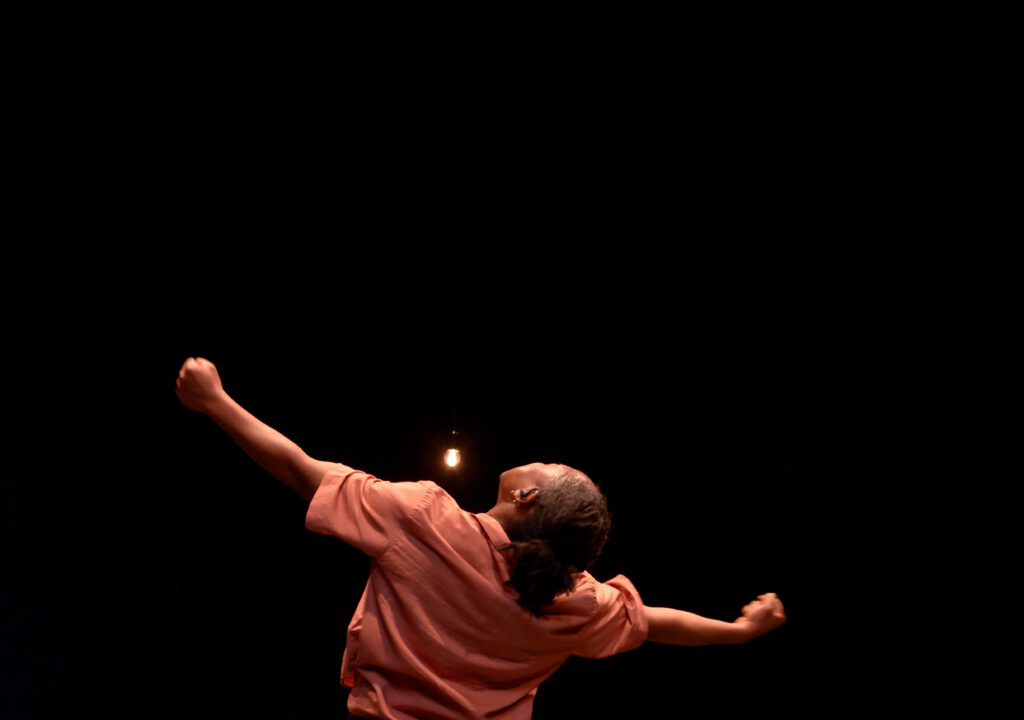
Mamu Tshi, Portrait pour Amandine © Sarah Imsand
My Body, My Archive and Mamu Tshi, Portrait pour Amandine benefit from the light each piece casts on the other. The gaping wound left by the absence of women in the first is, to some extent, alleviated by centering Mamu Tshi’s perspective in the second.
On the other hand the multimedia interplay of text, dance, sound and video in Mamu Tshi, Portrait pour Amandine is less sophisticated than in My Body, My Archive. Still, this brings me back to a passage in the programme text where Éric Vautrin allegorises Congo as a mirror for Linyekula, whose reflection he is constantly in search of, yet which has been shattered by past and present colonizers. The shards of experiential and memorial artefacts that Mamu Tshi is holding are sharply edged, not mended, factually montaged. In My Body, My Archive, by contrast, these shards shine back on each other in mysterious ways, blurring the contours of what is music or dance, past or presence, transcendental or earthly.
How does truth relate to completeness? How to resolve the conundrum that what we miss so painfully, is so difficult to make present and what we would like to get rid off, seems so rigidly stored and engrained inside of us. Faustin Linyekula’s bodily archives reveal holes and absences, and yet, I feel his necessity and trust to rely on the body as the smallest notion of place. I trust it too, I learn from it.
KRIJG JE GRAAG ONS PAPIEREN MAGAZINE IN JOUW BRIEVENBUS? NEEM DAN EEN ABONNEMENT.
REGELMATIG ONZE NIEUWSTE ARTIKELS IN JOUW INBOX?
SCHRIJF JE IN OP ONZE NIEUWSBRIEF.
JE LEEST ONZE ARTIKELS GRATIS OMDAT WE GELOVEN IN VRIJE, KWALITATIEVE, INCLUSIEVE KUNSTKRITIEK. ALS WE DAT WILLEN BLIJVEN BIEDEN IN DE TOEKOMST, HEBBEN WE OOK JOUW STEUN NODIG! Steun Etcetera.
recensie
28.05.2025
Leestijd 8 — 11 minuten
01.03.2025
—
14.09.2025

Anne-Lene Nöldner works as a dance artist in Belgium and Germany. She is a member of the ensemble Elsa Artmann/SANFTE ARBEIT, with whom she creates performances and publishes texts between essay and anecdote on their online platform sanfte-arbeit.de. From September 2025 Anne-Lene will start as artistic researcher at the Royal Conservatory of Antwerp.
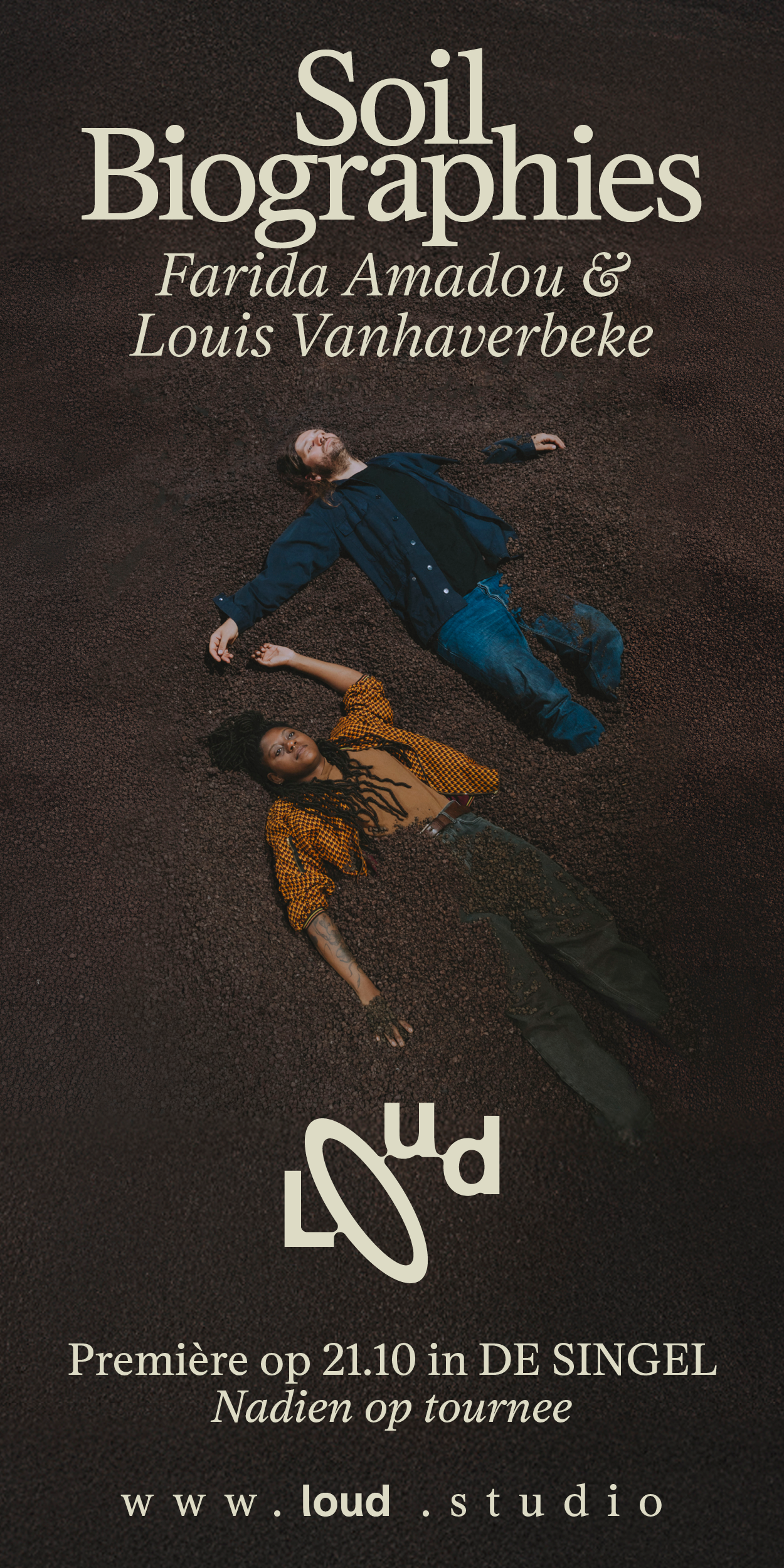

Tom Rummens
Floris Baeke
recensie 28.05.2025
Tom Rummens
Floris Baeke