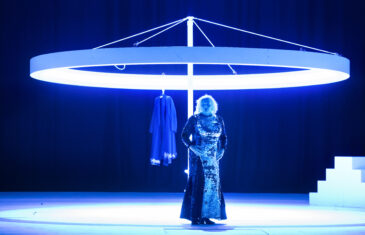
De Materie – Phia Ménard/Opera Ballet Vlaanderen/Bas Wiegers
Een schurend vooruitgangsdenken
Sébastien Hendrickx




© Paulien Verheyen
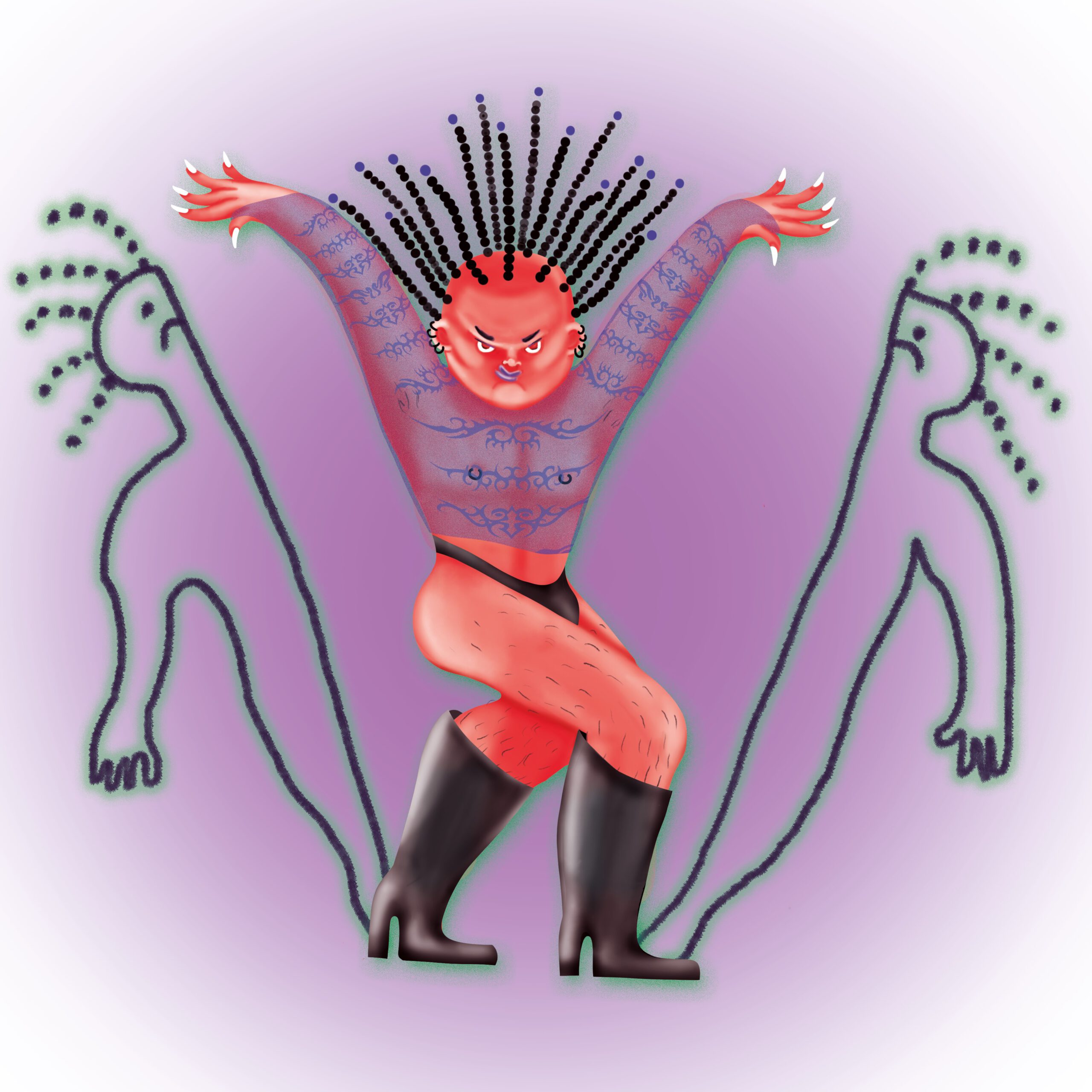
Endless fun, unlimited freedom, wild partying: that’s what nightlife is, isn’t it? Or isn’t it? Just like in the performing arts world, there is ongoing debate in the nightlife about safe(r) spaces and non-mixed spaces, about inclusion and the question what freedom actually means. Which written and unwritten rules apply in the club? Natalie Gielen discusses it with nightlife programmer Eric Cyuzuzo and with DJ, producer, artist, and organiser Sara Dziri, who both effortlessly navigate between the performing arts and the nightlife. DJ, actress, and curator Bouchra Lamsyeh adds a statement to this: is everything really allowed at night?
I’m in the Kunstenfestivaldesarts office with Eric Cyuzuzo, who works as a nightlife programmer for the festival. After a career in the worlds of business and fashion, Eric started working as a public outreach officer and programmer for, among others, the Beursschouwburg and Black History Month. ‘Organising talks and nightlife: these are the things I love doing most’, he says with enthusiasm.
‘Do you hear me okay now?’
We’re talking to Sara Dziri via video call from Berlin, where she is artist in residence in HAU (Hebben am Ufer) via the Un/Controlled Gestures programme at the Goethe Institut. Techno fans know her as resident DJ in the Brussels Fuse Club and as organiser of the Not Your Techno Parties, which focus on people of colour, queers and women. She ended up in the performing arts through collaborations with, among others, Enkidu Khaled and Sidi Larbi Cherkaoui.
Sara Dziri: ‘Next week I’ll be presenting my work in progress’
Eric Cyuzuzo: ‘Really? For the theatre?’
Sara: ‘I’m collaborating with dancer Synda Jebali from Tunisia. It’s an encounter between me and the dancer and between the Tunisian and Belgian rave scene. Black Hole is about that specific state of consciousness that you sometimes reach when you go out and the escapism that comes with it. So I found it an interesting coincidence that this interview is part of a journal issue on hedonism, because that’s what our performance is also actually about.
How do nightlife and the performing arts come together for you?
Eric: By bringing them together actively. I’m thinking for example of what Decoratelier does with ‘spending the night with…’, where they do not simply programme DJs but also performances for example. I’m thinking also of Darling, a queer collective that exists since 2019. They work with performances that pop up at different places, spread throughout a whole club night.
At Kunstenfestivaldesarts we often work with performers who are also active as DJs. Those people I then try to integrate into the nightlife programme. Apart from that I mostly try to programme intentionally. Last year for example we had lots of people of North-African origin in our podium programming, but not yet in the nightlife component. In Brussels we don’t see many DJs of North-African origin being programmed at subsidised parties anyway. I always say: communities organise their own parties. They don’t need the institutions for that. But our festival needs to be a reflection of Brussels, and people of North-African origin are part of that. That’s why I’ve invited DJ SAHЯA, Young Mocro, Cheb Runner, MamaKil of the Sehaq Queer Refugees Group, AMMAR808,… They’re all North-African, and a number of them are part of the Brussels community, so I was like, let’s show all these different identities in one night. The music was a mix of different styles and influences, and it was awesome. The audience also was a really mixed crowd.
Sara: I try to use the rave culture as a source of inspiration for a performance, not vice versa. My ambition with this piece is to integrate that rave culture, that underground techno culture, into a performance and to present it to an audience that doesn’t necessarily know it well. I also think there will be an interesting mix of people who come to watch the piece because they come from that rave world, but the starting point is that a considerable part of the audience will not be familiar with it.
Does a theatre stage sometimes feel like a club, or a club like a stage? Are you also a performer as a clubber or DJ?
Eric: Here I have to think of Jenela Jureša’s Aphasia performance. The mood was club-like, it was also late in the evening, and the crowd really started dancing. A club setting can be a real trigger. I thought it was quite interesting that you didn’t have to sit still all night, gazing at the performers. You could stand up, dance, and experience the let-go aspect of a club within the theatre.
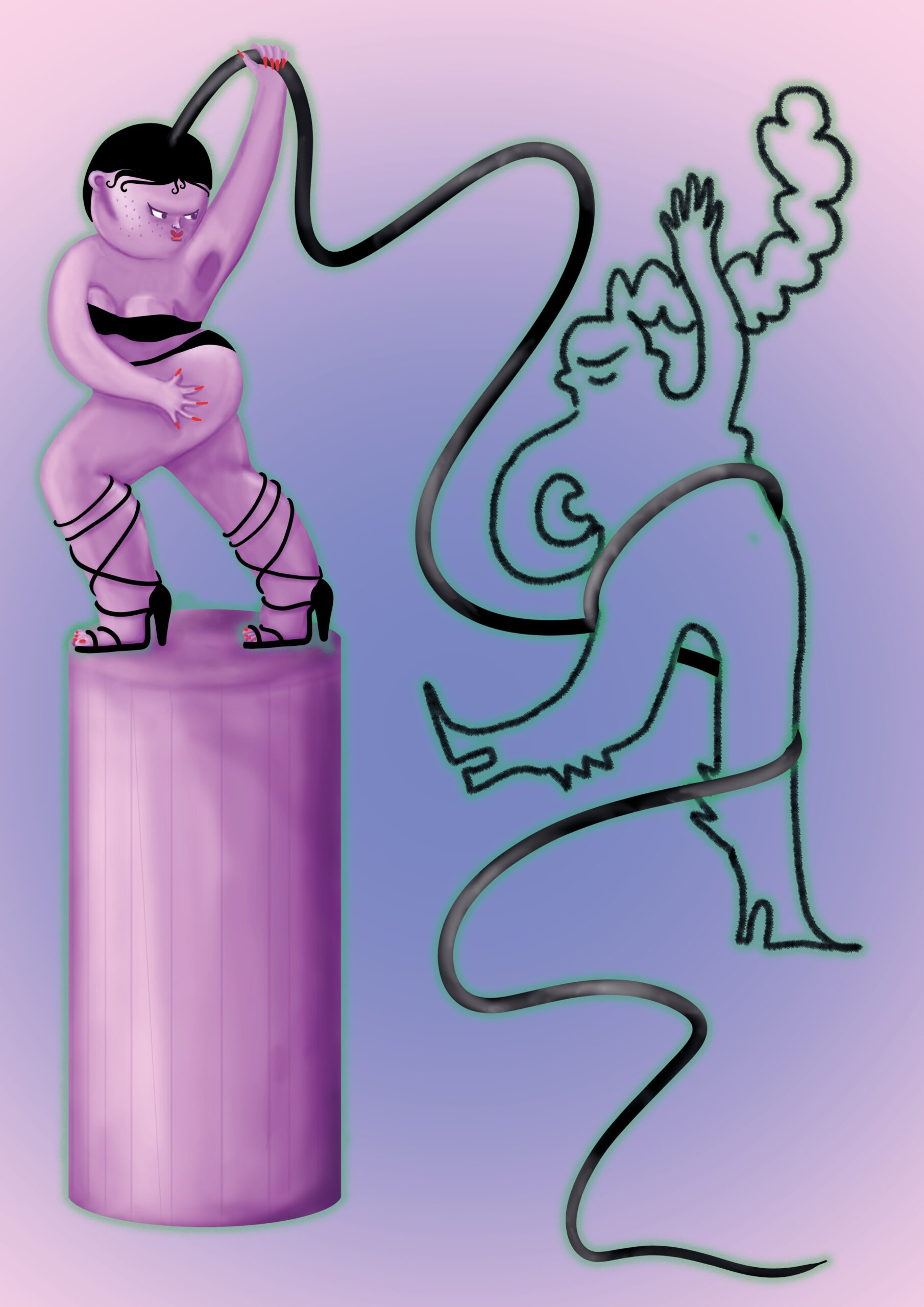
And of course the club also sometimes feels like a stage. When I first discovered the queer scene, there were a lot of gogo dancers in clubs who performed next to the DJ. These people are dancers. They are performers, even if they’re not doing a residency in an art institute. They get the people going, they interact with the crowd. I like that performative aspect of nightlife.
And yes, the audience performs as well. Certainly during black diaspora parties I notice that people sometimes form a circle. If you dance within that circle you become a performer: you want to show your moves and people are encouraging you. It’s a moment when someone from the crowd takes up space and starts performing before an enthusiastic, encouraging group of people.
I was at a talk this weekend that DJ Cheetah participated in. She said she comes in like Marina – that’s her real name. Marina is a bit shy. But behind the turntable she becomes Cheetah. Then she’s not shy, she’s interacting with the crowd. You’re an artist as a DJ, you work with music, with dance and movement, with how you engage with the crowd. So there’s certainly a performative aspect to DJ’ing in nightlife. That also holds for the crowd that says ‘I’m gonna leave all my problems behind me tonight, and I’m someone else when I step into the club’. You liberate a part of yourself, also by how you dance, and at the same time you play as if you don’t have any problems at all. In a club you dance differently than you do at home in your living room. There are a lot a performative aspects to nightlife: inhabiting another body, how do you move your body when you dance? The Eric you meet during the day and the Eric you meet in the club are not necessarily the same people.
“There are a lot a performative aspects to nightlife: inhabiting another body, how do you move your body when you dance? The Eric you meet during the day and the Eric you meet in the club are not necessarily the same people.” – Eric Cyuzuzo
Sara: I’m not the kind of DJ that starts dancing on the booth, but there really is a particular performativity, certainly today. Before, the DJ stood in a place where you couldn’t see them, all the way in the back, but now the DJ is in the middle of the room. So people are really watching you. How you behave has an impact on the audience.
Eric: During a Boiler Room set everyone also gathers around the DJ. In fact the set is often filmed, and that also happens more and more elsewhere. Think for example of Kiosk Radio (an online community radio which livestreams from a park kiosk in Brussels, ed.). Some people watch the DJ for hours and hours. So such a set is certainly a kind of performance.
I read in a BRUZZ interview with you that connection is crucial for you during DJ’ing and as a nightlife organiser, Sara. How do you create that connection?
Sara: I think as a DJ simply by reaching out to the audience. The best parties are actually the places where you feel most at home and where you can do your own thing. So for me it’s about creating freedom and comfort so that people get the feeling: hey, I’m welcome here, I belong here. If you can make a connection with people that simply creates good energy.
As the organiser of Not Your Techno I find it important that we create a place where everybody’s welcome, where everybody can be themselves, where gender expression, orientation, background don’t matter. What also helps in this is representation. It really helps that the organisation itself does not consist of white men (laughs). Also in the programming and in the communication I take that into account. We’re saying: hey, here you’ve to got to respect each other, if there’s something wrong you can come to us. It’s not okay to be harrassed, that’s not something that you have to accept or that we don’t respond to. We brief the security team, we brief the team. That’s how we try to create a context where people find themselves at ease. And that produces connection.
Of course this approach is somewhat utopian, because we live in a society where we simply aren’t equal yet. And if during such nights we can temporarily create an imaginary world where we get the feeling that that’s possible after all, then I think that as organisers we’ve succeeded. But of course I’m not at all claiming that I’m creating safe spaces. These don’t exist I think.
Roland Barthes wrote a text in the 1970s on Le Palace, a former theatre in Paris that been turned into a club. Barthes, the white, male intellectual, writes the following about his club experience:
‘The club is well proportioned. This means you are not afraid here (…): too small, a theatre is stifling; too big, chilling. Here you can circulate – up, down, changing places according to your whim – a freedom always frustrated in other theatres, where everyone is assigned a seat, the one corresponding to his money. Yet freedom is not enough to make a good space.1
Actually he is almost literally looking for a safe space where he can maintain an overview, where he can observe from above where everyone is, what everybody is doing. He wants control, and to feel safe. I found it striking that Barthes of all people wants to feel safe in a club. How do you see this?
(Eric and Sara are simultaneously shaking their heads)
Eric: No…
Sara: Pfff … I certainly don’t see a club as a safe space, unfortunately (laughs). That is not what it is. I see it as a temporary escape from daily reality. I think that people need that. And that can be an escape from the inequalities that you experience as a woman, a queer person, a person of colour … But also for the white male who’s stuck in the capitalist system a rave can offer a moment of escape. And in that moment we can find a connection, and warmth, and togetherness, which is temporary though and largely imaginary. When people are in this imaginary world, I think that definitely goes together with respect, which makes things safer. These are very temporary moments. They can be linked to the idea of a safer space, but they are really two different things.
“We live in a society where we simply aren’t equal yet. And if during such nights we can temporarily create an imaginary world where we get the feeling that that’s possible after all, then I think that as organisers we’ve succeeded.” – Sara Dziri
Eric: Of course I want the parties that we organise at Kunstenfestivaldesarts to be safe. But that’s simply not possible, because they’re free and open to everyone… As an organisation we try to maintain a couple of rules, but people come to relax and dance. They come with their own experiences. But people who are like male, white, rich, they come with their privileges and that also means: entitlement. These people have the feeling that they’re more entitled to the space. So there are people who dance like this (makes wide arm movements), and who start touching other people’s bodies or push against them. You try to make everything as safe as possible but a party is never going to be a safe space anyway.
Of course I go to parties myself which represent a certain demography, for example with a lot of black queer people. Many of these people are not rich, many of these people are not gender conforming, so they come together with a healthy sense of community. But even within a community you will find power inequalities. And it’s simply not possible always to control everything. You can make sure that you install a good system for when something happens.
But I also regret that the principle of safe spaces was originally used by black feminists, and that now many institutions and privileged people are putting this into their subsidy applications without really thinking about how they will be organising this in their work place, during an event, in their remuneration system, … Concepts like safe space, redistribution of power and means: all those things you read about in applications, but they’re not always respected and enacted.
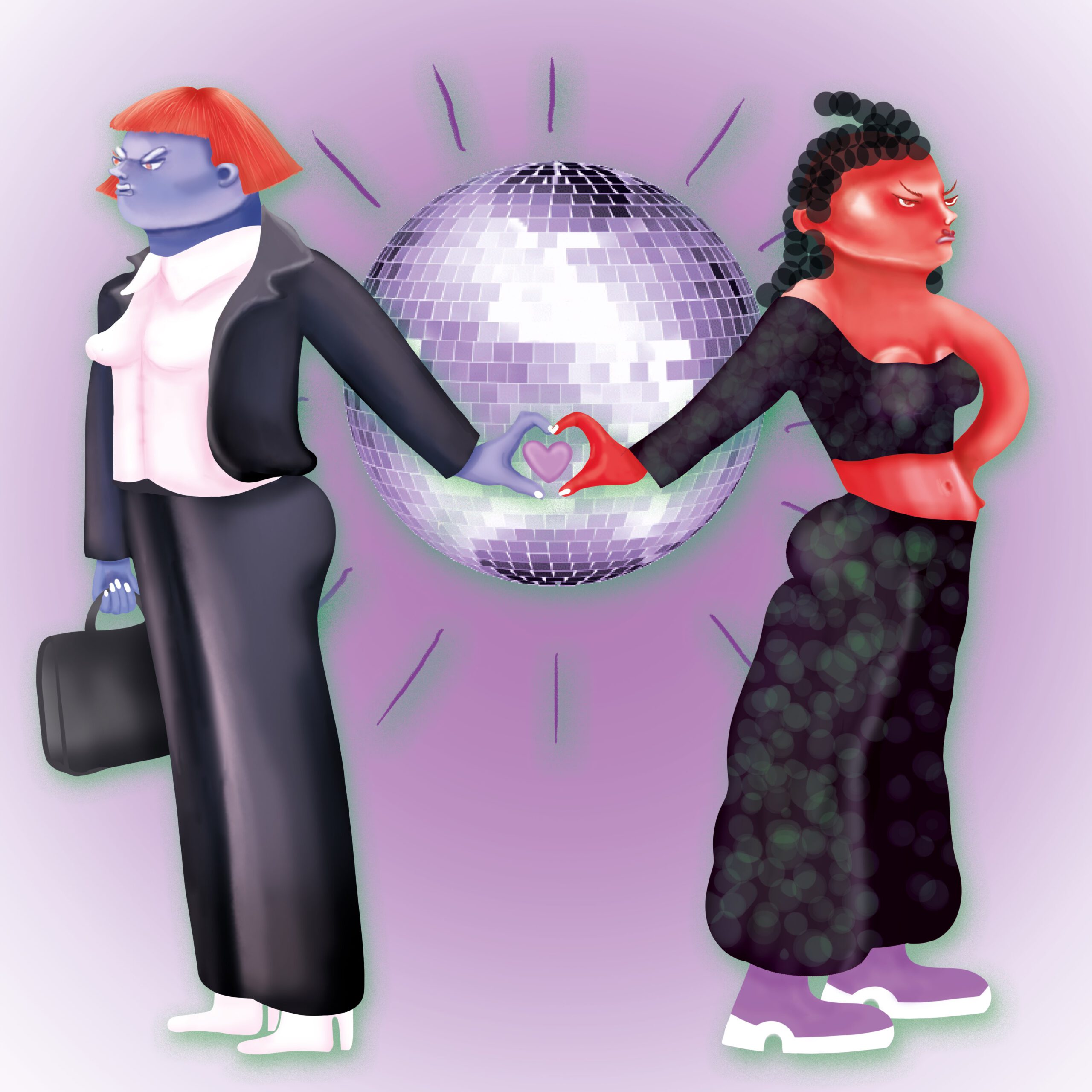
There is a saying in French that goes “la nuit tout est permis“. This is a double injunction in fact which invites a feeling of freedom as much as one of transgression: if everything is allowed, there are no rules, right?
After a few years of celebrating the nightlife, first as a member of the public, then as a DJ and as co-programmer of parties in performative contexts, this feeling of freedom that the night offers has left a sour aftertaste. I mean, I take as much pleasure in seeing, sharing, inviting artists, creating welcoming spaces as I do in listening during the evening to how everyone is sharing this sense of freedom. But universal freedom is another utopia, especially at night. That also holds for the relative subjectivity of freedom: if you feel free and safe, do I?
The violences that we experience during the day are also there at night. Society is violent during the day and at night. Hence the importance of creating frameworks that allow people to share a moment of togetherness. Recently this concern is being translated in organisations’ growing concern for the well-being of their audiences, notably in the setting up of safe conduct initiatives. These frameworks have their limitations, however, despite these organisations’ intentions, because the same abusers who feel entitled to ruin our public and private spaces during the day often reproduce and intensify their abusive behaviour at night. These problems do not stop at the doors of our clubs.
In an interview2 about nightlife titled ‘The club is about feeling freedom’ DJ and producer Honey Dijon formulates ten rules for clubbing, like ‘Bring respect, bring the blackness, bring the humour, bring the queer, …’. How do you feel about this? How you do set up rules?
Sara: That’s exactly what I mean. The party is a place of temporary, imaginary freedom. But it does not have anything to do with safety per se. Those rules are important, but that’s not the essence.
Eric: Rules are there to show what we believe in, what our values are. If I were to put all those values into one rule: respect that your freedom begins and ends where the freedom of others begins and ends. Because freedom is something collective. You’re not free if not everyone is genuinely free or if you’re hindering the freedom of others. I try to put that forward as a principle in everything I do. And since some people, like black queers or trans people or black women are never really free in our society, I sometimes organise events where they alone are free.
Are such non-mixed spaces important for you in nightlife?
Eric: Nightlife is an escape from your daily life, as Sara said. So you don’t want to meet the same people there who make your life difficult during the day. Then you sometimes need parties that you know of: ‘It’s just going to be us’.
There are countries like the US or Brasil where all black people live in the same neighbourhood, so if you organise a party there, you’re mostly reaching those communities of course. Here that’s not the case. Oppression makes accessing particular places difficult, moreover. So when I organise activities, I do a lot of outreach: hey, black queer people, come to this party. It’s also going to be for us. I want evenings where people can come together from Hasselt, Antwerp, you name it. A community gathering before we split up again in all four directions and go party at home in open and mixed spaces. Sometimes such non-mixed spaces are a safer haven where you can meet your own community. But I don’t organise this kind of non-mixed parties as part of my job for an art institute, because I would get too much backlash. We’d get less subsidies and then there would be jobs on the line within the organisation. Even if I’d like to of course. Look, there are non-mixed gender gyms. Why? Because it’s proven that many men cannot interact with flintas in a respectful way. And that also happens often in clubs. So why shouldn’t there be places in nightlife where people can feel safe?
“As a white, hetero cisgender male of the higher middle class you can in principle go to practically any club in the world. So why would you get upset if you can’t stay at one particular party? Why are people so angry that once in a while we claim our own little place?” – Eric Cyuzuzo
I have to think of Blond in this regard, the bar in Ghent that organised a party for flintas (female, lesbian, intersex, trans and agender) and that threw all cisgender men out at a certain moment. Co-manager Kevin Goossens said about this in De Standaard: ‘We needed the space. People of our team had been harrassed. (…) We wanted to be there for them, and instead we had to put our energy in men who don’t need this space.’3 This is about a bar, not an institute, but they got an incredible load of backlash. How do you deal with this?
Sara: I think there should be a time and space for safe parties for groups or communities who are not at the top of the power pyramid in our society’
Eric: It makes me think of a quote from Solange’s song ‘F.U.B.U’ (searches on his phone for the lyrics). Aha!
Don’t feel bad if you can’t sing along
Just be glad you got the whole wide world
Solange uses often uses the n-word in this song, which is why not everyone can sing along. Do you know, as a white, hetero cisgender male of the higher middle class you can in principle go to practically any club in the world. So why would you get upset if you can’t stay at one particular party, while you have access to the rest of town? Because a queer woman, a trans woman, a black woman: they can’t come to all those places, and if they do they will be facing intimidation. So why are people so angry that once in a while we claim our own little place? That’s why I like that statement of the people from Blond. They’re not wasting any energy on people who don’t need their space at that moment. Because after such an incident people often say: we need to educate people, we need to help them to see their blind spots – blind spots is such an abled term, by the way, because it’s simply about bias of course . Just protect the people who are being harrassed and give them a safe space. Give priority to the people who are being oppressed.
Do you want to get into a club ambiance? Sara, Eric, and Bouchra are happy to share a couple of musical tips that you can listen to after reading this conversation.
KRIJG JE GRAAG ONS PAPIEREN MAGAZINE IN JOUW BRIEVENBUS? NEEM DAN EEN ABONNEMENT.
REGELMATIG ONZE NIEUWSTE ARTIKELS IN JOUW INBOX?
SCHRIJF JE IN OP ONZE NIEUWSBRIEF.
JE LEEST ONZE ARTIKELS GRATIS OMDAT WE GELOVEN IN VRIJE, KWALITATIEVE, INCLUSIEVE KUNSTKRITIEK. ALS WE DAT WILLEN BLIJVEN BIEDEN IN DE TOEKOMST, HEBBEN WE OOK JOUW STEUN NODIG! Steun Etcetera.
interview
11.04.2023
Leestijd 16 — 19 minuten
15.03.2023
—
31.05.2023

Natalie Gielen works for Etcetera. She's also active as a freelance author, editor and ‘outside eye’ in the arts.
Sébastien Hendrickx
Mia Vaerman
interview 11.04.2023
Sébastien Hendrickx
Mia Vaerman