Atlantis/The Sea – Radouan Mriziga
Luisteren naar choreografie
Natalie Gielen


© Viktor Van Hoof
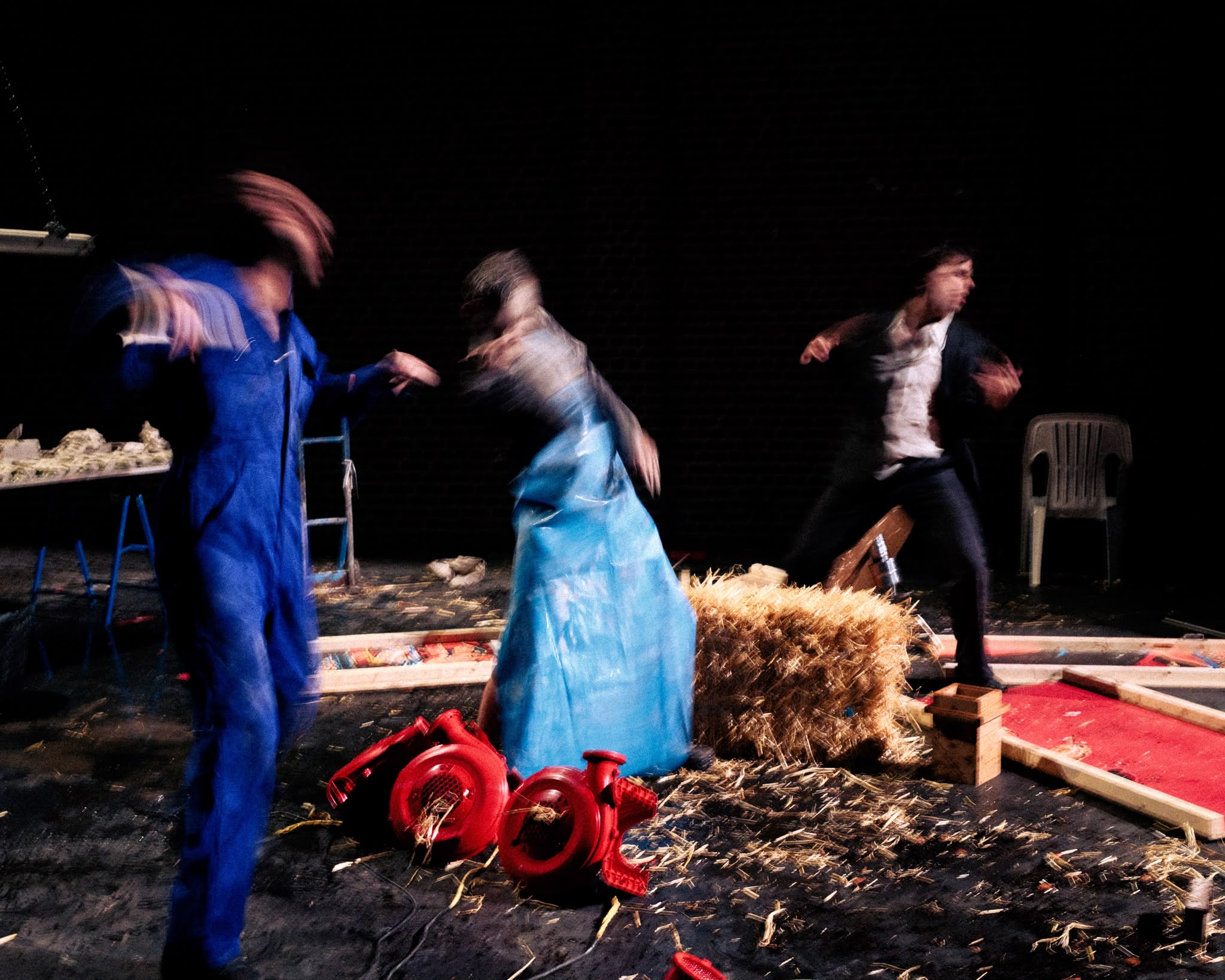
Jef Van der Burght, Senne Vanderschelden and Marius Lefever unite under the collective Three is a crowd and bring a Broadway-like show with dance, lights, laughter, jump-scares and lots and lots of drama. Their story is based on a classical drama of loss, ‘Three little pigs’, spiced up by a generous scoop of Swedish director Roy Andersson’s existential despair. The collective reclaims entertainment: as the play makes us forget our worries, it also manages to make bolder claims about masculinity, effort, and solidarity.
What does it mean for three men to work together, to build anything? In a world of absent fathers and emotionally stunted boyfriends, in a world where male world leaders have become cartoon versions of themselves, what does it mean to be a true man? Many of them are trying to be heroes and yet there are barely any male role models to follow. Aren’t men just pigs (trying to build a house)?
“Can cheap thrills become vehicles for meaning? Could we stop taking ourselves so seriously and laugh at our efforts?”
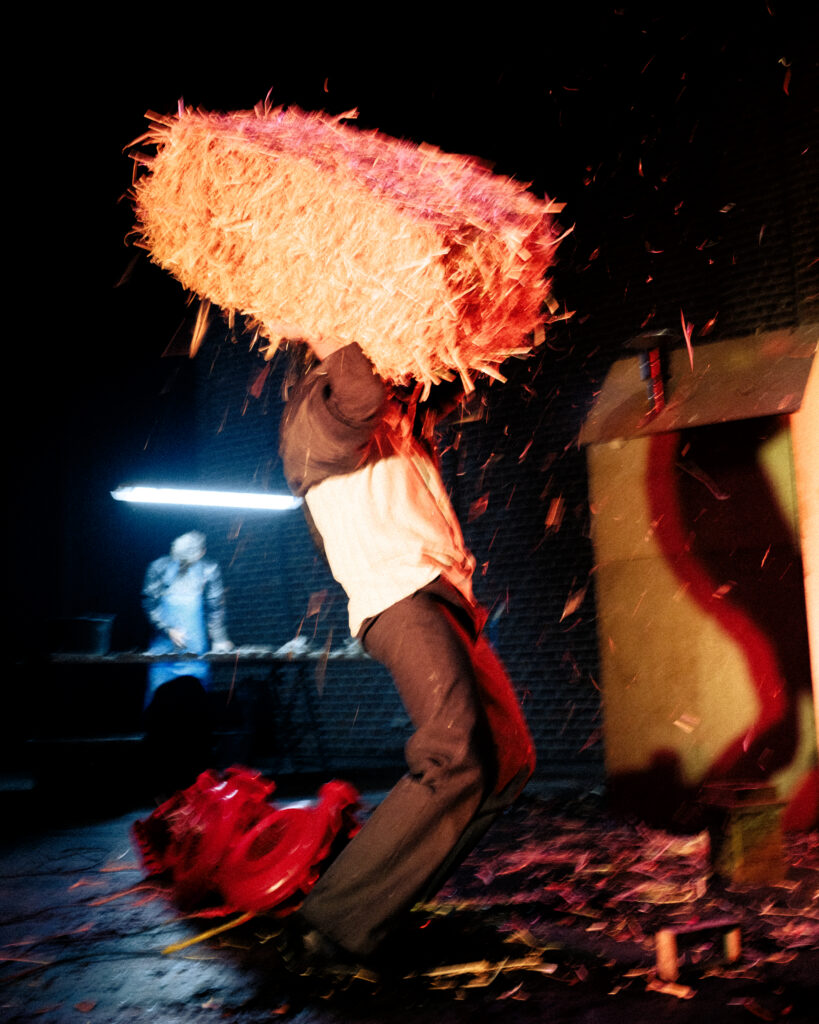
Being a hero involves doing something extraordinary, meeting the most dire situations and surviving through them. What can be more extraordinary than surviving death? Surviving death many times! When Marius Lefever resurrects from lying dead on a haystack it’s a major event. His voice is amplified so we hear the echo of his gasps for air. But the arrow that has pierced him in the side has no blood on it. He’s looking at it as if it was killing him all over again, but it’s just held by his arm, next to his side. And then it transfers to the foot and to the throat while he keeps dying ever more dramatically. It’s cartoonish, the fervour with which he’s convinced to be dying, as if the drama of dying alone could kill him. In the meanwhile the spectators are laughing their socks off. This grave event of death is played for laughs.
It’s not only that it is funny the way he dies while being in no danger at all, but rather the effort he puts into achieving this nothing-at-all. It reminds me of streaming services churning out TV series every week, and every week it’s deemed to be the most dramatic, entertaining and world-changing experience. I’m reminded that we go and watch movies and plays to be entertained, to feel something. We’re addicted to seeing our favourite characters die, finding out that their mortal enemy is their father, and that they’re the chosen ones. It seems like Three is a crowd is investigating to what extremes this drama can be pushed. If we empty the action of its meaning (i.e. dying as dying) then we have the room to ask: what are we really seeing? Can cheap thrills become vehicles for meaning? Could we stop taking ourselves so seriously and laugh at our efforts?
“A huff and a puff, in all its silliness and boys-will-be-boys attitude, actually admits that boys do not know.”
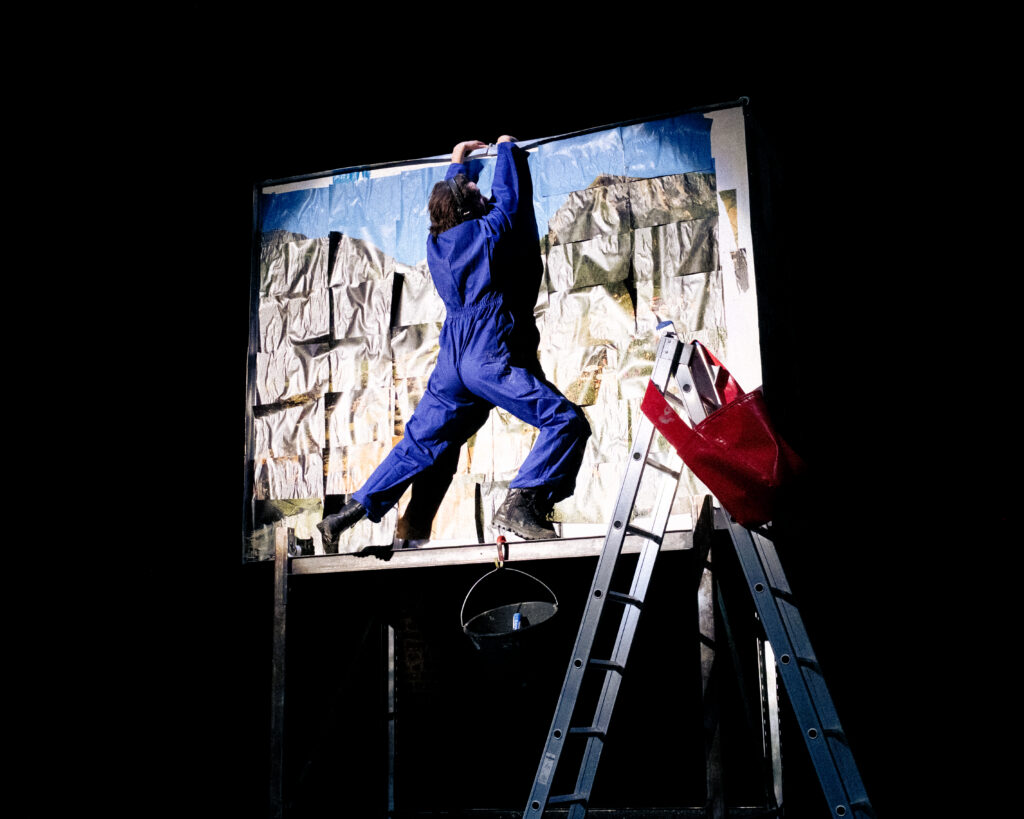
The ridiculousness of misdirected effort is also brought about by Senne Vanderschelden, who retreats into a lonely corner of the stage. He starts making bricks and after each batch he rubs his face and hair in despair. We forget him for a while as many things happen on the stage, we gasp when Jef Van der Burght almost falls off a billboard. In the very beginning he, Jef, tried to glue a beautiful landscape on it as if from ‘The Sound of Music’. Now it’s hanging up there like a miserable eye-sore, reminding us that this play is about the effort to create something and ultimately failing. And then we remember this lonely brick maker, whose face and hair by now are all gray. He looks like a worn-out character from a Roy Andersson movie. Stuck in misery, devoid of any colour, completely consumed by this meaningless task.
There’s a recognition that although his efforts were genuine we need more than trying hard in order to make something of value appear. He lays the bricks he made into a brick house, which really is just a wall barely reaching 10 cm above sea level. The play is true to its source, the brick house is the last one to be built. But all the other ones collapsed not because of a villainous wolf who blew the houses in. It was in one way or another brought about by one of the men, their carelessness, their jealousy. They all tried to build a cozy house with a chimney and a carpet that says ‘welcome’ – a picture of perfection. And this picture collapsed. Because of their rivalry, unwillingness to work together and a belief that you can fake it till you make it. No matter how many times you fake building a house, let’s be real, you’ll never make it.
“It’s freeing to see them play, make fun of one another, and try to be heroes but stand defeated.”
Pigs can build a house only in fairytales, but humans have the capacity to do it in real life. However, this capacity doesn’t directly translate into know-how. A huff and a puff, in all its silliness and boys-will-be-boys attitude, actually admits that boys do not know. It’s freeing to see them play, make fun of one another, and try to be heroes but stand defeated. So much hope is found in the end, when they cover Vanderschelden in a big coat to warm him up. They’re still goofy but there’s a recognition that ignoring each other, choosing separation, has not brought them anything good. So they can laugh at their efforts to be the next superman and find each other’s company. And in this drama-less state they can finally feel something real. Maybe they will never erect a house, but they might find home in togetherness.
© Viktor Van Hoof
© Viktor Van Hoof
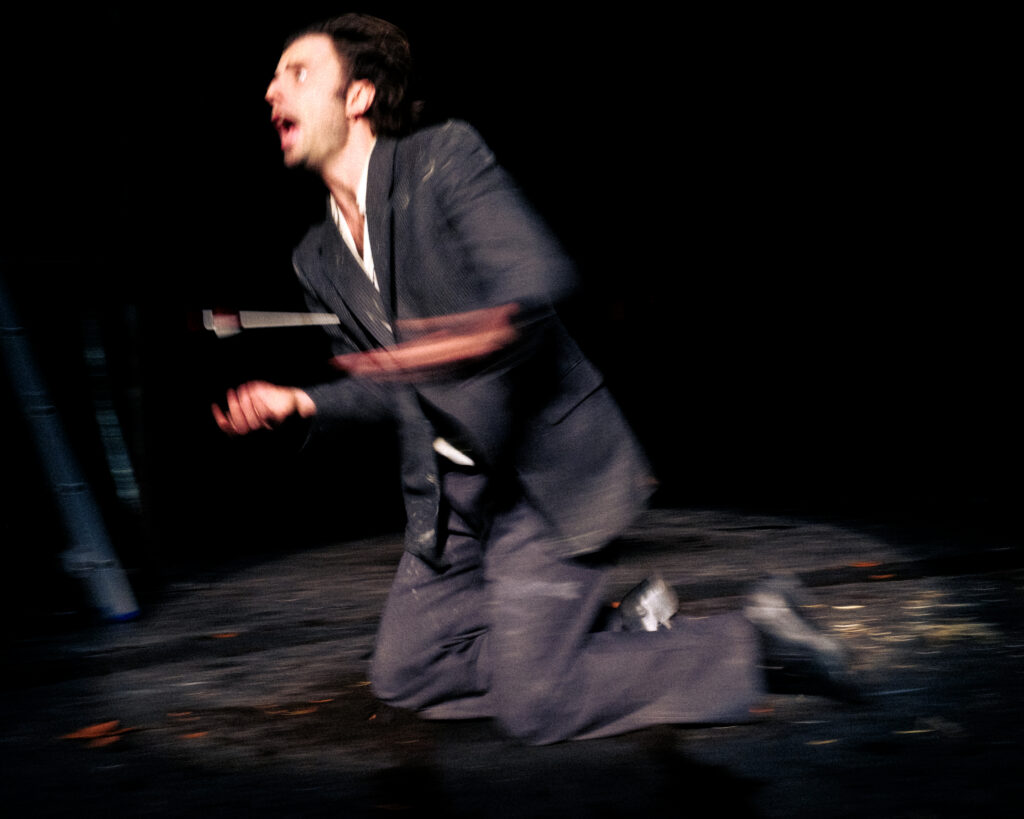
© Viktor Van Hoof
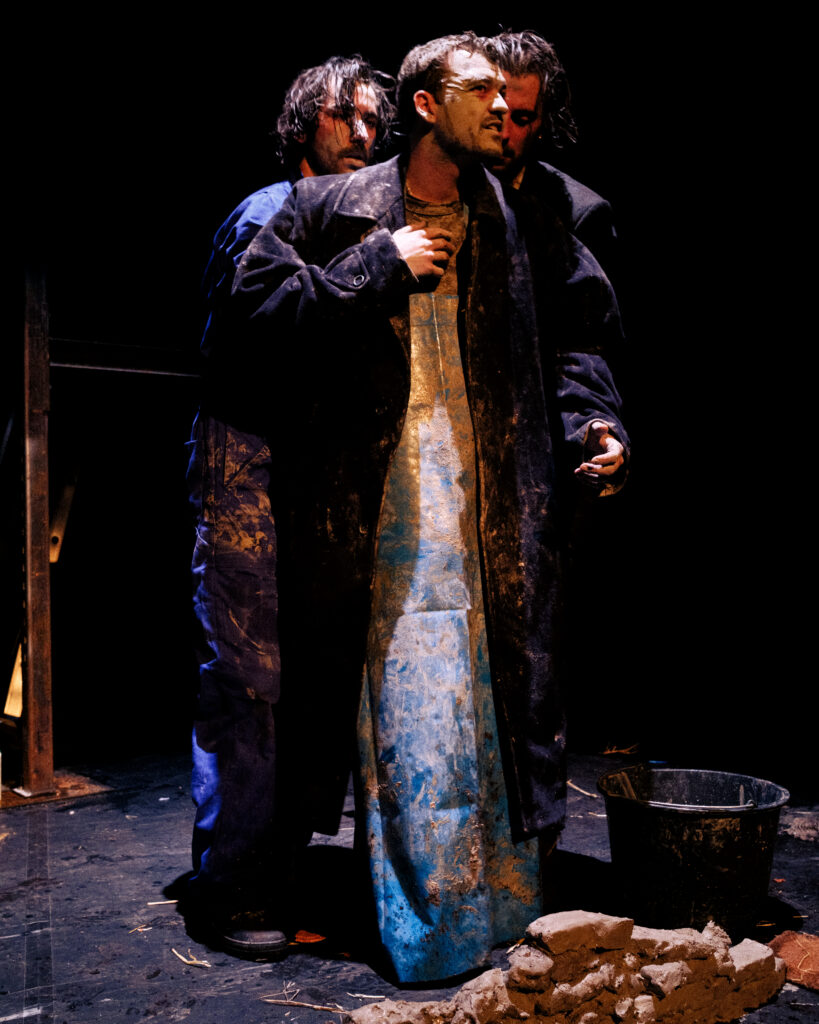
© Viktor Van Hoof
KRIJG JE GRAAG ONS PAPIEREN MAGAZINE IN JOUW BRIEVENBUS? NEEM DAN EEN ABONNEMENT.
REGELMATIG ONZE NIEUWSTE ARTIKELS IN JOUW INBOX?
SCHRIJF JE IN OP ONZE NIEUWSBRIEF.
JE LEEST ONZE ARTIKELS GRATIS OMDAT WE GELOVEN IN VRIJE, KWALITATIEVE, INCLUSIEVE KUNSTKRITIEK. ALS WE DAT WILLEN BLIJVEN BIEDEN IN DE TOEKOMST, HEBBEN WE OOK JOUW STEUN NODIG! Steun Etcetera.
recensie
05.11.2026
Leestijd 5 — 8 minuten
08.09.2026
—
14.01.2027

Ugnė Noreikė is a Lithuanian writer, musician and artist. She works in spaces of not knowing, vulnerability and extreme feelings. She’s looking for meeting points between sounds and words.
Natalie Gielen
Kristof van Baarle
recensie 05.11.2026
Natalie Gielen
Kristof van Baarle