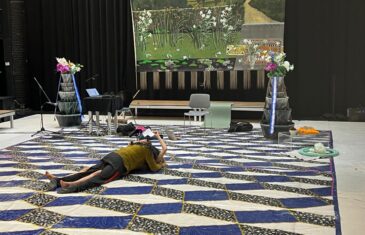
Dark Habits – Simon Van Schuylenbergh/KWP Post Deconstruction Trouble Trigger warning: this performance is transparent. In a world where everyone wants to be as correct and as successful as possible, Dark Habits is the disclosure of a research, and wants to share what it is: in the making. Catho De Cordt review 30.12.2024
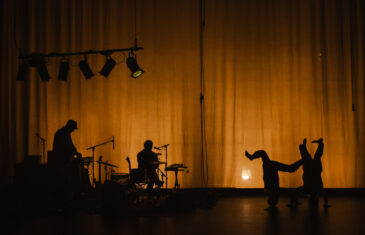
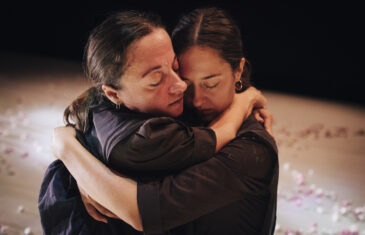
In Absentia – Helder Seabra Presence What does it take to stay present in absence? What does it take to embody the void left by a loss? Helder Seabra comes back to these questions after 10 years. In Absentia first premiered in 2015 – back then it was challenged by the deteriorating financial state of the cultural sector. Once again the funding for the arts was cut which affected Helder Seabra’s work too. I haven’t seen the first take but it seems like the flame of this Portuguese choreographer is still burning. Moreover, the initial financial shortcomings that left Seabra with fewer performers hasn’t restricted his passion, but rather scarcity became the mother of invention. In absence, Seabra found the space to create something powerful. Ugnė Noreikė review 23.12.2024
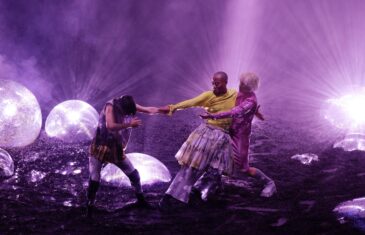
GLITCH WITCH – Meg Stuart/Damaged Goods Glitter Gravel GLITCH WITCH by Meg Stuart/Damaged Goods shows three women stranded on a lifeless, seemingly toxic rave moon, strewn with half-buried disco balls and black glitter gravel. But juxtaposing a dead landscape with hyper-alive bodies that twitch and contort isn’t meaningful in itself. What is the relation of the performers’ bodies to this barren space? What do their movements mean, apart from limb spasms? The lack of clear intent renders the performance elusive, leaving any connection frustratingly out of reach. Ugnė Noreikė review 17.12.2024
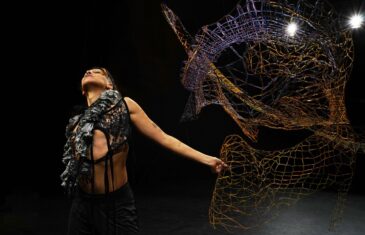
MadDoG – Lydia McGlinchey Navigating the hyperreal – but make it sexy In MadDoG, the Brussels-based Australian performance artist Lydia McGlinchey explores the fragmented realities of the hyperreal. Joined on stage by performers Mate Jonjić and Estefanía Álvarez Ramírez and musician Iris Therasse, McClinchey wades through a muddy march of meanings, mirrors and moulds. Margot De Grave Loyson review 03.12.2024
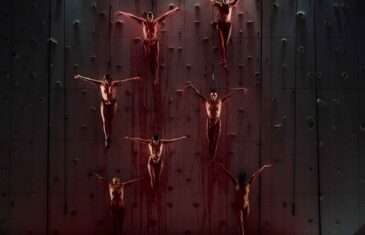
Sirens take the stage The Holzinger system For Florentina Holzinger, ballet isn’t delicate, and opera isn’t sacred. In the ‘Holzinger system’, bodies, stunts, and machinery collide in a form of expertly, artistically crafted spectacle exploring pleasure, pain, and power. Anna Leon looks back on ten years of Florentina Holzinger, one stunt at a time. Anna Leon essay 02.12.2024
Sottobosco – Chiara Bersani A Mellow Marsh In Sottobosco, Chiara Bersani guides our gaze to the life we overlook—crawling, contorting, and flourishing close to the ground. Together with Elena Sgarbossa, she unravels the hierarchies of life, imploring our minds to explore our bodies in relation to space. Ugnė Noreikė review 28.11.2024
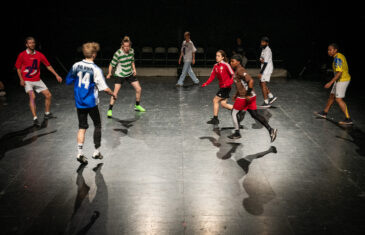
How to Be a Lousy Dramaturg: An Introduction What does it mean to teach the fragile, ever-shifting art of dramaturgy? Without easy formulas, Petar Sarjanović, dramaturg of Football Echoes by Ahilan Ratnamohan, dives into the messy, rewarding dance of guiding performance. Petar Sarjanović essay 12.11.2024