De Materie – Phia Ménard/Opera Ballet Vlaanderen/Bas Wiegers
Een schurend vooruitgangsdenken
Sébastien Hendrickx





The History of Korean Western Theatre © Leontien Allemeersch
‘You’re incapable of letting go of the past, old man.’
Toad, The History of Korean Western Theatre
This November, the Belgian audience had another chance to catch Jaha Koo’s Hamartia Trilogy in its entirety at CAMPO, where the three performances—Lolling and Rolling, CUCKOO, and The History of Korean Western Theatre—were shown in quick succession over two evenings. But the sprightly rhythm of the evening belied the length of time the creation has taken the artistic team; Lolling and Rolling was presented as early as 2015 at Bâtard Festival in Brussels, and it was in 2021 that The History of Korean Western Theatre finally premiered after a one-year delay due to the pandemic. Since then, the trilogy has travelled to better and lesser-known corners of the world, with its most recent stint in Seoul, South Korea, the backdrop to the tragedies that unfold before the audience.
While the montage of almost schizophrenically manipulated archival video materials on linguistic imperialism, societal pressure, and modern Korean theater history stylistically ties together the seven years of artistic process, what caught my attention in Ghent was Koo’s storytelling, in which he continuously layers historical and personal narratives to form a dissonant, ironic yet unified vision. ‘This is not a documentary theater,’ Seri the rice cooker announces at the beginning of The History of Korean Western Theatre, and indeed, the metaphorical power of certain stories seems to surpass the limits of factual reality. They nevertheless testify to a history that has gone awry, and the performers, in their embodiment of opposing narratives, reveal intrinsic contradictions in the three titles and, by extension, in Korean history.
The performance description for Lolling and Rolling warns the audience of the disturbing images taken from the surgery done on children’s tongues so that they can properly pronounce the English R, but perhaps the oddest element in Koo’s decolonial criticism of the linguistic fever in Korea is the character Jack. Koo begins the performance by recounting his relationship with Jack whom he meets in Amsterdam. Jack begins to teach Koo English, and the elderly American encourages the young Korean man to imitate the American accent as best as he can. Superficially, the pedagogical relationship mirrors the United States’ geopolitical influence over South Korea even when they are both removed from their homelands.
To Jack’s advice that Koo should practice English until he starts dreaming in English, however, Koo makes a confession: he had a dream in Korean, in which foreign soldiers, fighting in an unknown territory, tap into the trees that are ‘native to the land’ in order to gain the upper hand. As the fight continues, the video projection shows flames consume a landscape with tall, well-grown, which then cuts to footages of the Korean civil war. Jack, who once served in the military in South Korea, does not comment upon this dream.
The story of the dream allows an uneasy affinity between the two characters to surface that arises from their shared history. The foreign soldiers’ reliance on the native trees creates a proximity between the foreign and native beings; similarly, Jack seems to have somehow formed a connection to the country through his military service, and his coincidental friendship with a young Korean man feels almost fated. At the same time, Koo’s confession that he still dreams in his native tongue suggests, despite their mutual and amicable understanding, a subconscious resistance and the inability to forget the destruction of the Korean population during the war. The tragic aptness of their accidental encounter unsettles the veracity of Koo’s story, and the performance merely offers the recordings of Jack’s English lessons as a single piece of dubious evidence. Not unlike the accidental-but-fateful meeting between Oedipus and his father, however, the tense affinity between Koo and Jack lends poetic plausibility to the encounter.
“Koo leaves the audience to ponder the implications of distinguishing ‘lolling’ from ‘rolling’ within a history in which irony renders unconditional resistance impossible.”
The poem that Jack has relayed to Koo in English at the end thus provides a literally poetic ending to their poetically plausible encounter. In the poem ‘Spirit Mountain,’ the narrator describes a mountain in their hometown that no one has ever climbed or seen; having returned to his hometown in search of the mountain, they discover that the mountain has disappeared and that no one remembers its existence. When Koo proceeds to announce that he has found the original and recites it in Korean, he establishes a link between himself and the narrator; just as the composition of the poem itself supports the truth of the narrator’s memory even though the mountain has disappeared, Koo’s recitation of the poem in Korean, after having learnt its English translation ‘by heart’, emphasizes the existence of the original poem. In this confirmation, he performs a reversal of the linguistic imperialism that his relationship with Jack has come to symbolize.
But an undercurrent of irony prevents us from understanding this performative reversal as a triumphant act of resistance. His performative reversal begins with an English translation, which he never would have learned had it not been for his English lessons with Jack; their English lessons in turn would not have been necessary had it not been for the role of American military in Korean history and their ambivalent connection. As the spotlight on his body slowly dims and his body disappears into the darkness like the spirit mountain, Koo leaves the audience to ponder the implications of distinguishing ‘lolling’ from ‘rolling’ within a history in which irony renders unconditional resistance impossible.

Lolling and Rolling © Bea Borgers
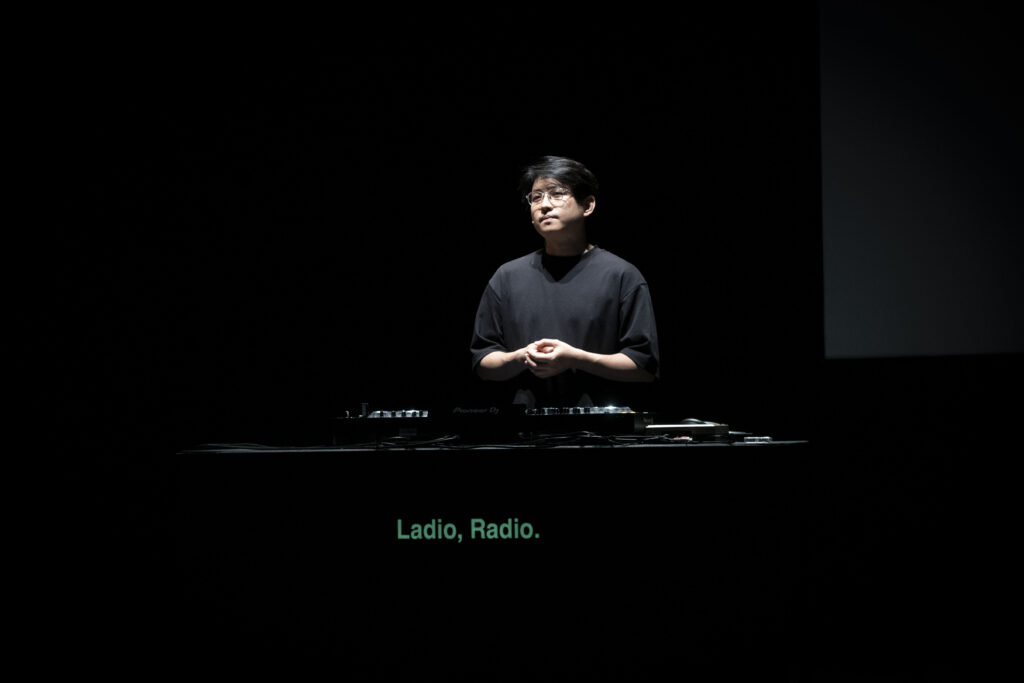
Lolling and Rolling © Bea Borgers
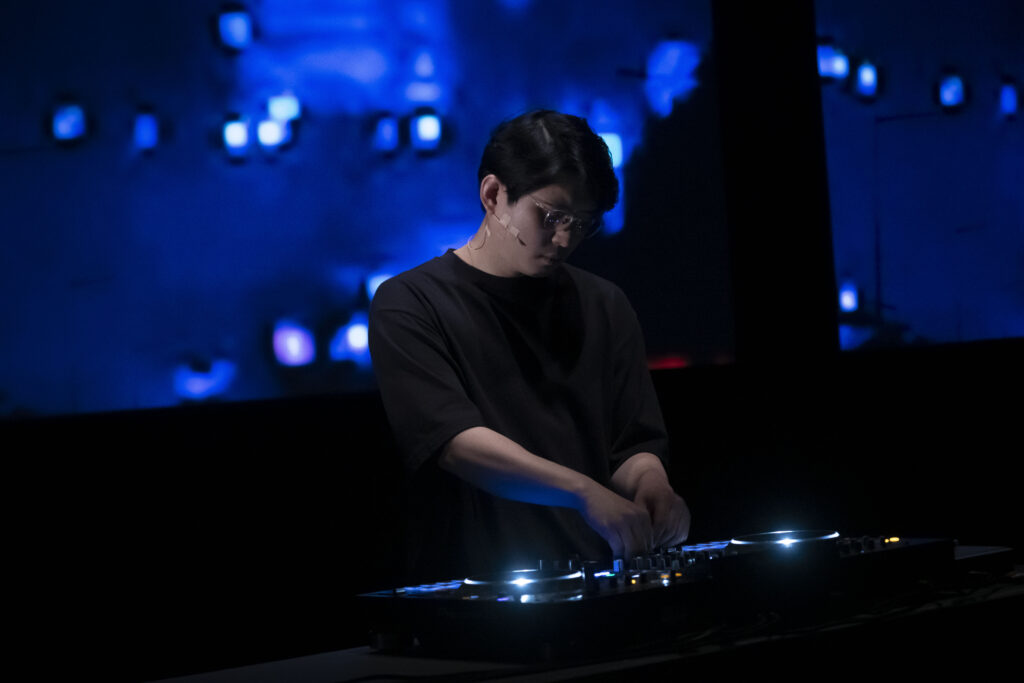
Lolling and Rolling © Bea Borgers
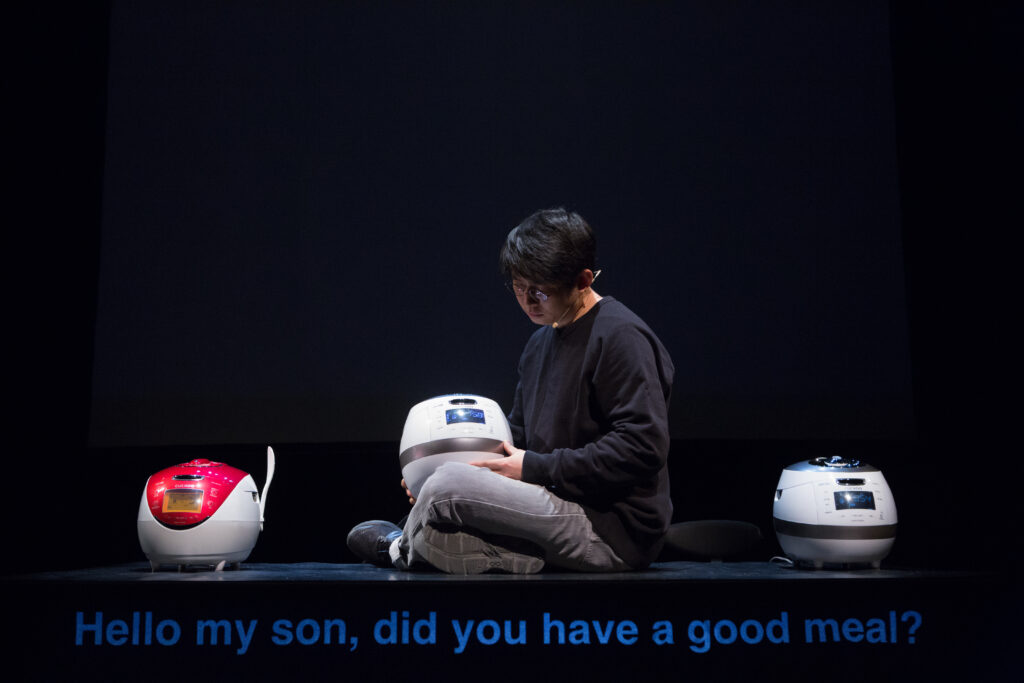
Whereas Lolling and Rolling ends with a silhouette of a single figure, CUCKOO proposes a new dynamic; a bickering chorus composed of cuckoo rice cookers Hana, Duri, and Seri (a wordplay on words for one, two, and three in Korean) has come to join him. Koo announces that the running theme of the performance is goripmuwon (고립무원), an expression that captures an isolated state without aid—the helpless isolation that unites his own position as a student in Amsterdam, the suicide of his factory-worker friend, and the death of a nineteen-year-old mechanic caught between a train and the platform. But in his discussion of loneliness, he will not be alone.
“The cuckoos embody in their internal pressure-cooking mechanism the economic pressure Korea faced during the time of their birth as well as the societal pressure in contemporary Korean society—whilst alleviating the sense of helplessness in Koo caused by the same pressure.”
The performance thus proposes a symbiotic relationship between the human performer and his three robotic collaborators. The cuckoos mock and insult each other in Korean, and their tone, contrasting with Koo’s matter of fact delivery to the audience, implies a familiarity between the performers that the performers and the audience do not share. Koo tells the audience that the cuckoo was one of the three things he brought with him when he moved to Europe and, when he cradles Duri as his father inquires whether he has eaten during a call, the audience sees the affectionate bond between the human performer, the performing objects, and his family. Like his family, the cuckoos speak his language and provides sustenance to care for his body, accompanying him in his daily life as they accompany him now on stage.
As seen in Koo’s relationship with Jack, however, a shared history between the performers undermines their symbiotic relationship. The cuckoos explain that they owe their existence to a period in Korean history when the International Monetary Fund’s involvement triggered a financial crisis in the country. If the cuckoos are the backbone of a Korean household, they came to existence during this time marked by a sense helplessness. Koo proposes that pressure from the dire economic condition in 1997 continues to haunt Korean individuals and mass movements two decades later. The cuckoos thereby embody in their internal pressure-cooking mechanism the economic pressure Korea faced during the time of their birth as well as the societal pressure in contemporary Korean society—whilst alleviating the sense of helplessness in Koo caused by the same pressure.
As if to identify the villain of the story, the performers present the Rubin family, whose patriarch, Robert Rubin, was the former secretary of the treasury under Clinton’s administration and played a crucial role in determining the IMF’s response in 1997. His daughter, Gretchen Rubin, gives a lecture on achieving maximum happiness and sells happiness like a product a generation later. The actual Gretchen Rubin is not biologically related to Robert Rubin in any way, but the happy coincidence that they should share a last name contributes to the irony—the irony that Robert Rubin should have been indirectly responsible for both the hopelessness that Koo’s friend succumbed to and Gretchen Rubin’s happiness campaign.
Cuckoo © Radovan Dranga
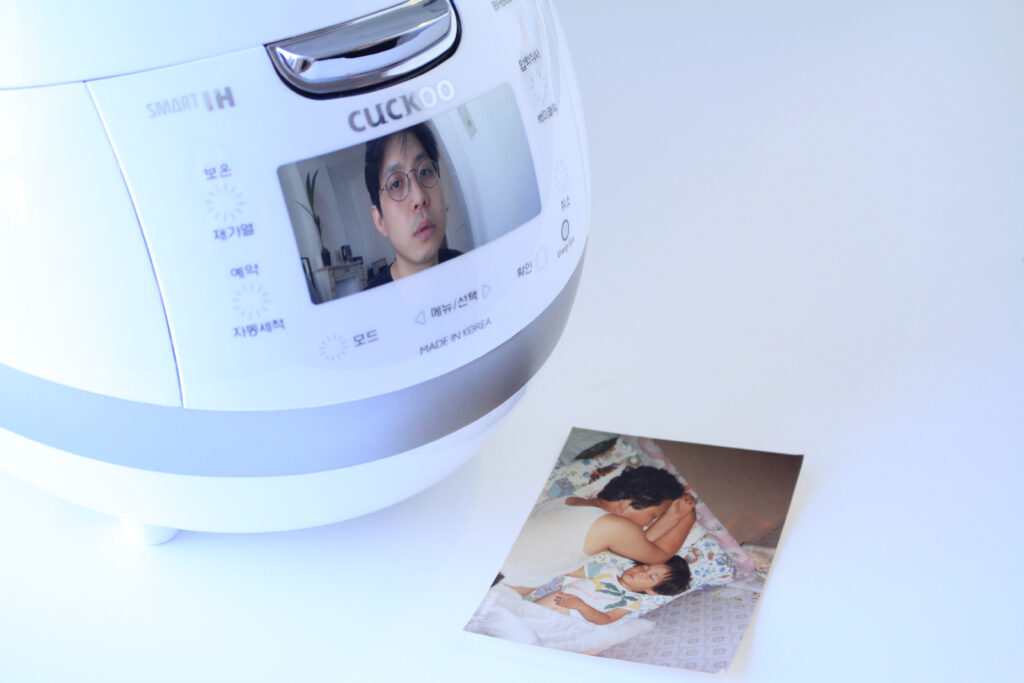
Cuckoo © Eunkyung Jeong
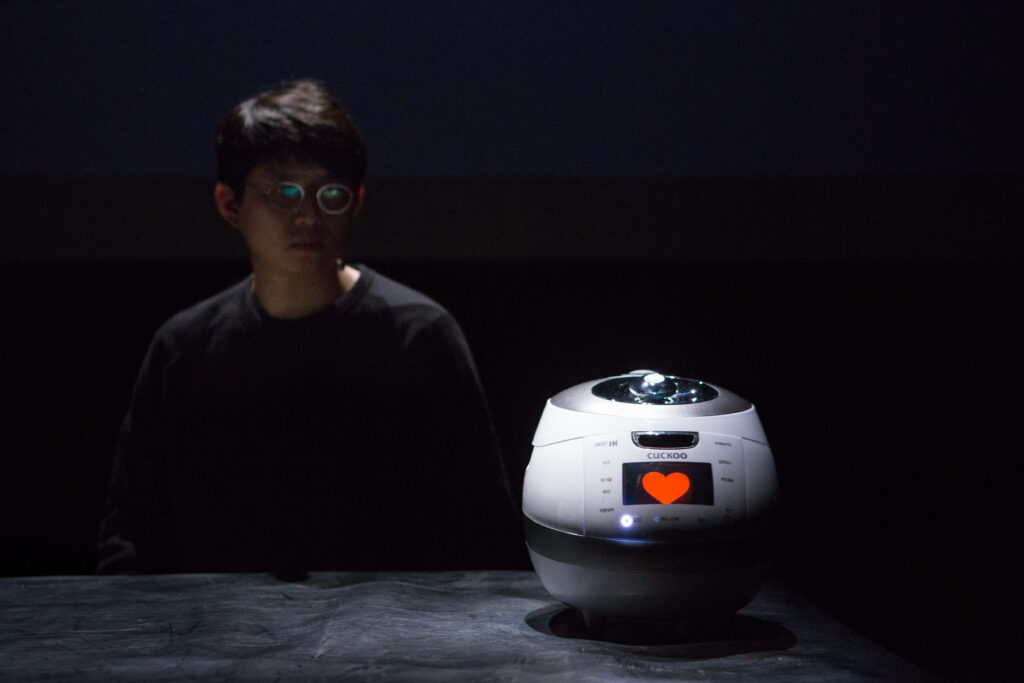
Cuckoo © Radovan Dranga
And then, Koo opens Duri and Seri to reveal the face of Robert Rubin inside. Sparklers burn cheerfully on Duri’s head as a toy superhero figurine stands proudly between them, and a distorted voice repeats the financial threat that IMF posed on the Korean economy. Rubin the savior, as The Times once reported, lies hidden within each cuckoo that disguises external threats like a Trojan horse. The performer himself emerges from behind the table wearing the same mask, presenting an eerie superposition of American economic power upon his body. The performer is not identifying with Rubin, far from it; rather, he produces a visual identification with the cuckoos. For a moment, the cuckoo’s symbolic value passes onto his body; as the revelation of Rubin’s concealed face emphasizes how the cuckoos internalized IMF’s strategies for pressuring the Korean economy, the mask on Koo’s face brings to light how his body has also internalized the societal pressure of his time.
After a long period of silence, Hana, the oldest cuckoo, gets the last word in the cuckoo-chorus: the rice has finished cooking! As vapor rises from the pile of rice against the black scenography, the song Koo composed after the death of his friend comingles with all the stories from the performance and forms a whirlpool of a soundscape. In the overwhelming cacophony of death and those who are far away, the performer creates blocks of rice in silence, applying pressure on them as if to prepare a lunchbox. Transforming the internalized societal pressure into physical force, he attempts to survive and continue, a wordless answer to his father’s inquiry as to whether he has eaten that day.
Seri the cuckoo returns to the last installment as colorful and cocky as ever, but her quip ‘if you want to see documentary theater, Rimini Protokoll is probably performing not too far from here’, nevertheless signals a shift. Having toured with Koo for three years across the world, she is in the big leagues now as a professional and demands the authority to define the reception of the performance. She is also more self-conscious about her presence on stage and laments that ‘there are no roles for her’ as a cuckoo even though the principles of theater mandate that a performer can play any role. Whether her criticism is directed against Korean or western theater, the audience is not told—but, as the title suggests, the two are not as separable as one may initially believe.
This shift is accompanied by a newcomer on stage: the toad, whom the audience discovers Koo making out of paper with his own hands as they enter the theater. The toad accordingly calls its creator ‘papa’, and, unlike its professional and cheeky robotic collaborator, does not care for the history of Korean/western theater. Whereas Seri sings of the impact of Japanese colonialization on Korean theater history, questioning whether one should call the development modernization or colonization, the toad has no patience for his papa’s project. It does not particularly care that origami—the technique of folding paper into shapes that Koo uses to create him—is a vestige of Japanese colonial education in Korea; it even complains that Koo is far too attached to the past while watching him create a row of knots out of white fabric. Like the cuckoo, the toad’s existence is predicated on another dark period in Korean history, but, indifferent to the past, it dreams of a cosmic expansion unfolding into the future.1
Between one figure gazing back into the past and the other crawling into the future, Koo takes his final stance in the present and slowly anticipates the death of his grandmother by listening to the tapes she has made to preserve her memory. In a particularly moving recording, his grandmother recounts the happiest moment in her life, when she and Koo had come back from a neighbor’s funeral. The child, she recalls, did not belong at such a ceremony, but circumstances led to her bringing him along. Upon arrival, he immediately attempts to jump into a palanquin2 even though the vehicle was reserved for the dead. Koo then fails to understand why the bystanders are wailing, and, upon listening to his grandmother’s explanation, joins the crowd by performatively mourning the dead with the community.
“Koo reclaims a fading tradition and incorporates it into his present-day practice, redefining what Korean western theater could be from now on.”
The tale, which presents a utopic transmission of cultural heritage through intergenerational, communal experience, is once again rife with irony. The history of Korean western theater suggests that such direct transmission of tradition has become more or less impossible due to the modernization of the country. Koo’s usage of tapes, moreover, echoes his creation of Jack in Lolling and Rolling and challenges the authenticity of the story. But what is perhaps more interesting is the irony within the tale: the young child does not know the order of things and keeps committing mistakes, even attempting to cross the threshold to the underworld at one point by climbing into the palanquin. The transmission anticipates failure as an integral part of the process.

The History of Korean Western Theatre, Jaha Koo/CAMPO © Leontien Allemeersch
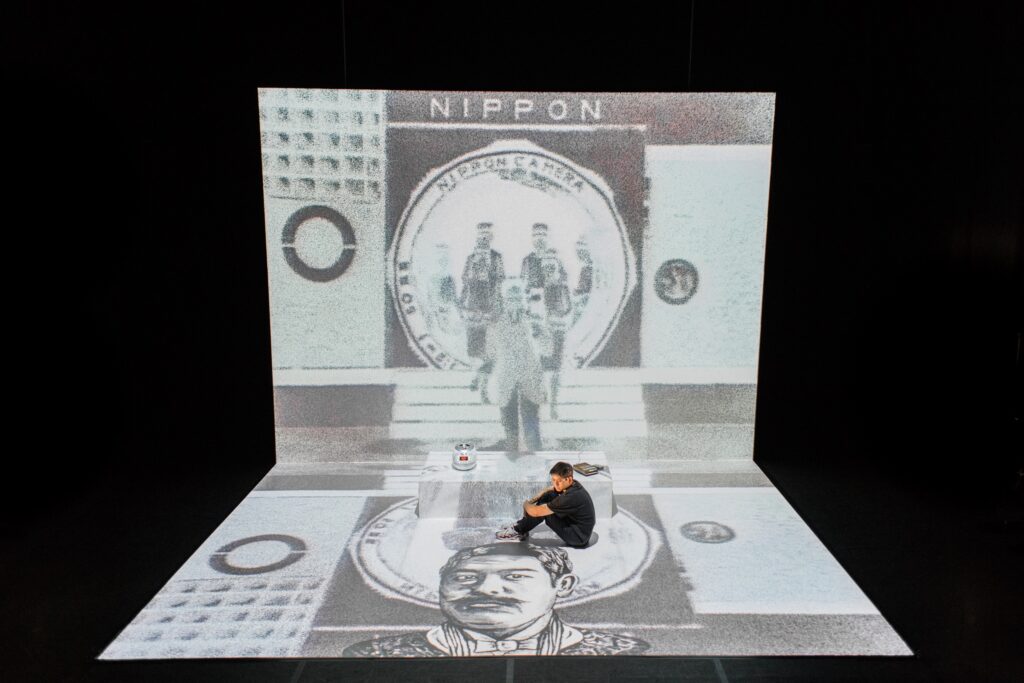
The History of Korean Western Theatre © Leontien Allemeersch
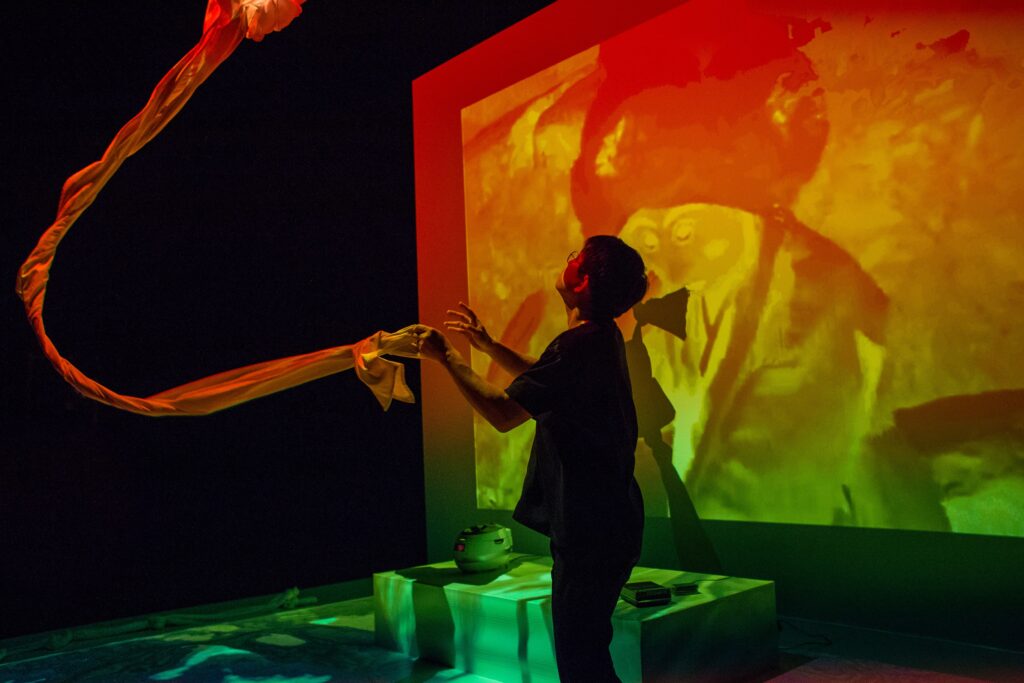
The History of Korean Western Theatre © Leontien Allemeersch
This image of an erring child learning his ancestor’s tradition represents the central dramaturgy of The History of Korean Western Theatre. To give his grandmother a proper farewell, Koo unearths from the archives gopuri (고풀이), a ritual from the Southwest that wishes the dead a safe passage into the afterlife. The choreography of undoing the knots in the fabric, which Koo has tied throughout the performance, traditionally symbolizes the deceased being freed from unearthly unresolved suffering, which Koo also wishes for his grandmother. Just as the personal loss of his grandmother’s knowledge, now deemed “folkloric,” due to dementia mirrors the collective amnesia of Korean theater practitioners, Koo’s farewell for his grandmother contains larger political and cultural implications; the performer reclaims a fading tradition and incorporates it into his present-day practice, redefining what Korean western theater could be from now on.
Koo’s performance at the end is by no means a faithful reenactment of gopuri.3 The ritual is traditionally performed only by women, for one, and his choreography does not correspond to contemporary reconstitutions of the ritual. But such unfaithfulness characterized the young child in his grandmother’s story, constantly deviating from tradition in order to become part of a community. The fabrics hang from either side of the screen upon which the final image of the video is projected: jesasang, a table set for the deceased members in the family to remember their passing. Although the performance ends with death, it hints at a beginning; as the revived Korean spirit in the middle of the show predicts, from the death of the older generation will sprout the seeds of the new generation.
In considering Lolling and Rolling, CUCKOO, and The History of Korean Western Theatre as a unified series of work, I found myself returning to the first words I heard associated with them, which was the title. Hamartia is a term developed by Aristotle in Poetics to describe an error committed by the tragic hero that causes a chain reaction resulting in his downfall. Koo combines the notion of causal repercussions central to Aristotle’s analysis of tragedies with a sense of fate to create a contradictory historical narrative regarding the effects of westernization on Korean economic, social and cultural reality.
“Hamartia Trilogy does not seek to recreate ancient Greek tragedies, but its title nevertheless contains the fundamental contradiction described in The History of Korean Western Theatre: modern Korean theater has been, despite its name, perhaps the most faithful version of western theater, and one cannot discuss the former without considering the latter.”
We may still ask ourselves: why a trilogy? The question takes us back to the ancient Greek theatrical convention, in which tragedies were written to be performed in threes. Comprehensively understanding and reconstructing the dramaturgy of ancient Greek tragedians are not an endeavor that attracts most contemporary theater artists, and the “incorrectness” of staging one isolated tragedy rarely disturbs the audience. But The History of Korean Western Theatre reveals that Koreans have, against the current, stubbornly defended for the better part of the 20th century the principle of faithfully reproducing a dramatic text. Studying works of Shakespeare, Aeschylus, and Tennessee Williams (apparently equally important pillars of the western tradition), actors would put on white faces and blonde wigs to transform themselves as close as possible to the western “originals.”
Hamartia Trilogy does not, of course, seek to recreate ancient Greek tragedies, but its title nevertheless contains the fundamental contradiction described in The History of Korean Western Theatre: modern Korean theater has been, despite its name, perhaps the most faithful version of western theater, and one cannot discuss the former without considering the latter. The same contradiction informs the foundation of Hamartia Trilogy. To examine the remnants of history in contemporary Korean society, Koo relies on Aristotle; the resulting examination is structured into three, dramaturgically connected works, referencing the lost trilogies of ancient Greek tragedians.
If we sense an irony in the title, it is irony that Koo consciously employs in his storytelling. Regardless of the characters in the performance—a chance encounter with an American veteran in Amsterdam, a daughter of Rubin selling happiness, or a bumbling child who does not understand the tradition he was born in—the country’s history permeates throughout the trilogy, and any perspective that Koo proposes on contemporary Korean society cannot escape from irony. Undeterred, Koo tells the toad in The History of Korean Western Theatre that he has come to accept the scar on his arm from his childhood injury; he no longer feels ashamed the scars of the past that are still visible in the present. Contrary to what the dream in Lolling and Rolling may suggest, history is no longer a nightmare from which he is trying to awake; the artist accepts its presence in the present and forges on with ironic deliberation.
KRIJG JE GRAAG ONS PAPIEREN MAGAZINE IN JOUW BRIEVENBUS? NEEM DAN EEN ABONNEMENT.
REGELMATIG ONZE NIEUWSTE ARTIKELS IN JOUW INBOX?
SCHRIJF JE IN OP ONZE NIEUWSBRIEF.
JE LEEST ONZE ARTIKELS GRATIS OMDAT WE GELOVEN IN VRIJE, KWALITATIEVE, INCLUSIEVE KUNSTKRITIEK. ALS WE DAT WILLEN BLIJVEN BIEDEN IN DE TOEKOMST, HEBBEN WE OOK JOUW STEUN NODIG! Steun Etcetera.
essay
08.12.2023
Leestijd 15 — 18 minuten
15.09.2023
—
14.12.2023
Caroline Lee-Jeong does dramaturgy and writes on different occasions. She has a background in literary and theater studies.
Sébastien Hendrickx
Mia Vaerman
essay 08.12.2023
Sébastien Hendrickx
Mia Vaerman