Visies voor het veld: Wouter Hillaert
We moeten meer wakker liggen van Lanaken en Izegem
Wouter Hillaert




© David Jacowbski
What does it take to stay present in absence? What does it take to embody the void left by a loss? Helder Seabra comes back to these questions after 10 years. In Absentia first premiered in 2015 – back then it was challenged by the deteriorating financial state of the cultural sector. Once again the funding for the arts was cut which affected Helder Seabra’s work too. I haven’t seen the first take but it seems like the flame of this Portuguese choreographer is still burning. Moreover, the initial financial shortcomings that left Seabra with fewer performers hasn’t restricted his passion, but rather scarcity became the mother of invention. In absence, Seabra found the space to create something powerful.
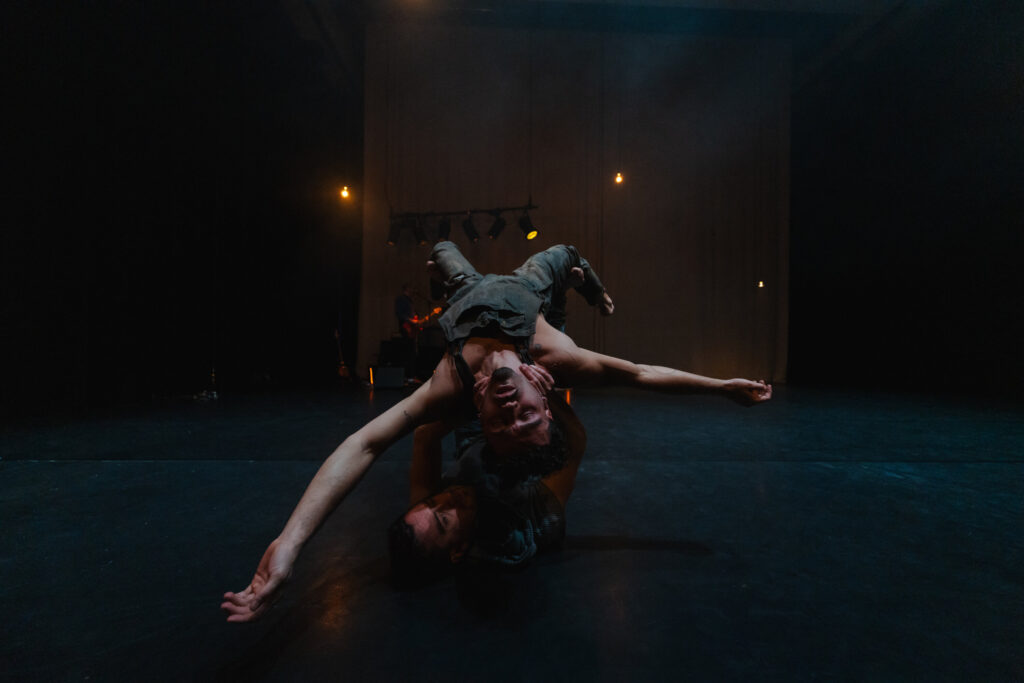
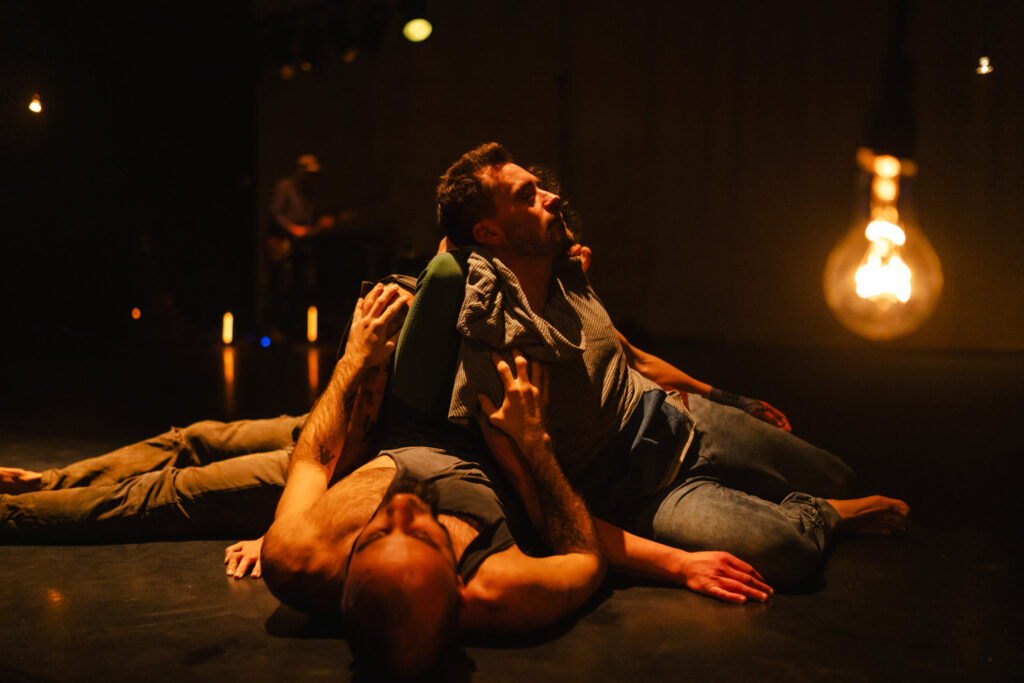
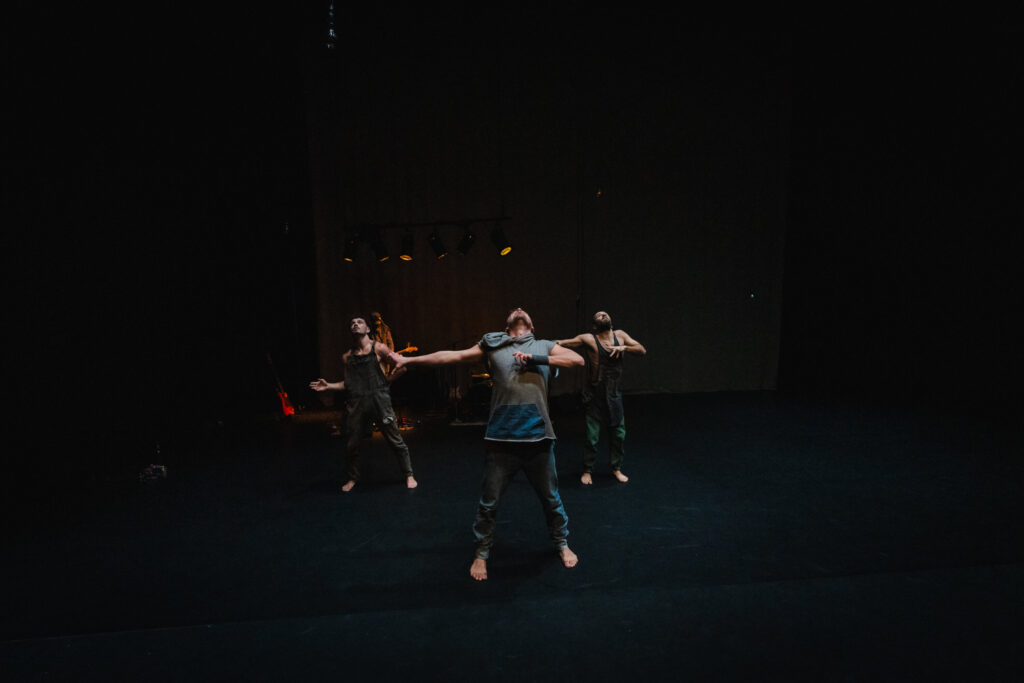
The lure of painful stories is as old as culture itself. There’s this drug called catharsis that many art lovers chase. It’s fair to say that Seabra has brewed a very strong batch. We see him trying to comfort his enraged friend, Afonso Cunha, who struggles against Seabra’s embrace and eventually passes away. The men have fought fiercely but Seabra is defeated by the loss of his friend. He falls backwards with no one to catch him, his back loudly hitting the ground. His pain is palatable and seemingly undeserved, a true tragic Greek hero.
But right afterwards, we see something that proves Seabra isn’t just after the high of catharsis. In other words, he’s not trying to make misery porn. Seabra embraces his friend Deeogo Oliveira, both of them carry stones from the altar at the back of the stage and cover the body of Cunha. As if this loss is chipping away from their faith. And even if the tenderness of a friend cannot heal grief, we see them trying to do better, to deal with their pain and loss and misery, not wallow in it. Time and time again we see the men coming together with openness to one another and facing a fully fledged human being with all their flaws.
“Time and time again we see the men coming together with openness to one another and facing a fully fledged human being with all their flaws.”
The spiritual slow intermezzos throughout the piece intertwine and counter the explosive and painful moments. Every time the dancers go through an emotional turmoil, every sense is absolutely flooded. The lights shine bright, the live music is loud and heavy, the eyes dart from one impressive feat to another, Oliveira is doing somersaults, Cunha and Seabra engage in balancing acts. The men sweat profusely, their pumped muscles glisten, they leave wet stains on the black stage floor, their body odour is inescapable. But then come the slower moments and the musicians come to the foreground. The drummer Sylvester Vanborm tenderly plays on the stones or performers’ bodies. The guitar player Stijn Vanmarsenille uses a looper to record a tender chant. The men are trying to heal.
By the end of the piece the performers receive a standing ovation, I can’t hold back my tears and clap with my eyes closed. I hear women in the first row loudly whooping, shouting and giggling. Right after the applause dies out, two male voices behind me start talking about the muscle power required to perform the tricks on stage. The probability of injuries. As if they were discussing cars. I become uncomfortably aware of the dichotomy that is created by emotionally powerful performances. Through them, so-called negative feelings can be experienced in a safe environment because we live controlled lives where very little actually reaches the public space.
I reflect back on the performance, on the attractiveness of what I saw. How sexy it all was, how polished. I hurry to my train and inspect every human being. I’m painfully aware of how none of them can compare to the stature of these performers. In Absentia shows fully fledged people who are emotionally mature and open. But such a human being has the body of Michelangelo’s David, the strength of an Olympic athlete, the soul of a Greek hero. And even though I believe in what I just saw, and I believe in the expression of these complex, often ugly-looking feelings, I fear that this amount of perfection furthers them from the public sphere. With such an impressive and tricky performance it’s easy to slip into admiration for the body, and miss the feeling point of the play. In Absentia invites us to meet the other in oneself, the one we hide away – the raging, the tender, the depressed, the friend. It above all invites us to be present with the absences we feel and express them.
© David Jacowbski
© David Jacowbski
© David Jacowbski
KRIJG JE GRAAG ONS PAPIEREN MAGAZINE IN JOUW BRIEVENBUS? NEEM DAN EEN ABONNEMENT.
REGELMATIG ONZE NIEUWSTE ARTIKELS IN JOUW INBOX?
SCHRIJF JE IN OP ONZE NIEUWSBRIEF.
JE LEEST ONZE ARTIKELS GRATIS OMDAT WE GELOVEN IN VRIJE, KWALITATIEVE, INCLUSIEVE KUNSTKRITIEK. ALS WE DAT WILLEN BLIJVEN BIEDEN IN DE TOEKOMST, HEBBEN WE OOK JOUW STEUN NODIG! Steun Etcetera.
recensie
23.12.2024
Leestijd 4 — 7 minuten
15.12.2024
—
28.02.2025

Ugnė Noreikė is a Lithuanian born freelance writer with Master’s degree in arts from Amsterdam University. Right now she’s residing in Antwerp working as a language teacher meanwhile engaging in partnerships with different cultural magazines.
recensie 23.12.2024
