#182
15.04.2026
—
14.09.2026
Eylül Fidan Akıncı is the house dramaturg of Theater aan de Rijn, Arnhem.
.
“Can we fundamentally give a dancer an order to stop moving? […] Is dance not defined as the potential movement within the dancer’s stillness?” These questions, read aloud in a calculated calm, resound throughout We Came to Dance.
EXÓTICA is a journey that sets off even before the show proper starts. In my rush through its arcades, the Royal Saint-Hubert Galleries become a zoetrope of chocolate shops, gift boutiques, and chic restaurants–a parade of taste tourism that mindlessly reiterates the colonial accumulation and display of riches. In that sense, the premiere of Chilean-Mexican-Austrian based artist Amanda Piña’s latest piece at the Théâtre Royal des Galeries feels site-responsive. EXÓTICA beckons its audiences to examine the productions and consumptions of coloniality as it manifests between the dancing and spectating bodies across ethnic and sexual asymmetries. I enter the foyer covered with red velvet and mirrors, with the soundscape of tropical forests layered beneath the noise of the crowd. I can’t resist the feeling of being moved by some tingle that our predicament has deprived us of more and more: Fascination.
On May 8, 2022, Nigerian-American artist Okwui Okpokwasili’s Bronx Gothic (2014) at Kunstenfestivaldesarts did not end. It didn’t end because not only its story rides on the perpetual logic of dreams and sea waves, but also because this time it skipped a few beats from its climax and denouement—more on this and the new iteration of the show by Paris-based Kenyan artist Wanjiru Kamuyu later.
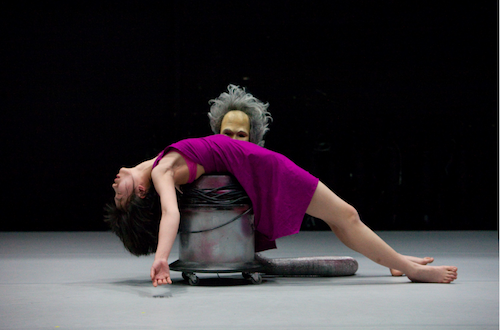
The history of puppetry is full of supernatural bodies on stage that dramatically or subtextually represent their quest of coming to life and gaining autonomy from their masters. A puppet’s performance often reflects on its condition of existence: How does a random object become an animated body on stage? This practical and theoretical question energizes South Korean artist Geumhyung Jeong’s (b. 1980) body of work. Jeong extends the possibilities of puppetry by choreographing her entire body as her animation technique. Moreover, she explores the various dimensions of the object’s liveliness by way of sexuality. In fact, in Jeong’s exploration of animacy, this stage life of the object always already involves intimacy and sensuality. She crafts and manipulates her performing objects that range from simple masks to dummies to machines, embraced carnally with them in the double entendre of playing with control. Reflecting on the six performances Jeong created between 2008 and 2019, I am repeatedly reminded that there is no anima, no life, and no agency for objects devoid of sexual being.
De geschiedenis van het poppenspel zit vol bovennatuurlijke lichamen die op een dramatische of subtekstuele manier zoeken naar hoe ze autonoom kunnen worden van hun meesters. Hoe komt een willekeurig object tot leven op het podium? Deze praktische en theoretische vraag stimuleert het oeuvre van de Zuid-Koreaanse kunstenares Geumhyung Jeong (1980). Jeong verruimt de mogelijkheden van het poppenspel door het hele lichaam te choreograferen. Ze exploreert bovendien de levendigheid van het object door middel van seksualiteit.
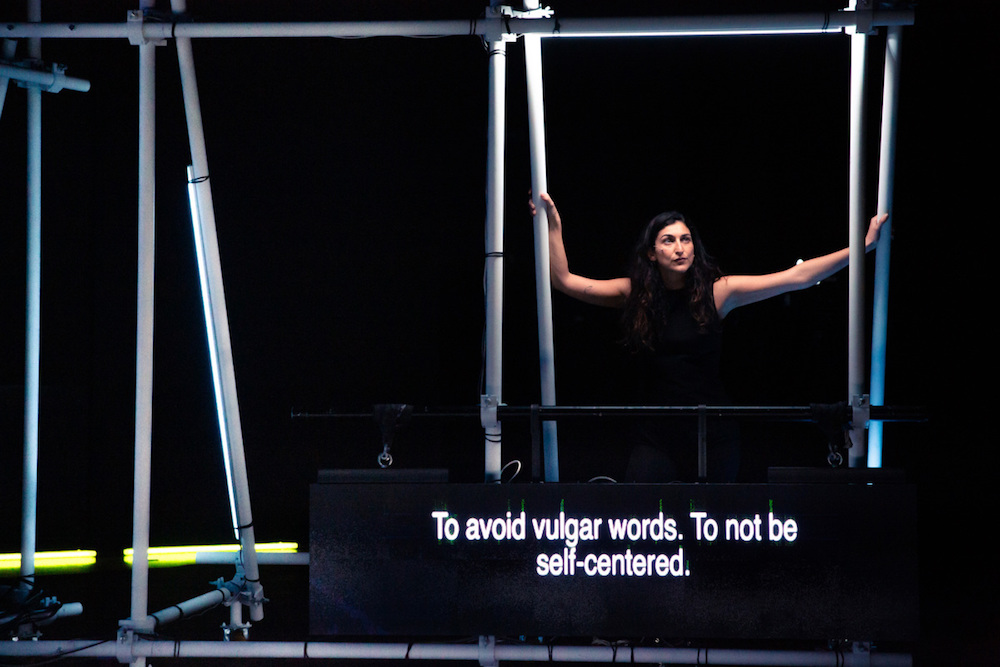
I can give two accounts of Sachli Gholamalizad’s solo performance Let us believe in the beginning of the cold season, which premiered on May 11 at KVS in the frame of KFDA. First one: It is a show by a very virtuosic performer, sliding back and forth between semi-autobiographical storytelling, video interviews of Gholamalizad’s mother, spoken poetry of Forugh Farrokhzad’s verses, and singing; a show that is built on the hyphenations of the performer’s identity across Iran and Belgium, with the modular light and screen fixture as a material aid for, as well as a metaphor of, such division of sense of belonging. This account is not necessarily untrue, and it wouldn’t spoil the work’s pleasure for the potential viewers. The other story I might tell is less pleasant, and precisely about the problem of pleasure.
Until the beginning of February, the New York MoMA is mounting an exhibition on Judson Dance Theater. In the sixties, this legendary collective, which used the Judson Memorial Church in Greenwich Village as its home base, paved the way for a postmodern dance and performance which steered clear of the formalism of modern dance. The influence of Judson Dance Theater on the development of contemporary dance in the last decades of the twentieth century is undeniable. But what can the movement mean to millennials who are trying to find their place in the world of dance today?
Tot begin februari loopt in het MoMA in New York een tentoonstelling over Judson Dance Theater. Met de Judson Memorial Church in Greenwich Village als uitvalsbasis lag dit legendarische collectief in de sixties aan de basis van de postmoderne dans en performance, die zich losrukte van het formalisme van de moderne dans. De invloed van Judson Dance Theater op de ontwikkeling van hedendaagse dans in de laatste decennia van de twintigste eeuw is evident. Maar wat kan de beweging nog betekenen voor millennials die vandaag hun weg zoeken in het dansveld?